Baking & Pastry
Acetate Transfer Sheet
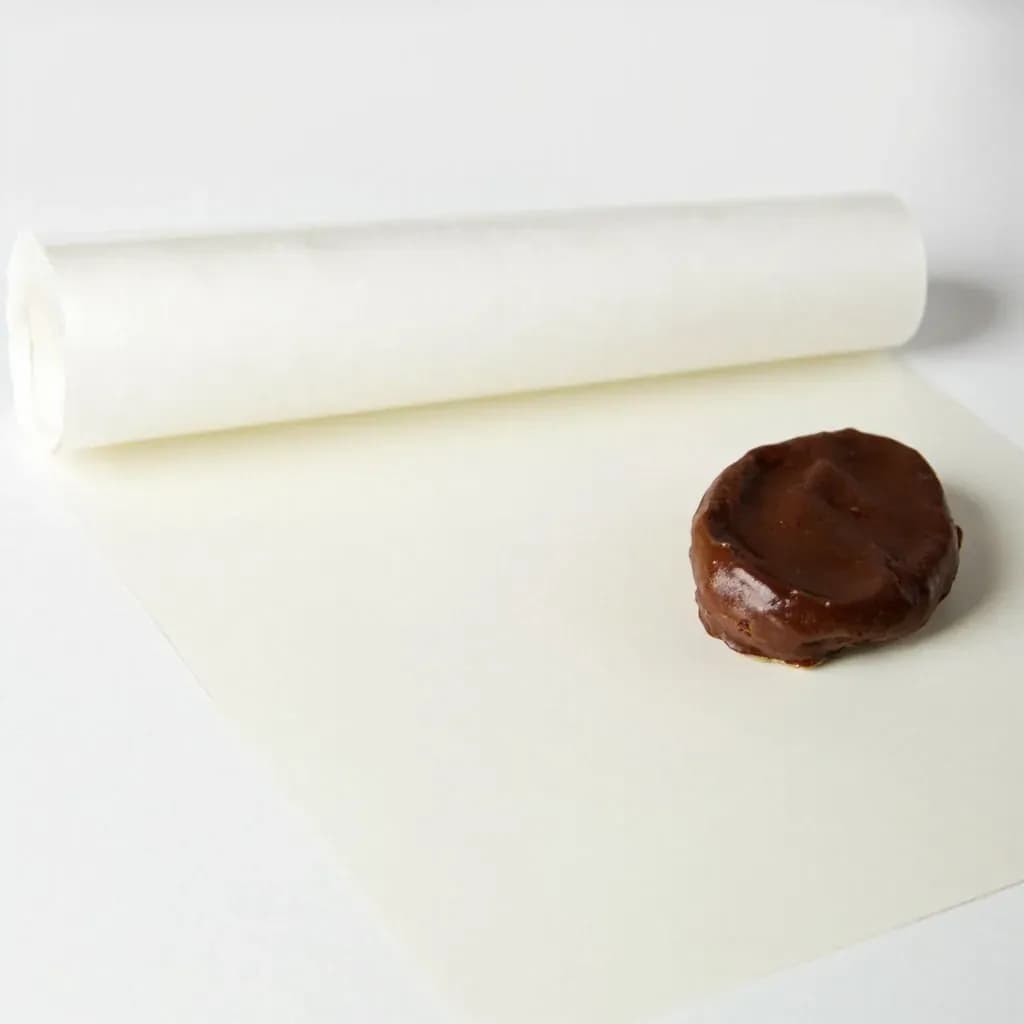
A clear plastic sheet for shaping, lining and giving a glossy finish to chocolate and mousse cakes.
An acetate sheet is a flexible, food-safe clear plastic used to line cake collars, set chocolate against for a mirror shine, and roll into cylinders for setting mousses and entremets. Printed transfer sheets stamp cocoa-butter patterns onto chocolate as it sets. Once the dessert is firm, the sheet peels away cleanly to leave a smooth, glossy surface.
An acetate transfer sheet is a thin, food-grade plastic film used in pastry and chocolate work to produce impossibly smooth sides, mirror-glossy chocolate surfaces, and crisp printed patterns. In professional practice it shows up in two main jobs: lining the inside of ring molds so chilled mousses, bavarians, and ice cream cakes release with a flawless vertical wall, and acting as a carrier for cocoa-butter decorations that print themselves onto chocolate as it sets. The name is a holdover from the original material, cellulose acetate; almost every sheet sold to pastry kitchens today is actually PET (polyethylene terephthalate), but the older term has stuck and the two are used interchangeably.
What makes the sheet indispensable is the combination of three properties: it is optically clear, so it does not dull a chocolate's polish; it is rigid enough at 0.2–0.3 mm to stand unsupported inside a ring mold; and it releases cleanly from fat-based foods once they are fully set. It tolerates freezer temperatures and tempered chocolate (around 31–32 °C), but it has no business anywhere near an oven — heat warps it and, in extreme cases, can drive plasticizers into the food. Treated as a cold-work tool, it quietly solves problems that no silicone mold can.
Alternatives
Types & varieties
Unprinted film for lining mousse rings, terrines, and loaf pans, and for giving chocolate a polished, mirror-like surface.
Pre-coated with cocoa butter designs — stripes, dots, geometric patterns, holiday motifs — that release onto chocolate as it crystallizes.
Coated with colored cocoa butter or metallic powders for gold, silver, or vivid color finishes on chocolate.
Continuous format for lining tall entremets, terrines, and long molds; cut to length on demand and most economical for high-volume pastry kitchens.
Manufactured strips sized to common ring diameters and heights; saves measuring and cutting in busy service.
Thicker stock used when the strip must stand unsupported inside a ring or when molding chocolate pieces with sharp, clean edges.
Embossed surfaces that imprint linen, leather, geometric, or custom textures onto chocolate or pulled sugar decorations.
Choosing the right gauge
Thickness is the single decision that determines whether the sheet behaves itself. Use the thinnest gauge your application allows, then step up only when the job demands it.
- 0.1 mm — chocolate transfer work, surface polishing, and any application where the sheet will be supported by something underneath. Too floppy to stand on its own inside a ring.
- 0.2 mm — the everyday choice for lining entremet and mousse rings. Flexible enough to curve cleanly around a circle yet rigid enough to hold a mousse in place during freezing.
- 0.3 mm — reserve for tall entremets that need an unsupported vertical wall, for sharp-edged chocolate pieces, and for lining long, deep terrines where a thinner sheet would buckle.
Working with chocolate transfers
A transfer sheet works by printing a cocoa-butter design onto chocolate as the chocolate sets against the film. The technique is forgiving once you understand the timing, but the failure modes are specific.
- Spread tempered chocolate 2–3 mm thick — thinner tears when peeled, thicker turns the print cloudy and dull.
- Lay the transfer sheet with the printed side down, then smooth from the center outward with a bench scraper or palette knife to push out air bubbles. Trapped air shows up as blank spots in the pattern.
- Let the chocolate fully crystallize: cold, firm, and just beginning to pull away from the sheet at the edges. Peeling early smears the print; peeling late risks cracking the chocolate.
- Condition a cold sheet briefly at room temperature before use — a sheet straight from a chilly walk-in can trap moisture and bubbles against the chocolate.
Food safety and what to avoid
Acetate is safe in the kitchen only when it is the right grade and used in the right conditions. A few simple checks keep it that way.
- Buy pastry-branded sheets from reputable suppliers (Martellato, Pavoni, Silikomart, Chocolate World, Chefmaster, and similar). The same chemical name covers industrial film that is not approved for food contact.
- Confirm certification: FDA (US), EU Regulation 10/2011, or German LFGB. With strongly acidic or deeply colored components — raspberry, lemon, passion fruit — verify acid-fat contact approval.
- Never use acetate in an oven, microwave, or any application above about 70 °C. It will deform, melt, or in the worst case release fumes.
- Do not tape the food-contact side of a sheet. To seal a strip inside a ring, place a small piece of clear tape on the outside of the join only.
Common uses
Tips & pitfalls
- Match gauge to task: 0.1 mm for chocolate transfer and surface gloss, 0.2–0.3 mm for lining rings and supporting tall mousse cakes — a floppy sheet inside a ring is a recipe for a leaning dessert.
- Cut liners 1–2 cm taller than the ring so the mousse can be filled flush and trimmed cleanly at the base; an undersized strip leaves you with a lopsided edge.
- Seal the join of a ring liner with clear tape on the outside only — tape on the food-contact side can shed adhesive into the dessert.
- For transfers, peel only when the chocolate is fully crystallized: cold, firm, and starting to pull at the edges. Pulling early smears the print; pulling late cracks the chocolate.
- Hand-wash gently with warm water and mild dish soap. Abrasive pads scratch the surface, and even light scratches will print themselves into the next batch of chocolate.
- Replace any sheet that is yellowed, warped, creased, or has lost its optical clarity. Every defect ends up in your finished work, and there is no way to polish it out of the chocolate after the fact.
- Never use acetate in the oven or microwave — it is a cold and room-temperature work tool, and heat will deform it or drive plasticizers into fat-based foods.
- Smooth transfer sheets from the center outward with a bench scraper to push out air bubbles; trapped air is the most common cause of blank spots in a finished pattern.
Good to know
- Material
- Food-grade plastic — almost always PET in modern pastry; genuine cellulose acetate is now rare. The terms are used interchangeably.
- Typical thickness
- 0.1 mm for chocolate transfer and surface gloss; 0.2 mm for lining mousse rings; 0.3 mm for unsupported vertical use in tall entremets or sharp-edged chocolate pieces.
- Common formats
- A4 and US Letter packs (typically 20–100 sheets), pre-cut rounds and collars for standard ring diameters, and continuous rolls (commonly 60 cm wide × 5–20 m).
- Temperature tolerance
- Service range roughly −40 °C to 70 °C. Performs well in freezers and with tempered chocolate; not suitable for oven or microwave use.
- Food contact
- Must carry food-grade certification (FDA, EU 10/2011, or German LFGB). Industrial acetate film from art-supply sources is not food-safe and may contain unapproved plasticizers.
- Reusability
- Reusable while flat, clear, and unscratched. Yellowed, warped, scratched, or creased sheets should be retired — every defect will transfer to the chocolate or show through a clear glaze.
- Storage
- Store flat, away from heat and direct sunlight. UV exposure and warmth cause warping, clouding, and yellowing over time.
- Sizing for rings
- Cut a strip roughly 1–2 cm taller than the ring's height and equal to its inner circumference. Standard entremet sizes (16, 18, 20, 22, 24 cm) all fit comfortably on a 60 cm roll.
Also called
Acetate Strip · Cake Collar · Chocolate Transfer Sheet
Related

Muffin Pan
Multi-cup pan for muffins, cupcakes, and egg bites

Bundt Pan
Fluted ring mold for showstopping cakes with a center hole

Springform Pan
Latch-release pan that frees delicate cakes without flipping

Pie Dish
Sloped round dish for crisp-bottomed pies and quiches

Tart Pan
Fluted pan with a pop-out base for clean-edged tarts

Rolling Pin
Rolls dough into even sheets for pastry and bread

Pastry Brush
Brushes on egg wash, glaze, butter, and marinades

Bench Scraper
Flat blade that divides dough and clears your work surface