Cookware
Bamboo Steamer
Stackable woven baskets that steam dumplings, buns, and sticky rice over a wok.
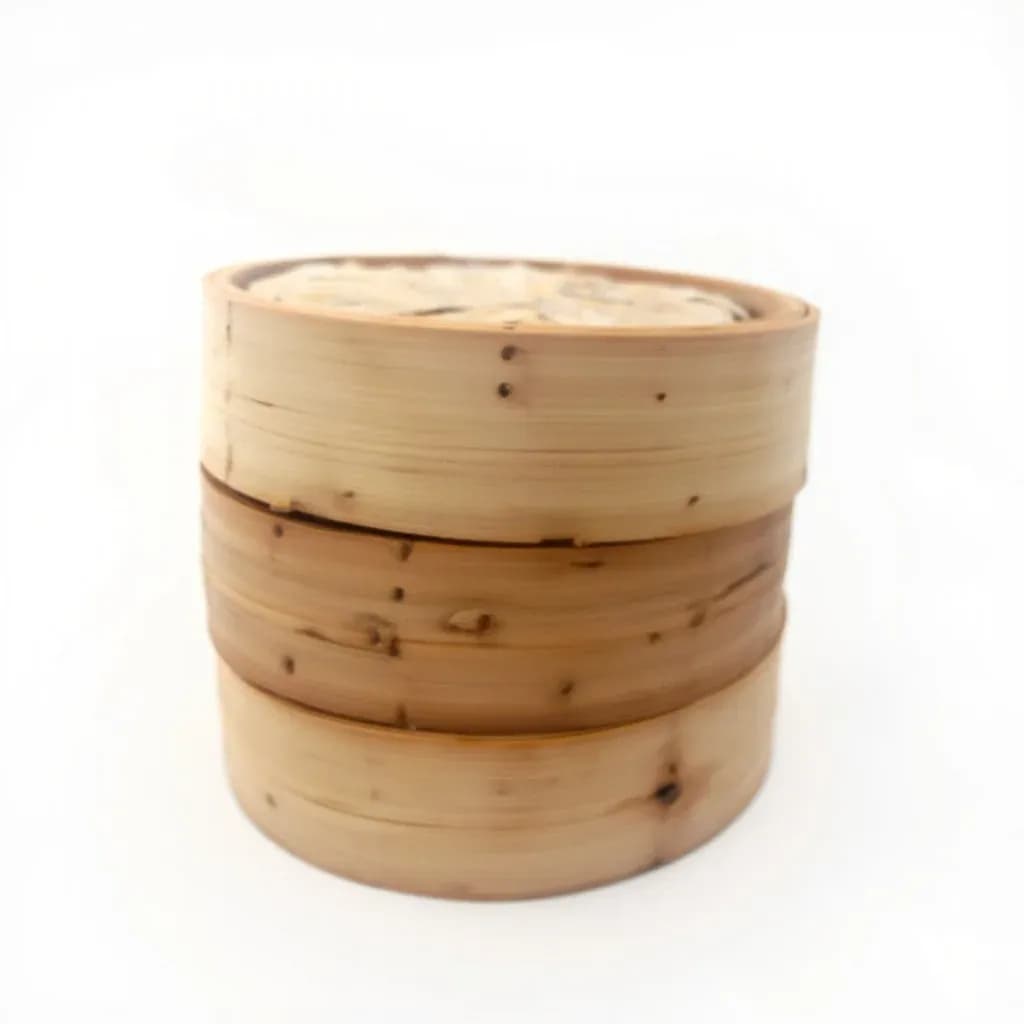
A bamboo steamer is a set of stackable woven baskets with a lid, set over a wok or pot of simmering water to steam food gently. It is essential for dim sum like dumplings and buns, and for steaming fish, vegetables, and sticky rice. The bamboo absorbs excess condensation so it doesn't drip back onto the food, and multiple tiers let you cook several items at once.
A bamboo steamer is a stackable set of shallow, woven baskets with a loose-fitting lid, designed to perch over a wok or pot of simmering water. The bamboo wicks away excess condensation and lends a faint, earthy fragrance, while the slatted base lets steam rise freely through every tier. Because the baskets are lightweight and interchangeable, a cook can run two or three levels at once, finishing fish, dumplings, and a vegetable side in the same pan.
Bamboo steamers have been the everyday steaming vessel in Chinese kitchens for centuries, and they remain preferred over metal inserts for many tasks because the wood never gets screamingly hot and will not react with delicate foods. They are inexpensive, fold flat for storage, and are replaced rather than repaired once the weave weakens — most cooks treat them as semi-disposable, retiring a set when the slats darken or begin to shed.
Alternatives
Types & varieties
The workhorse size; fits a 12-inch wok and holds 8–10 soup dumplings per tier.
For larger meals or cooking several components simultaneously.
Small-format for two-person portions or a whole small fish.
Needs a correspondingly wide wok; used for whole chickens, large fish, party quantities.
Sold as single baskets so a two-tier set can be expanded to three or four.
Care and lifespan
Bamboo steamers need almost no upkeep beyond a hot rinse and a full air-dry. After each use, tip out any food residue, run the baskets and lid under the hottest tap water the bamboo can handle, and stand them on a rack until completely dry before stacking. Never submerge the steamer for long periods and never put it in a dishwasher — the soak swells the weave and rots the stitching. A well-used steamer darkens with age, picking up a patina of steam and starch; that is normal and even welcome. Replace the set when the slats start to splinter, the stitching unravels, or the base no longer sits flat. Because the cost is low, most cooks keep a backup on hand so a worn-out set can be swapped in mid-service.
Common uses
Tips & pitfalls
- Line the base with parchment (pierced with holes), napa cabbage leaves, or lettuce to keep small foods from sticking and to catch drips.
- Keep the water at a hard simmer, not a rolling boil — too vigorous and the pan boils dry or splashes up into the bottom tier.
- Stack from the top down: foods that cook fastest go up top, the longest-cooking item sits nearest the steam source.
- Lift and wipe the inside of the lid between batches; drips falling back into the basket make buns and dumplings soggy.
- Rinse with hot water only — soap is absorbed by the bamboo and later taints the food.
- Raise the basket off the bottom of the wok with a small metal trivet, a ring of tied scallions, or a crumpled sheet of aluminum foil so the base sits above the waterline.
- For a stronger aroma, tuck a few slices of fresh ginger or a small handful of tea leaves into the water beneath the basket.
Good to know
- Material
- Woven bamboo with a matching bamboo or wood lid
- Standard diameter
- 10 in (25 cm); also made in 8, 11, 12, and 14 in
- Tiers per set
- Usually 2; sets of 1 and 3 are widely sold
- Heat source
- Stovetop, over a wok or saucepan of simmering water
- Oven / direct flame
- Not safe; will scorch and crack the bamboo
- Care
- Hand-rinse with hot water, air-dry open; no soap, no dishwasher
- Approx. lifespan
- 1–3 years with regular home use
Also called
bamboo-steamer · sticky-rice-steamer-basket · sticky-rice-steamer · steaming-basket
Related

Steamer
Gentle moist heat that keeps vegetables, fish, and dumplings tender

Frying Pan
Shallow sloped pan for frying, sautéing, and quick sears

Saucepan
Tall, straight-sided pot for sauces, grains, and small batches

Sauté Pan
Wide straight-sided pan with room to brown and braise

Dutch Oven
Heavy lidded pot that turns tough cuts tender over hours

Stock Pot
Tall, roomy pot for stocks, pasta, and big-batch cooking

Wok
High-sided bowl pan built for blistering-hot stir-fries

Griddle
Flat, broad surface for pancakes, smash burgers, and breakfast