Baking & Pastry
Banneton (Proofing Basket)
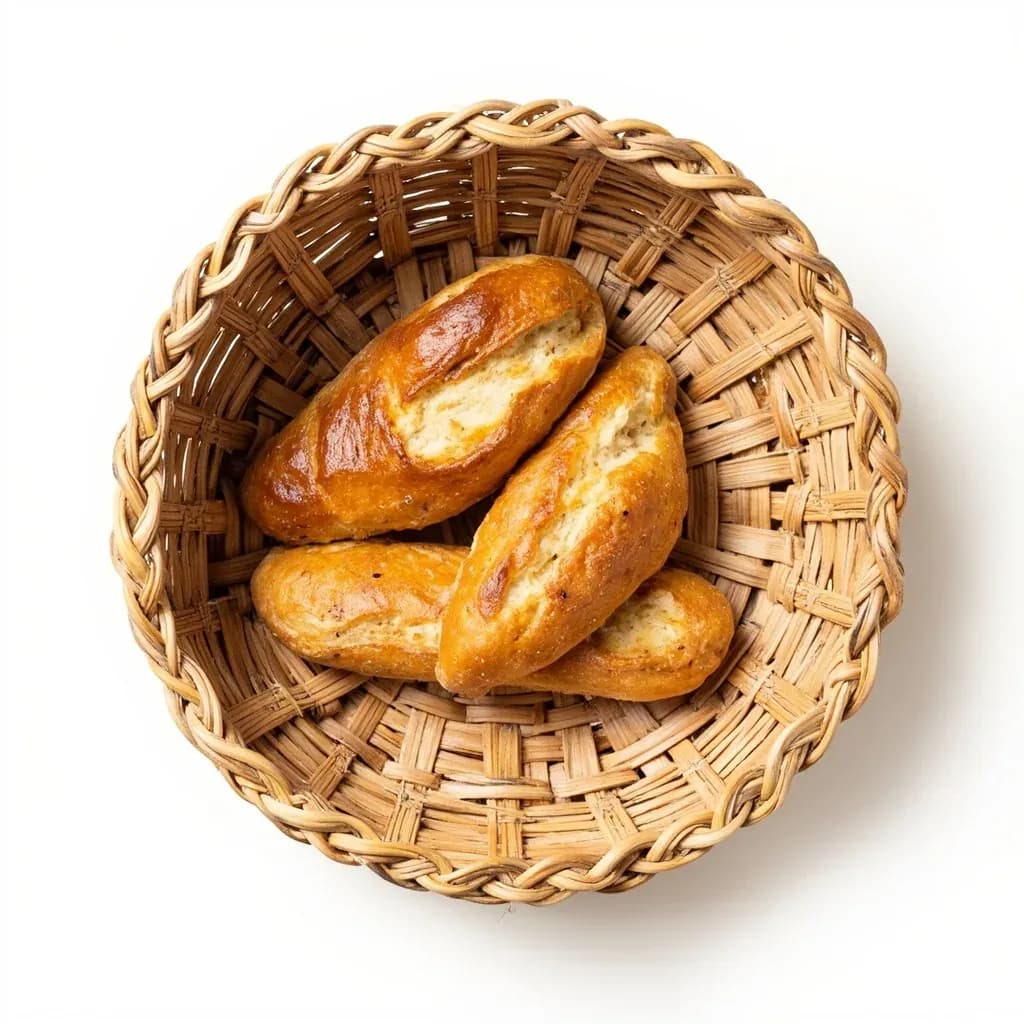
A cane or rattan basket that supports and shapes bread dough during its final rise.
A banneton is a coiled cane, rattan, or wood-pulp basket used to hold artisan bread dough through its final proof. It supports the wet dough so it rises upward rather than spreading, and the spiral ridges press a distinctive pattern into the crust. Dusted with flour, it also keeps sticky high-hydration doughs from clinging before they are tipped out onto a hot baking surface.
A banneton is a shaping tool disguised as a basket. Its job during the final proof is to hold a shaped loaf upright so it rises up rather than out, to wick just enough surface moisture to form a taut, scorable skin, and — as a happy side effect — to print the spiral or ribbed flour pattern that has become the visual shorthand for hand-shaped hearth bread. The coiled cane weave does all three jobs at once: the ridges give wet dough something to grip as it expands, the breathable plant fibers gently dry the crust, and a dusting of rice-and-wheat flour transfers as the signature concentric imprint.
The form descends from European peasant kitchens, where the French banneton and the German Brotform were woven from whatever willow, rattan, or rush grew nearby, sized to the loaf the household actually baked. That utilitarian lineage is still visible in the design — the spiral is structural, not decorative, and the basket was always meant to be turned out, never baked. A banneton is a cold-side tool; the dough leaves it the moment the oven door opens.
Alternatives
Types & varieties
The everyday workhorse; wide-bowl shape with a coiled interior that prints a concentric spiral on the top crust.
Used for bâtard-shaped loaves; the long coil produces a lengthwise ribbed pattern.
German pressed-paper version with a smoother interior and a lighter imprint; needs extra-thorough drying to resist mold.
A cane basket dressed with a heavily floured couche-style cloth; the safe choice for very wet or rye-heavy doughs that would otherwise fuse to bare cane.
Flexible, dishwasher-safe modern alternative with an easy release, but little to no surface pattern and no moisture wicking.
Inexpensive entry-level option that is easy to sanitize, though it lacks the breathability and grip of natural cane.
Why a basket, not a bowl
A banneton looks like a bowl, but it behaves like a hands-on shaping partner. Three details do the real work:
- The coiled ridges give wet dough something to push against, so a slack, high-hydration loaf proofs upward into a tall boule instead of slumping into a disc on a sheet pan.
- The porous cane wicks a thin layer of moisture from the surface, drying it into a skin that holds the score mark and blisters in a hot oven — the same skin you'd otherwise build by leaving the dough uncovered on the counter.
- The flour dusted into the weave transfers onto that skin as it rises, so the spiral or rib pattern is essentially a byproduct of the structural job the basket is already doing.
Common uses
Tips & pitfalls
- Dust the inside with a 50/50 blend of rice flour and bread flour; rice flour absorbs less moisture from the crust and resists sticking far better than wheat flour alone.
- For very wet doughs above roughly 75% hydration, line the basket with a heavily floured linen couche rather than flouring the bare cane — bare cane will fuse to the dough and tear the skin on release.
- Always place the dough seam-side up in the basket so the smooth, floured top becomes the visible crust once you turn it out — putting it seam-down buries the pattern in the oven.
- Let the basket air-dry completely between uses; trapped moisture is the leading cause of mildew and sour odor in cane bannetons.
- Skip the dishwasher and never soak the basket — a stiff dry brush or stiff-bristled pastry brush is all the cleaning a cane banneton needs.
- If a single rattan strand lifts, snip it flush with scissors; pulling it unravels the weave and ruins the basket.
- For the easiest release and the deepest flavor, proof cold (around 4 °C / 39 °F) for 12–18 hours directly in the banneton after the final shape.
- Choose a smaller basket than you think you need for high-rye or whole-grain doughs, which spread more readily and benefit from extra lateral support.
Good to know
- Also called
- Brotform or Gärkörbchen (German); banneton or paneton (French)
- Traditional material
- Spiral-woven cane (rattan) or pressed wood pulp
- Standard shapes
- Round (boule), oval (bâtard), and oblong/long forms
- Typical sizes
- Round: ~15–25 cm (6–10 in) diameter; oval: ~25–30 cm (10–12 in) long
- Purpose
- Holds shaped dough upright during final proof or cold retard so it rises up, not out
- Oven-safe
- No — dough is always turned out onto a peel, stone, steel, or Dutch oven before baking
- Flouring
- Generously dusted, usually with a rice-flour blend, to prevent sticking
- Care
- Brush out loose flour, air-dry thoroughly, never soak; an occasional bake in the sun discourages mildew
Also called
Brotform Cane Basket · Proofing Basket · Brotform · Bread Proofing Basket
Related

Muffin Pan
Multi-cup pan for muffins, cupcakes, and egg bites

Bundt Pan
Fluted ring mold for showstopping cakes with a center hole

Springform Pan
Latch-release pan that frees delicate cakes without flipping

Pie Dish
Sloped round dish for crisp-bottomed pies and quiches

Tart Pan
Fluted pan with a pop-out base for clean-edged tarts

Rolling Pin
Rolls dough into even sheets for pastry and bread

Pastry Brush
Brushes on egg wash, glaze, butter, and marinades

Bench Scraper
Flat blade that divides dough and clears your work surface