Cookware
Bean Pot (Olla para Frijoles)
A clay or earthenware pot for slow-simmering dried beans to a creamy, well-flavored finish.
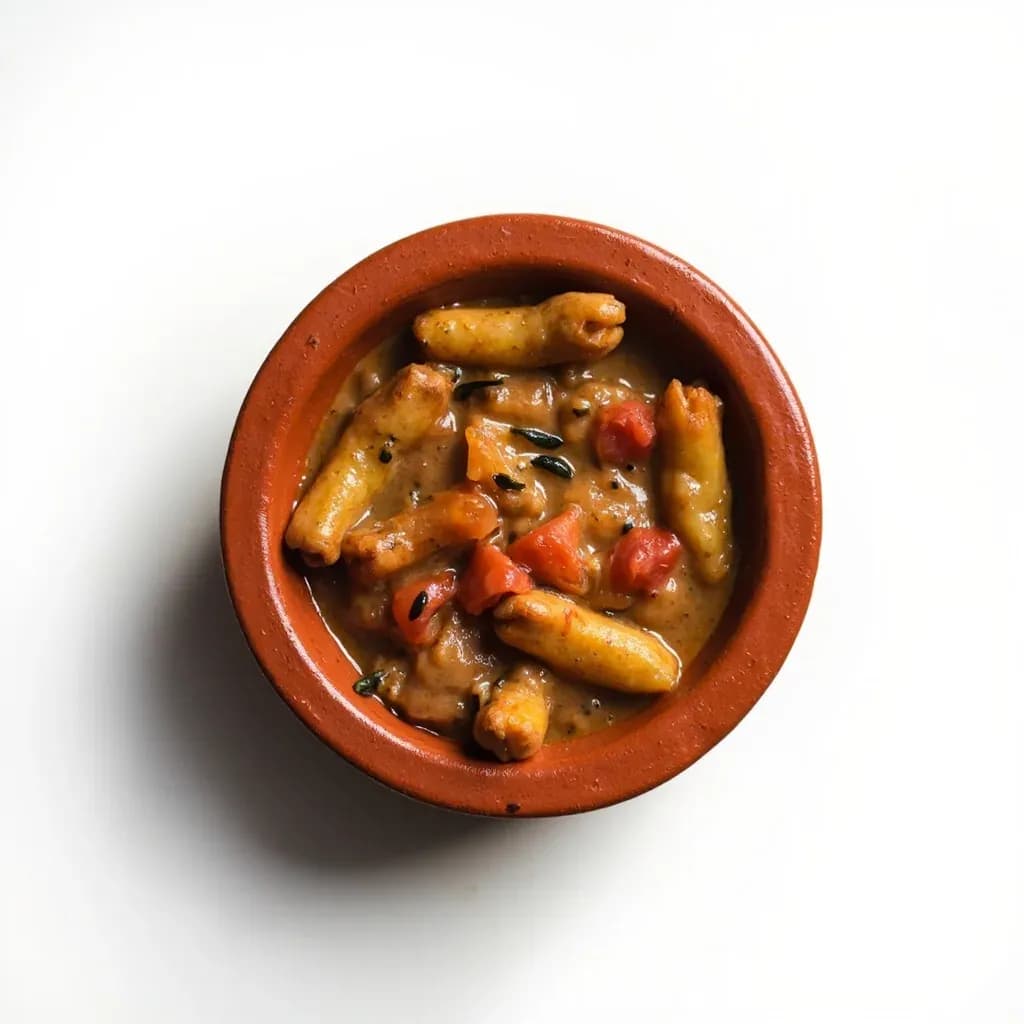
A bean pot is a deep, narrow-mouthed clay or earthenware vessel built for the long, gentle simmer that dried beans require. The unglazed clay holds steady, even heat and is said to lend an earthy, mellow flavor that metal pots lack. It is a fixture of Mexican and Mediterranean kitchens for cooking frijoles de la olla and baked-bean dishes over hours.
A bean pot is a thick-walled earthenware or stoneware vessel designed to do one thing very well: turn dried beans into something creamy, tender, and deeply flavored over a long, gentle cook. The classic shape is round with a wide base and a domed or knobbed lid — built to hold a generous amount of water and to be tucked into a low oven or set over the smallest flame on the stove. The thick clay walls do the work that a thin metal pot can't: they absorb heat slowly and release it steadily, holding the contents at a true simmer even when the burner is barely on.
What separates a bean pot from a Dutch oven is the clay itself. Unglazed terracotta, the traditional Mexican olla de barro, is slightly porous, allowing slow evaporation through the walls. This concentrates flavor and helps beans cook down in their own thickening broth without scorching. Glazed New England–style stoneware seals the surface, trading some of that breathability for easier care and the steady, even oven heat that Boston baked beans rely on. Either way, the pot's heavy mass buffers temperature swings, so beans simmer more evenly and finish cooking on residual heat after you turn off the stove or oven.
For a cook, this means a bean pot rewards patience and punishes impatience. It works best at low, steady temperatures, with soaked beans and a full lid, and it gives you beans with intact skins and a velvety interior — exactly the texture a thin metal pot rarely achieves. The same properties make it useful for any long, gentle cook: polenta, steel-cut oats, soups, chilis, and slow-braised dishes where even heat matters more than browning.
Alternatives
Types & varieties
The classic American bean pot: round, about 2 quarts, brown-glazed stoneware with a lid, traditionally used for Boston baked beans slow-cooked in the oven.
Unglazed or lightly burnished terracotta from Mexico and the American Southwest, used over a low flame or set on a bed of coals for frijoles de la olla — pot beans cooked simply with onion, garlic, and salt.
Shallow, wide earthenware dish from Spain used for beans, rice dishes, and slow-braised preparations; a flatter cousin of the deeper bean pot.
Mass-produced glazed versions in various sizes, often sold as Boston-baked-bean cookers; oven-safe and easier to maintain than unglazed clay.
Tall, pot-shaped enameled cast iron marketed for baked beans; functions like a Dutch oven rather than a true clay bean pot.
Glazed vs. Unglazed: Choosing the Right Pot
Both glazed stoneware and unglazed terracotta make excellent beans, but they shine in different settings. The choice usually comes down to how you cook beans most often.
- Choose glazed New England–style stoneware if you bake Boston-style beans, want dishwasher-safe cleanup, or cook in a 250–300°F (120–150°C) oven for several hours. The glaze seals the clay so the sauce develops thick and syrupy rather than evaporating away.
- Choose an unglazed Mexican olla for stovetop frijoles de la olla, where the pot's breathability concentrates flavor and you want the beans to cook down in their own liquid. These pots need seasoning before first use and must be air-dried after washing.
- Both pots need low heat and patience. Neither should go on a high burner, under a broiler, or from fridge to hot oven — thermal shock cracks clay of any kind.
- If you already own a heavy Dutch oven, you have a functional substitute for most bean-pot work, but you'll miss the clay's gentle moisture behavior and the way residual heat keeps cooking the beans after the pot leaves the stove.
Common uses
Tips & pitfalls
- Soak dried beans 8–12 hours (or use a quick-soak boil) before bean-pot cooking; clay pots reward patience with creamy interiors and intact skins.
- Never subject an earthenware pot to thermal shock — start in a cold or warm oven, never place a cold pot on a hot burner, and never add cold liquid to a hot pot. This is the single most common cause of cracking.
- Season an unglazed clay pot before first use by filling it with water, bringing it slowly to a simmer, and discarding the water; this reduces porosity and helps prevent cracking.
- Cook on the lowest possible stovetop flame or in a 250–300°F (120–150°C) oven. Clay's heat retention means high heat is unnecessary and risks scorching the bottom.
- Salt beans only after they are mostly tender; salting early can toughen skins, especially during the long cooks a bean pot encourages.
- Use wooden, silicone, or plastic utensils on glazed pots to protect the glaze; scratched glaze can harbor stains and bacteria.
- Air-dry unglazed pots thoroughly before storing. A musty smell means the pot was put away damp and should be re-dried in a low oven before next use.
- Resist the urge to peek — every lid lift drops the pot's internal temperature noticeably more than it would in a metal pot, lengthening the cook.
Good to know
- Material
- Traditional pots are unglazed or glazed earthenware (red or gray terracotta); New England–style pots are typically brown-glazed stoneware.
- Typical capacity
- 1 to 3 quarts for home use; larger 4–6 quart versions exist for family-size batches.
- Shape
- Round with a wide base and a domed or knobbed lid, designed to hold plenty of liquid and to be buried in a brick oven or set in a low oven.
- Heat sources
- Glazed stoneware: oven, or stovetop on a diffuser. Unglazed clay: low stovetop, low oven, or buried in coals. Not for high direct flame, broiler, or induction.
- Heat retention
- Thick clay walls hold heat steadily, producing a gentle, even simmer and continuing to cook the contents after removal from the heat.
- Moisture behavior (unglazed)
- Slightly porous walls allow slow evaporation and wicking, which concentrates flavor and thickens bean liquid without scorching.
- Origin
- Bean-cooking clay vessels have long traditions in New England (for Boston baked beans), Mexico and the American Southwest (olla de barro / olla para frijoles), and across the Mediterranean and North Africa (tagine-style earthenware).
- Care
- Unglazed pots should be air-dried fully after washing and stored dry to prevent mold; glazed stoneware is generally dishwasher-safe.
- Not safe for
- Direct high burner heat, broiler elements, or sudden temperature swings — all can crack earthenware.
Also called
bean-pot · clay-olla · terracotta-bean-pot · Olla para Frijoles · Clay Bean Pot
Related

Steamer
Gentle moist heat that keeps vegetables, fish, and dumplings tender

Frying Pan
Shallow sloped pan for frying, sautéing, and quick sears

Saucepan
Tall, straight-sided pot for sauces, grains, and small batches

Sauté Pan
Wide straight-sided pan with room to brown and braise

Dutch Oven
Heavy lidded pot that turns tough cuts tender over hours

Stock Pot
Tall, roomy pot for stocks, pasta, and big-batch cooking

Wok
High-sided bowl pan built for blistering-hot stir-fries

Griddle
Flat, broad surface for pancakes, smash burgers, and breakfast