Baking & Pastry
Bread Stamp (Chekich)
A spiked or carved stamp that presses decorative patterns and docking holes into flatbread.
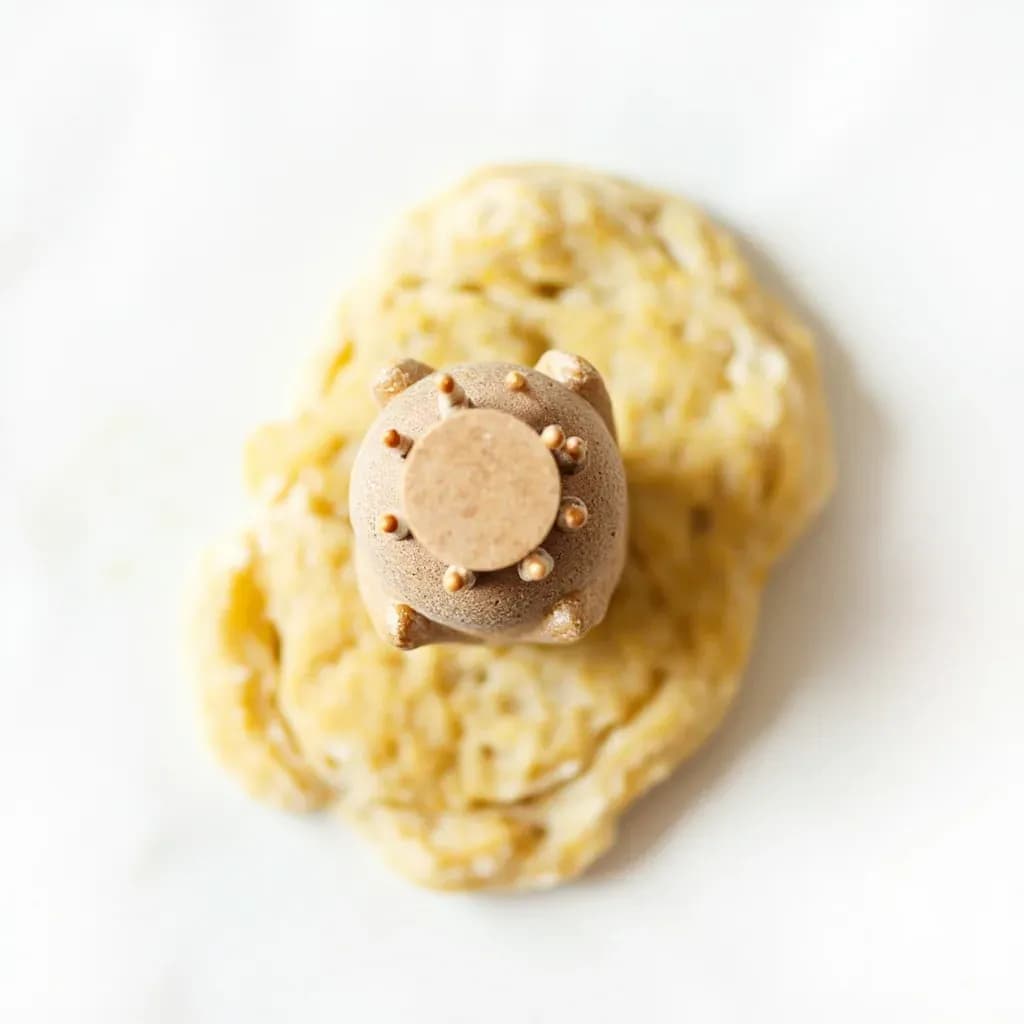
A bread stamp, such as the Central Asian chekich, is a handled tool with clustered pins or a carved face pressed into raw flatbread dough before baking. The pattern is decorative but functional: the punctures dock the center so it stays flat and crisp while the rim puffs. It gives non, lavash, and other tandoor breads their signature rosette imprint.
A chekich (also spelled chakich or chakchik) is a small hand tool with a short handle and a carved, spiked working face, used across Central Asia to mark and vent flatbreads before tandoor baking. Its working face does two jobs at once: a long central boss surrounded by shorter radial pins pierces the dough to release steam, while the carved relief between the pins presses a printed pattern into the surface. Without that venting, a round flatbread slapped onto the wall of a clay tanur balloons away from the heat and either collapses or bakes unevenly; without the pattern, you lose both decoration and the household's signature mark.
The tool evolved in the tandoor-baking cultures of Uzbekistan, Tajikistan, Afghanistan, and neighboring regions, where round flatbreads known as non, lepyoshka, or naan are still a daily staple. The patterns themselves carry meaning: a working chekich is rarely purely ornamental. Specific motifs signal a family's region, clan, or the occasion the bread is for — wedding non, funeral non, and Navruz (New Year) non are stamped with deliberately different designs, and the tamgha (a family or tribal signet) is sometimes carved into the face in place of a decorative pattern. Stamped bread is treated with corresponding respect: loaves are set pattern-side up on a cloth, never inverted, and torn by hand rather than cut with a knife.
A well-made wooden or brass chekich lasts decades, darkens beautifully with use, and rewards even pressure on rested dough. The skill lies less in the tool than in the timing: stamp after the final shape and rest, but just before the dough goes into the tandoor or oven, and dust the face lightly between presses to keep the carving clean.
Alternatives
Types & varieties
The classic form, hand-carved from fruitwood such as apricot or mulberry. Gives a softer, slightly rustic impression and is gentler on delicate dough.
Forged metal stamp with sharper pins and a crisper pattern. Heavier and more durable; favored for deeply docked tandoor breads.
A central boss plus a ring of shorter pins plus carved motifs — the most common working form on a household non stamp.
A multi-spike head with no decorative carving — used purely to vent dough before baking, in the manner of a Western docker.
Carved relief without long pins, used to mark the surface of softer flatbreads or cookies that don't need extensive venting.
Carved with a family or tribal signet mark rather than an ornamental pattern; used to identify the household's bake or for specific ceremonial breads.
Technique: how a chekich is used
The mechanics are simple, but the timing and pressure separate a clean print from a torn one.
- Shape and rest the dough first. Stamp after the loaf has been formed into its final round or oval and rested just long enough to relax — typically 5–10 minutes, depending on hydration.
- Lightly flour or rice-flour the working face between presses. Sticky dough is the fastest way to smear the carving and obliterate the pattern.
- Press straight down with firm, even pressure. Rocking or twisting tears the dough around the pins and distorts the print.
- Stamp just before the bread goes into the tandoor or oven. Too early and the dough springs back; too late and it sticks to the stamp and lifts.
- Match the stamp to the bread. A stamp that is too large for the loaf pushes dough to the edge and thins the crust; too small and you get only a central dot.
Reading the pattern
In a working Uzbek or Tajik household, the pattern on a chekich is rarely chosen for looks alone. It can be read.
- Regional motifs: specific star, floral, and geometric patterns are associated with cities and regions such as Samarkand, Bukhara, Khorezm, and the Fergana Valley.
- Occasion marks: wedding non, funeral non, and Navruz (New Year) non are stamped with deliberately different designs so the bread can be sorted at a glance.
- Family tamgha: some households carve a clan or family signet into the stamp face, so a loaf is identifiable to a particular family — useful in shared ovens and at large gatherings.
- The bread is set pattern-side up on a cloth and broken by hand; it is never inverted, and never cut with a knife, which is considered disrespectful to the stamp and the baker.
Care and storage
A chekich is built to last generations, but it rewards a small amount of attention.
- Store dry. Wood and bone stamps should never be soaked or run through a dishwasher; prolonged water swells the grain and cracks the carving.
- Brush out flour and crumbs after each use. A dry toothbrush works well for cleaning between pins and into the recessed carving.
- Oil a wooden stamp a few times a year with a thin coat of neutral food-grade oil (grapeseed, sunflower) to keep the wood from drying and splitting.
- Inspect the pins. Bent or blunt pins drag instead of pierce, leaving ragged holes; a fine file or sharpening stone can restore a metal stamp, while a wooden one is best replaced.
Common uses
Tips & pitfalls
- For very wet dough, dust the surface with flour first so the pattern transfers cleanly and the dough doesn't cling to the stamp.
- Keep the pins sharp. Bent or blunt pins drag instead of pierce, leaving ragged holes rather than clean vents — refresh metal pins with a fine file.
- If you don't own a chekich, a fork will handle the venting function — you'll lose the decoration but keep the bread flat against the oven wall.
- Buy from a working artisan if you want authentic regional motifs; tourist-market stamps are often stylized and less crisp, with shallower carving that wears out quickly.
- Press into rested dough only — a tight, unrelaxed ball will spring back and lose the imprint within seconds of release.
Good to know
- Other names
- Chakich, chakchik, chekich; sometimes called a bread punch or bread docker in English. The root is Persian for 'little nail' or 'pricker.'
- Origin
- Central Asia — primarily Uzbekistan and Tajikistan, with related traditions in Afghanistan, Kazakhstan, and Kyrgyzstan. The tool has deep roots in Persian bread-baking.
- Primary function
- Two-fold: imprints a decorative pattern into flatbread dough and pierces docking holes so steam escapes and the bread bakes flat against the tandoor wall.
- Typical materials
- Traditionally hand-carved hardwood (apricot, mulberry, walnut), bone, or forged brass or iron. Modern versions may be aluminum, stainless steel, or food-safe plastic.
- Typical size
- Working face roughly 5–12 cm (2–5 in) across with a short handle. Round tandoor loaves (non, lepyoshka) use 8–10 cm stamps; smaller ones suit fatir or yufka.
- Pattern types
- Central boss surrounded by radiating motifs, geometric stars, stylized islimi florals, or a family/tribal tamgha signet. Some patterns identify region, family, or occasion.
- Working face design
- A raised central spike for the deepest dock, ringed by shorter pins and recessed carving — the pins pierce while the relief leaves a printed impression in one motion.
- Cultural note
- Stamped bread is never inverted on the table; pieces are torn by hand, never cut. The chekich itself is often an inherited household object.
Also called
nan-stamp · Chekich · Naan Stamp · Bread Docker
Related

Muffin Pan
Multi-cup pan for muffins, cupcakes, and egg bites

Bundt Pan
Fluted ring mold for showstopping cakes with a center hole

Springform Pan
Latch-release pan that frees delicate cakes without flipping

Pie Dish
Sloped round dish for crisp-bottomed pies and quiches

Tart Pan
Fluted pan with a pop-out base for clean-edged tarts

Rolling Pin
Rolls dough into even sheets for pastry and bread

Pastry Brush
Brushes on egg wash, glaze, butter, and marinades

Bench Scraper
Flat blade that divides dough and clears your work surface