Cookware
Brine Tank
A large vessel that holds salt brine for curing cheese, olives, vegetables or meats.
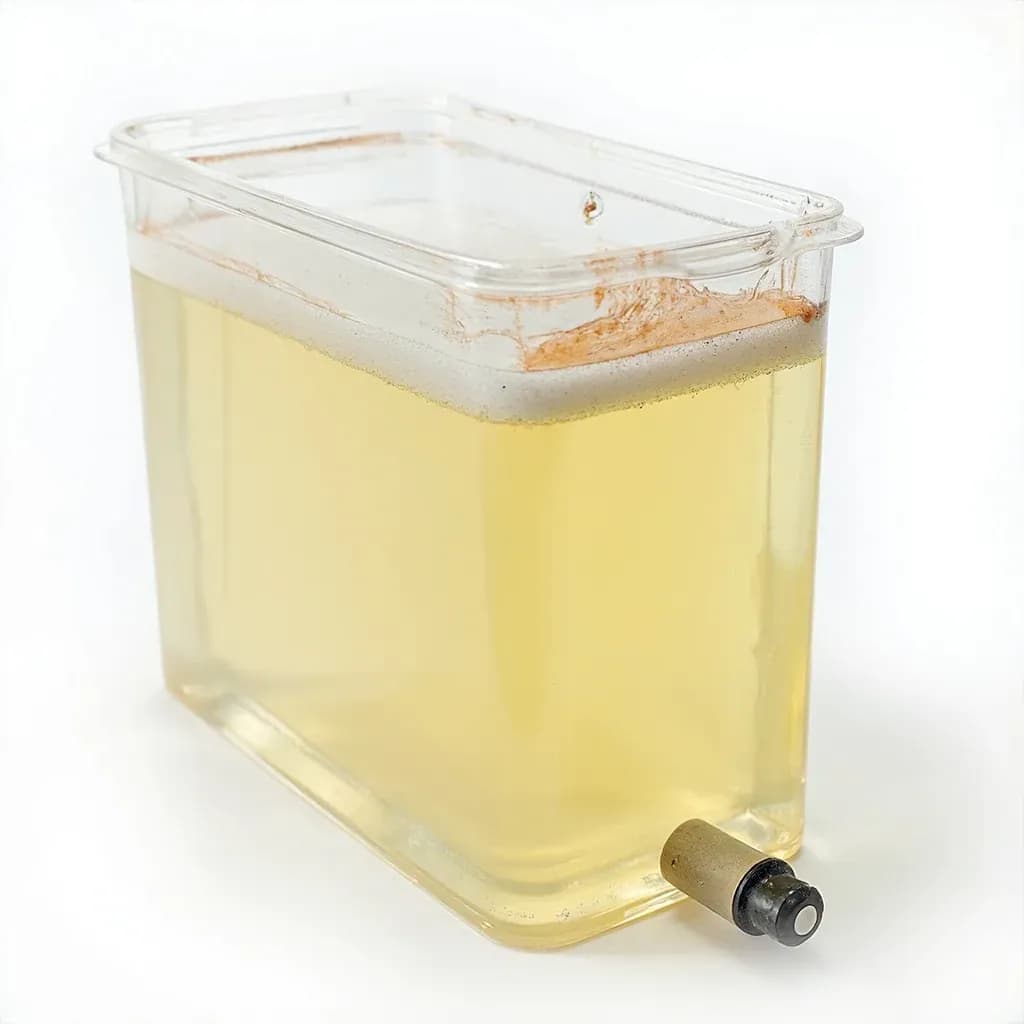
A brine tank is a large food-grade tub or vat used to submerge food in a measured salt solution for curing and flavoring. Cheesemakers float fresh wheels in it to salt the rind, while picklers and curers use it for olives, vegetables and meats. The brine concentration and time are controlled carefully, and the tank is often chilled and kept clean to avoid spoilage.
A brine tank is a dedicated vessel — typically cylindrical or rectangular, deep enough to fully submerge its contents — built to hold salt water (and sometimes acidified salt water) for curing cheese, olives, vegetables, or meats. The container itself is simple, but design choices carry real consequences: material reactivity, interior smoothness, and lid fit all shape what the brine can do safely. The right tank is the difference between a pickle that ferments evenly and one that turns soft, or a wheel of feta that cures properly versus one that spoils.
The term spans two related worlds. In cheesemaking the brine is cool, near saturation, and pH-controlled; the tank lives in a cave or affinage room and may be reused for months with regular maintenance. In fermentation and meat curing, the brine is usually room temperature, often anaerobic, sometimes acidified, and either short-lived (a pickle crock) or long-lived (an olive curing vat). Material matters more than shape across both: food-grade 304 stainless, food-grade HDPE plastic, and vitrified ceramic are the modern standards; aluminum, copper, and galvanized steel will corrode or leach into the brine. Wood is traditional and still seen in some old-world setups, but it is porous and harder to sanitize than modern materials.
For a serious home cook or cheesemaker, the practical decision is whether to buy a purpose-built tank or improvise with a food-grade bucket, stockpot, or fermentation crock. The improvised route works for one-off projects; it fails for long-running brines because scratches, weak seals, and unmeasured concentration catch up with you.
Alternatives
Types & varieties
Lidded stainless or food-grade plastic tank sized to submerge whole wheels or blocks; standard in cave and affinage rooms, often reused for months.
Large food-grade vessel for water-curing or lye-treated olives; traditionally ceramic or wood, now commonly stainless or HDPE.
Smaller ceramic or stoneware crock with a water-seal moat lid, used for sauerkraut, pickles, and other vegetable ferments held under brine.
Wide-mouth food-grade container sized for cucumbers, peppers, or mixed pickles submerged in saltwater brine.
Heavy-duty vessel for corned beef, tongues, hams, or fish in salt brine; typically stainless with a weighted follower to keep meat submerged.
Shallow, wide tank used in larger production to float and turn wheels during brining.
Cheese brining vs. vegetable fermentation: two different brines
Cheese brine and pickle brine share the word but behave very differently, and the tank you use for each is sized and maintained accordingly. Cheese brine is essentially a saturated salt bath held cool and slightly acidic — a hostile environment for pathogens but a friendly one for the slow, controlled rind development cheesemakers want. It is reused indefinitely, tested with a salometer, and topped up with salt and acid. A vegetable fermentation brine is much weaker (often 2–5% salt for lacto-fermented pickles), held at room temperature, and designed to host the right lactic bacteria. Once the ferment is done, the brine is consumed with the food or discarded; the tank is emptied and cleaned. Olive curing sits in between, with strong (8–10%+) brine that is refreshed periodically over weeks or months.
Material matters more than shape
Because brine is salty, acidic, and held for long stretches, it is unusually aggressive on containers. The reactive metals — aluminum, copper, and bare or galvanized steel — either corrode into the brine (off-metallic flavors, pitting) or, worse in the case of galvanized coatings, leach zinc. Food-grade stainless (304 is the standard), food-grade HDPE plastic, and vitrified ceramic or stoneware are the safe modern choices across all uses. Wood is traditional and acceptable for some setups, but it is porous, hard to sanitize fully, and not the standard for long-running commercial cheese or olive brines.
- 304 stainless steel: durable, scrubbable, the commercial standard.
- Food-grade HDPE (often marked with recycle code #2): cheaper, lighter, common for home cheese brine tanks and olive vats.
- Vitrified stoneware / ceramic: classic for crocks; check the glazing is food-safe and unchipped.
- Wood: traditional and still seen in old-world setups; less common for long-running brines because of sanitation concerns.
Maintaining a working brine
A brine tank that is reused — almost any cheese tank, and most olive tanks — is a living piece of equipment. Surface films and yeasts appear within days and must be skimmed. Salt crystals precipitate on the bottom and walls and should be scrubbed off; an open-weave cheesecloth or fine mesh filter on the way in and out catches curd fines and olive debris. Test the brine's concentration before each new batch and adjust with pickling salt (non-iodized, no anti-caking agents) or, for cheese brine, with a measured addition of calcium chloride and citric or lactic acid. Skipping this step is how brines drift, flavors go stale, and batches fail.
Common uses
Tips & pitfalls
- Use only non-reactive, food-grade materials — 304 stainless steel or food-grade HDPE are safe; never aluminum, copper, galvanized metal, or unknown plastic.
- Keep contents fully submerged with a weighted follower or lid; exposed surfaces grow molds, lose salt, and cure unevenly.
- For cheese brine, maintain salt concentration with a salometer (around 18–23%) and re-acidify if the pH drifts above 5.2.
- Skim surface film or yeast growth regularly and filter the brine between batches — off-flavors almost always start on top.
- Chill brine before adding fresh cheese or meat; a warm brine encourages pathogens and over-acidification.
- Sanitize the tank thoroughly between very different uses; salt and moisture will pit low-grade steel and harbor microbes in scratches.
- Reserve a separate tank for strongly aromatic brines (washed-rind cheese, blue, cured olives) to avoid flavor carry-over into mild projects.
- Don't confuse a brine tank with a dry salt-rub curing box — wet brine immersion and dry salt packing are different techniques with different vessels.
Good to know
- Category
- Cookware / Curing vessel
- Common materials
- Food-grade stainless steel (304 grade), food-grade HDPE plastic, vitrified stoneware or ceramic; wood in traditional setups
- Avoid
- Reactive metals (aluminum, copper, plain steel), galvanized metal, and non-food-grade plastics
- Typical sizes
- Home cheesemaking 2–20 qt; commercial cheese brining 50–500+ gal; olive and vegetable curing often 15–100+ gal
- Cheese brine concentration
- Roughly 18–23% salt by weight (near saturation), measured with a salometer or Baumé hydrometer
- Cheese brine pH
- Maintained around 5.0–5.2, adjusted with cheese-grade calcium chloride and food-grade acid (citric or lactic)
- Cheese brine temperature
- Cool, 50–55°F (10–13°C); warmer speeds acid development, colder slows it
- Key features
- Tight-fitting lid or follower plate, rounded interior corners for sanitation, optional spigot, false bottom or screen to keep product off the floor
- Maintenance
- Brine is filtered, re-salted, and re-acidified between batches; tank is scrubbed and sanitized; salt sludge removed
Also called
Brining Tank · Salting Tank
Related

Steamer
Gentle moist heat that keeps vegetables, fish, and dumplings tender

Frying Pan
Shallow sloped pan for frying, sautéing, and quick sears

Saucepan
Tall, straight-sided pot for sauces, grains, and small batches

Sauté Pan
Wide straight-sided pan with room to brown and braise

Dutch Oven
Heavy lidded pot that turns tough cuts tender over hours

Stock Pot
Tall, roomy pot for stocks, pasta, and big-batch cooking

Wok
High-sided bowl pan built for blistering-hot stir-fries

Griddle
Flat, broad surface for pancakes, smash burgers, and breakfast