Knives & Cutting
Brisket Slicing Knife
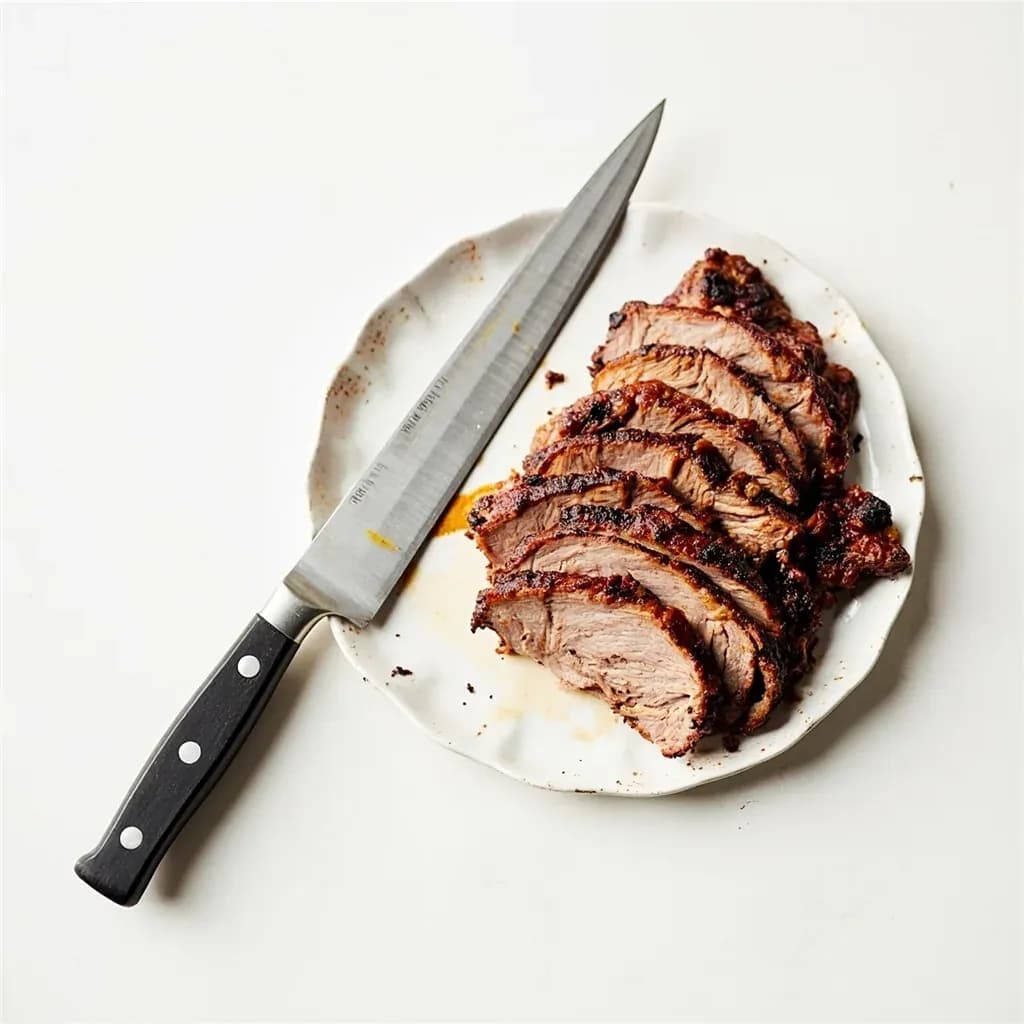
A long, narrow knife built to slice smoked brisket in clean, single strokes.
A brisket slicing knife has a long, thin, flexible blade designed to glide through a whole smoked brisket and produce even slices without sawing. The extra length lets the pitmaster cut clean slices in one pull, preserving the bark and tender grain. It is a barbecue staple for portioning large cuts like brisket, ham, and turkey breast.
A brisket slicing knife is a purpose-built carving knife, typically 10 to 14 inches long, with a long, narrow blade designed to make a single, full-length draw across an entire brisket flat. The extra length matters because a whole packer brisket can span 12 to 16 inches across the flat; a shorter knife forces you to start and stop mid-slice, which tears the bark and drags juice across the cut face.
Most brisket knives are stiff or semi-stiff, which keeps each slice at a uniform thickness and prevents the blade from flexing around dense, well-rendered muscle. Many carry a granton edge — shallow oval scallops hollow-ground into the sides of the blade — that creates tiny air pockets so thin slices release cleanly instead of clinging to the steel. Where a chef's knife is built for rocking and a traditional European slicer favors long pulled strokes for roasts, the brisket knife is a Texas barbecue adaptation: longer, more rigid, and tuned specifically for the bark-meets-tender challenge of a properly rested smoked brisket.
Alternatives
Types & varieties
Hollow-ground oval dimples along the blade; reduces friction and keeps slices from tearing or sticking.
Smooth, straight edge for the cleanest cuts; requires more frequent sharpening but delivers pristine slices.
Scalloped or micro-serrated edge that grips the bark; common in commercial BBQ for low-maintenance slicing.
Handle set below the blade plane so knuckles clear the cutting board; favored for tall hams and roasts.
Slight flex lets the blade follow the contour of the brisket point; a middle ground between stiff slicers and boning knives.
Long, stiff, slightly upturned tip borrowed from butcher's breaking knives; useful for separating the point from the flat.
Choosing a brisket knife
Match the blade to the work. A 12-inch blade handles nearly every whole packer brisket a home cook will face; go longer (14 inches) only if you regularly cook competition-size briskets or break down whole subprimals. Stiffness is a question of style: a fully stiff blade gives the most uniform slices on the flat, while a semi-flexible tip helps follow the contours of the point and the deckle. Edge style comes down to priorities — granton edges reduce drag and stick, plain edges cut the cleanest slices but demand more sharpening discipline, and serrated edges hold up to long service days but can chew up a delicate smoke ring. Handle fit matters more than material: the knife should sit comfortably in your hand for the 30 to 60 seconds it takes to break down a whole brisket, with no hot spots at the bolster.
- 12 inches is the sweet spot for most home and competition cooks.
- Stiff blade for uniform flat slices; semi-flexible for following the point.
- Granton edge reduces sticking; plain edge cuts cleanest when sharp; serrated is lowest-maintenance.
- Full-tang construction with a comfortable grip is essential for long slicing sessions.
Care and maintenance
A brisket knife lives or dies by its edge. Hone it on a fine ceramic or steel honing rod before every cook — five or six light passes on each side is plenty — and sharpen on whetstones or a guided sharpener a few times a year, or whenever the edge starts to drag rather than glide. Hand wash and dry immediately: dishwashers punish long, thin blades with rattle damage and edge dulling from detergent. Store the knife on a magnetic strip, in a blade guard, or on a knife rack where the edge is protected; a long slicer tossed in a drawer is a chipped-edge accident waiting to happen.
- Hone on a fine rod before each cook; sharpen on stones a few times a year.
- Hand wash and dry immediately; never run through a dishwasher.
- Store on a magnetic strip, in a guard, or on a rack to protect the long edge.
- Avoid twisting or prying — long slicers are designed to draw, not torque.
Common uses
Tips & pitfalls
- Always slice brisket perpendicular to the muscle grain — the flat and point run in different directions and should be rotated accordingly.
- Use one long, smooth pull from heel to tip rather than short sawing strokes; let the blade do the work.
- Rest the brisket at least 30 minutes (ideally 45–60) after removing it from the heat — slicing too early bleeds juice across the cut face and ruins the presentation.
- Aim for pencil-thickness slices (about 1/4 inch) for serving; go to 3/8–1/2 inch for sandwiches or chopped brisket.
- Wipe the blade with a damp towel between every few cuts to keep slices clean and the cut line tidy.
- Keep the edge honest — a dull blade tears bark and crushes the smoke ring; hone before every session and sharpen on stones regularly.
- Hold the knife perpendicular to the board and keep your guiding hand flat with knuckles tucked for even, safe cuts.
- Cut the flat first, then rotate and slice the point; separating the two muscles before slicing makes for cleaner, more uniform portions.
Good to know
- Blade length
- Typically 10–14 inches; 12 inches is the most common size for competition and home BBQ use.
- Blade shape
- Long, narrow, rectangular or slightly tapered profile; designed for straight, stroke-driven slicing rather than rocking.
- Edge style
- Most are straight-edge slicers; many feature a granton (hollow-ground scalloped) edge to reduce drag and prevent meat from sticking.
- Blade flexibility
- Generally stiff or semi-stiff to keep slices uniform across a wide brisket flat.
- Common steel
- High-carbon stainless steel is standard; some are forged, others stamped, for a balance of edge retention and affordability.
- Handle
- Usually full-tang with a riveted polymer or wood grip; designed for a secure, comfortable hold during long slicing sessions.
- Origin
- Evolved from the European carving/slicing knife; the BBQ-specific brisket-knife identity grew out of Texas barbecue tradition in the late 20th century.
- Typical slice thickness
- About 1/4 inch (pencil-thickness) for serving; 3/8–1/2 inch for chopped or sandwich brisket.
Also called
slicing knife · carving knife · barbecue slicer
Related

Knife
The fundamental cutting tool every kitchen is built around

Chef's Knife
The do-everything blade for chopping, slicing, and mincing

Paring Knife
Small, nimble blade for peeling and detailed in-hand work

Serrated Knife
Saw-toothed blade that slices crusty bread without crushing

Cleaver
Heavy broad blade for chopping through bone and bulk prep

Cutting Board
The stable surface every cut starts on

Mandoline
Adjustable blade for paper-thin, perfectly even slices

Kitchen Shears
Heavy-duty scissors for poultry, herbs, and packaging