Cookware
Brite Tank
A pressurized stainless vessel that clarifies and carbonates beer or cider before packaging.
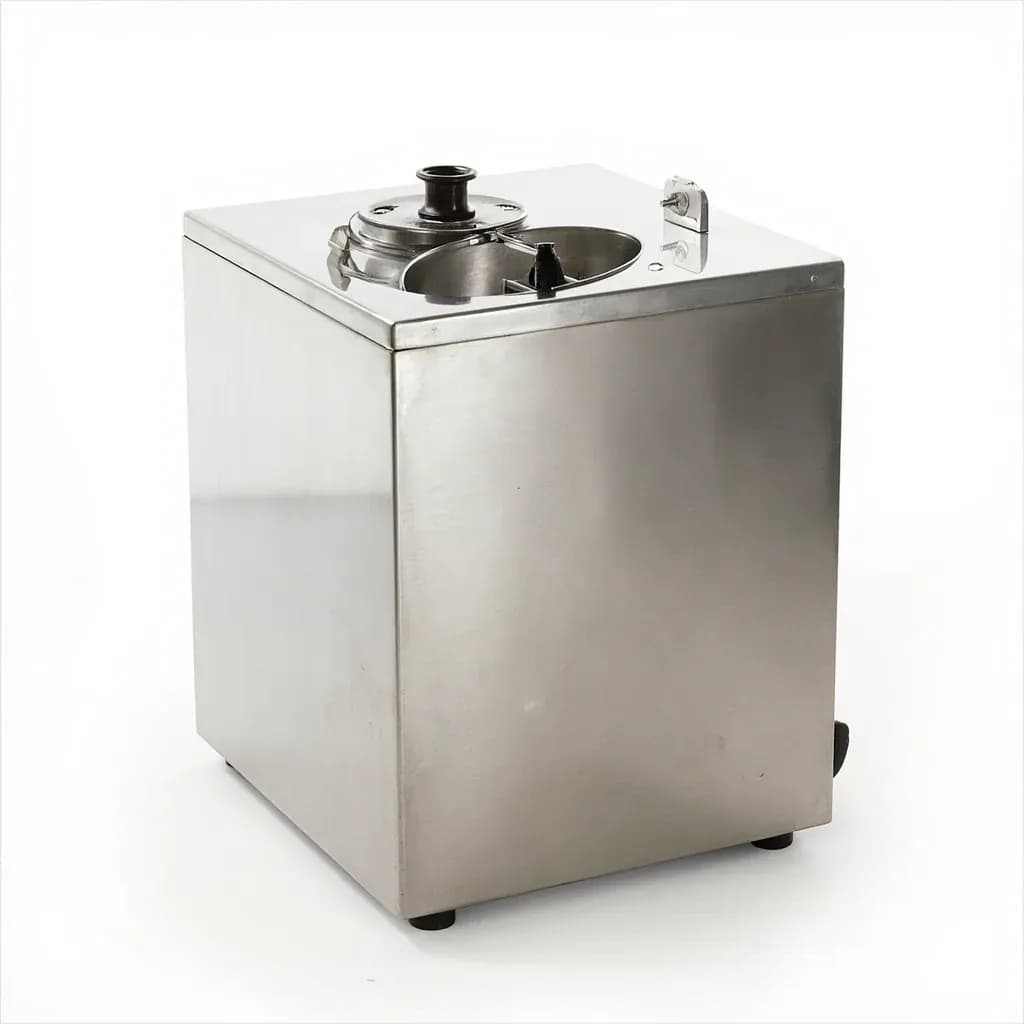
A brite tank is a pressure-rated stainless steel vessel used in brewing to hold beer or cider after fermentation so it can clear, condition and carbonate before kegging or bottling. The name comes from the bright, clear liquid it produces once yeast and sediment settle out. It holds carbonation under pressure and often has a carbonation stone to dial in fizz.
A brite tank is the last vessel beer touches inside the brewery, the quiet holding point where finished beer is cleared, carbonated, and held at serving pressure before it is kegged, canned, or bottled. In commercial breweries it is a pressure-rated, sanitary stainless vessel (usually 304 grade), fitted with a carbonation stone, sample valve, racking arm, pressure relief valve, and a spray ball for clean-in-place (CIP) cycles. In the simplest terms, it is where green beer becomes bright beer.
What it actually does is three jobs at once: it cold-conditions the beer so yeast, hop debris, and protein haze settle out; it carbonates the beer by pushing CO2 through a diffusion stone under pressure; and it holds the finished product at a stable, packaged-ready temperature and pressure so it can be moved out without disturbing the clarity. Because it is sealed and pressurized, it also lets a brewer add fruit, coffee, spices, or finings without exposing the beer to oxygen, which is the enemy of shelf life.
Even though the word "tank" suggests something industrial, the brite tank is functionally a precision instrument. Temperature, headspace pressure, and CO2 absorption are controlled together, and small missteps — a warm tank, a lazy CO2 purge, a clogged stone — show up immediately as flat, hazy, or stale packaged beer. It is the boundary between fermentation and packaging, and most of the quality decisions a brewer makes in the cellar happen here.
Alternatives
Types & varieties
Standard upright cylindrical design with a dished or conical bottom; the most common configuration in breweries of every size.
Shorter, wider profile with a reinforced top so several units can be stacked vertically; saves floor space in tight cellars.
Wrapped in a glycol or ammonia cooling jacket for tight temperature control during cold crash and carbonation.
A fermenter (unitank) repurposed as a brite by adding a carb stone and racking arm; common in small breweries and serious home cellars.
Relies on glycol-cooled cellar air for temperature control; cheaper but slower to cool and less precise.
Very small brite, typically 1–3 bbl, used for pilot batches, small-brand packaging, or direct in-bar serving.
How carbonation actually works in a brite tank
Carbonation in a brite tank is governed by a simple fact: CO2 dissolves into beer in proportion to pressure and inversely with temperature. Cold beer holds more gas under the same pressure, which is why brite tanks run at cellar temperature (32–38 °F) rather than fermentation temperature. The two common methods behave differently and produce different results.
- Forced carbonation: CO2 is fed from a regulator through a 0.5–2 µm sintered stone at the bottom of the tank. The stone breaks the gas into a cloud of micro-bubbles, dramatically increasing surface area and speeding absorption. A typical pale ale reaches roughly 2.5 volumes of CO2 in 12–24 hours on a stone at 34 °F and 12–14 psi.
- Spunding or natural carbonation: Fermentation is finished in the brite (or transferred early) and the tank is sealed once the beer hits the target pressure. Residual yeast finishes the sugar and self-carbonates. This preserves delicate hop aromatics but is slower and harder to hit precisely.
- Volumes vs. psi: Brewers think in volumes of CO2 (lager 2.4–2.8, ale 2.0–2.5, hefeweizen 3.5–4.5, Belgian strong 3.0+), not raw pressure. A carbonation chart maps temperature and pressure to volumes; guessing by feel is the fastest way to under- or over-carb a batch.
- Headspace matters: A partially filled tank carbonates faster than a full one at the same pressure, because there is more gas headspace feeding CO2 into a smaller volume of liquid. Track tank volume when setting regulator pressure.
Cold crashing and clarity
The 'bright' in brite tank refers to clarity. Beer enters the brite still slightly hazy with suspended yeast, hop polyphenols, and proteins. Cold crashing — holding the beer near 32 °F for 24–72 hours — drives these particles out of suspension so they settle into the cone or dished bottom, where the racking arm draws clear beer from above the sediment layer.
Common uses
Tips & pitfalls
- Purge the headspace thoroughly with CO2 before transfer; oxygen pickup at this stage is the single biggest cause of stale packaged beer.
- Always start carbonation at the beer's actual temperature — CO2 absorption is dramatically better cold than warm, so a warm tank can take days to reach the same volumes.
- Set regulator pressure to your target volumes of CO2 using a carbonation chart, not a flat psi number; lagers typically want 2.4–2.8 vol, ales 2.0–2.5 vol.
- Sanitize the carb stone after every batch. A clogged stone gives uneven carbonation and is hard to recover without disassembly or replacement.
- Pull samples from the sample valve, not the racking arm — opening the racking arm disturbs the settled sediment layer and can give you a misleadingly hazy or yeast-burpy reading.
- Cold crash for at least 24–72 hours before packaging. Rushing this is the most common cause of hazy, yeast-burpy packaged beer.
- Test and clean the pressure relief valve regularly; a sugar refermentation or carb overrun can rupture a tank or blow a lid if the PRV sticks.
- Match the tank's working pressure rating to your carbonation target plus a safety margin — never assume a 15 psi tank is safe for 30 psi spunding, even briefly.
Good to know
- Also called
- Bright tank, bright beer tank, serving tank, BBT
- Material
- Food-grade stainless steel, typically 304 grade, sometimes 316 for highly corrosive or acidic applications
- Pressure rating
- Commonly 15 psi (≈1 bar) working pressure; some models rated to 30 psi or higher for spunding or highly carbonated styles
- Common sizes
- Pilot systems 1–3 bbl (≈30–90 gal); brewpubs 5–15 bbl; production breweries 30–120 bbl
- Key fittings
- Carbonation stone, sample valve, racking arm, PRV, pressure gauge, thermowell, manway, CIP spray ball, sight glass
- Operating temperature
- Usually 32–38 °F (0–3 °C) for cold conditioning and stable carbonation
- Carbonation method
- Inline forced CO2 through a 0.5–2 µm sintered diffusion stone, or natural/spunded carbonation captured during fermentation
- Role in process
- Final vessel before packaging; receives beer from fermenter or unitank after primary fermentation is complete
Also called
Bright Tank · Serving Tank
Related

Steamer
Gentle moist heat that keeps vegetables, fish, and dumplings tender

Frying Pan
Shallow sloped pan for frying, sautéing, and quick sears

Saucepan
Tall, straight-sided pot for sauces, grains, and small batches

Sauté Pan
Wide straight-sided pan with room to brown and braise

Dutch Oven
Heavy lidded pot that turns tough cuts tender over hours

Stock Pot
Tall, roomy pot for stocks, pasta, and big-batch cooking

Wok
High-sided bowl pan built for blistering-hot stir-fries

Griddle
Flat, broad surface for pancakes, smash burgers, and breakfast