Baking & Pastry
Cake Ring
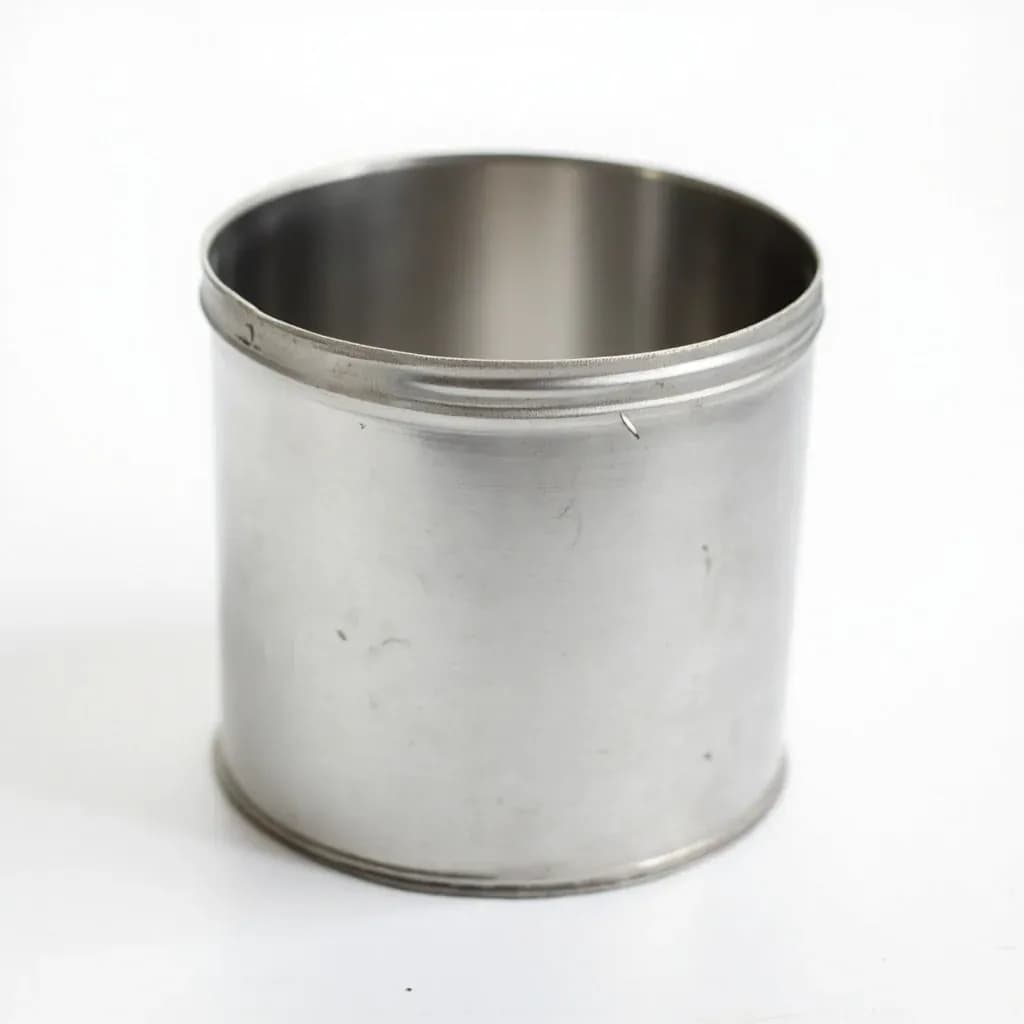
A bottomless metal ring used to bake, layer, and mold cakes and entremets with sharp vertical sides.
A cake ring is a tall, bottomless stainless steel band set on a board or sheet to shape a cake, mousse, or layered entremet. Without a base it lets the pastry chef assemble layers in place, then lift the ring cleanly for crisp, professional edges. Adjustable versions resize for different cakes, and acetate liners help unmold delicate fillings.
The cake ring is a bottomless metal band that defines the shape of a dessert without enclosing it in a traditional pan. Unlike a springform or cake pan, it has no base, which means the dessert sits directly on whatever flat surface the ring is placed on — typically a sheet pan lined with parchment, a silicone mat, or a sheet of acetate. This deceptively simple construction is the foundation of modern French-style entremet work: the pastry chef assembles layers (biscuit, mousse, insert, glaze) in a single mold, freezes the whole construction, and unmolds by sliding the finished dessert off the tray. Because there is no pan to wash or season and no base to unclip, the ring can be reused indefinitely with consistent results across batches.
The ring's open bottom and open top mean it leans on its working surface to do what a pan's base would. That is why pairing it with an acetate (Mylar) collar matters so much: the acetate creates a smooth vertical wall that releases cleanly, gives mirror glazes a glass-like finish, and stands up on its own inside a tall ring without any adhesive. The ring itself stays rigid and acts purely as a former; the acetate is the disposable skin that defines the final surface.
In practice, the workhorse dimensions are an 18–20 cm diameter and roughly 5 cm (2 in) height for full entremets, paired with 6–8 cm individual rings for plated desserts. Stainless steel is the standard material because it holds its shape under freezer cold, will not react with chocolate, fruit purées, or dairy, and tolerates the dishwasher. Diameter and height conventions are essentially standardized across professional suppliers, which makes recipes portable between kitchens.
Alternatives
Types & varieties
The standard, all-purpose format in stainless steel; available across the full diameter and height range.
Imprints a decorative vertical edge onto mousse cakes; works best with soft fillings that hold the detail.
For geometric entremets and layered desserts where sharp corners and clean straight edges are wanted.
Specialty shapes for celebration cakes; less versatile than round.
A hinged band whose diameter can be set to any size; useful when a specific size isn't on hand, though the seam can leak.
Short (1.5 in) for thin layered desserts and tarts; tall (2.5–3 in) for layered entremets with mousse, insert, and glaze.
Coated steel or aluminum; releases delicate batters, but the coating can scratch and acetate still gives a cleaner finish.
Small diameters (6–8 cm) for plated desserts and frozen mousses served on a plate.
The acetate partnership
Acetate (also called Mylar in kitchen shorthand) is the canonical partner to a cake ring, and adopting it is the single biggest upgrade a home cook can make when working with these tools. Cut a strip roughly 2–3 cm taller than the ring and as long as its circumference plus a small overlap. Press the strip against the inside wall of the ring; the acetate is rigid enough to stand on its own, and the ring holds it in place. The dessert builds against the acetate, not the metal, so the finished sides release with a glass-smooth surface — no tearing, no mottling, no metallic taste.
Acetate also tolerates a hot neutral glaze poured over a frozen dessert without softening, and it peels away cleanly once the glaze has set. Plastic wrap and parchment can substitute in a pinch, but neither gives the same finish: plastic wrap wrinkles and traps air, and parchment leaves a faintly fibrous side that shows through mirror glazes.
Sizing a starter kit
Two rings cover the majority of home recipes. A 7–8 cm individual ring, 4.5–5 cm tall, handles plated desserts — frozen mousses, individual bavarois, composed starters. A single 18 cm or 20 cm entremet ring, also around 5 cm tall, handles full-size layered cakes. Add a 22 or 24 cm ring if you regularly bake for a crowd. Skip specialty shapes and fluted edges until you have built confidence with round; fluted sides show every imperfection in a mousse and demand near-perfect piping technique.
A set of assorted stainless rings from a single supplier is the most economical way to fill out a kit. Mixing brands is fine for plain rounds but can leave you with slight height mismatches when stacking rings inside one another, which is sometimes used to build a stepped or two-tier structure.
Common uses
Tips & pitfalls
- Always set the ring on a perfectly flat sheet pan or tray — any warp in the tray causes leaning layers and uneven glazes.
- Line the inside with an acetate strip for razor-clean sides and easy release; this is the single biggest upgrade for home cooks moving from springform pans.
- If the filling is liquid or thin, wrap the bottom of the ring tightly with plastic wrap, or set it on a perforated silicone mat over a solid tray to prevent leaks.
- Chill or freeze between layers (typically 15–30 minutes) so each stratum supports the next instead of bleeding into it.
- Pipe mousses in from the center outward rather than against the ring walls to avoid trapping air pockets against the acetate.
- When demolding, pass a thin palette knife — or a knife dipped in hot water and wiped — around the outside. Never pry, or the sides will tear.
- Don't fill above the ring's height before the structure has set; mousse expands slightly when frozen and can dome over the edge.
- Avoid stacking rings directly on top of each other in storage without a buffer — stainless edges dent, and a dent becomes a permanent leak path.
Good to know
- Also known as
- Entremet ring, mousse ring, pastry ring, dessert ring
- Material
- Stainless steel (standard); also aluminum and nonstick-coated
- Standard heights
- 1.5 / 2 / 2.5 / 3 in (4–7.5 cm); 2 in is the workhorse
- Standard diameters
- 6, 7, 8 cm for individuals; 16, 18, 20, 22, 24, 26 cm for entremets
- Construction
- Bottomless seamless band, open at top and bottom
- Origin
- French pâtisserie, particularly for entremets and frozen desserts
- Working surface
- Set on a sheet pan lined with parchment, silicone mat, or acetate
- Commonly paired with
- Acetate (Mylar) strips, micro-perforated mats, offset spatulas
Also called
entremet ring · mousse ring · cake ring mold
Related

Muffin Pan
Multi-cup pan for muffins, cupcakes, and egg bites

Bundt Pan
Fluted ring mold for showstopping cakes with a center hole

Springform Pan
Latch-release pan that frees delicate cakes without flipping

Pie Dish
Sloped round dish for crisp-bottomed pies and quiches

Tart Pan
Fluted pan with a pop-out base for clean-edged tarts

Rolling Pin
Rolls dough into even sheets for pastry and bread

Pastry Brush
Brushes on egg wash, glaze, butter, and marinades

Bench Scraper
Flat blade that divides dough and clears your work surface