Cookware
Caldero (Aluminum Cooking Pot)
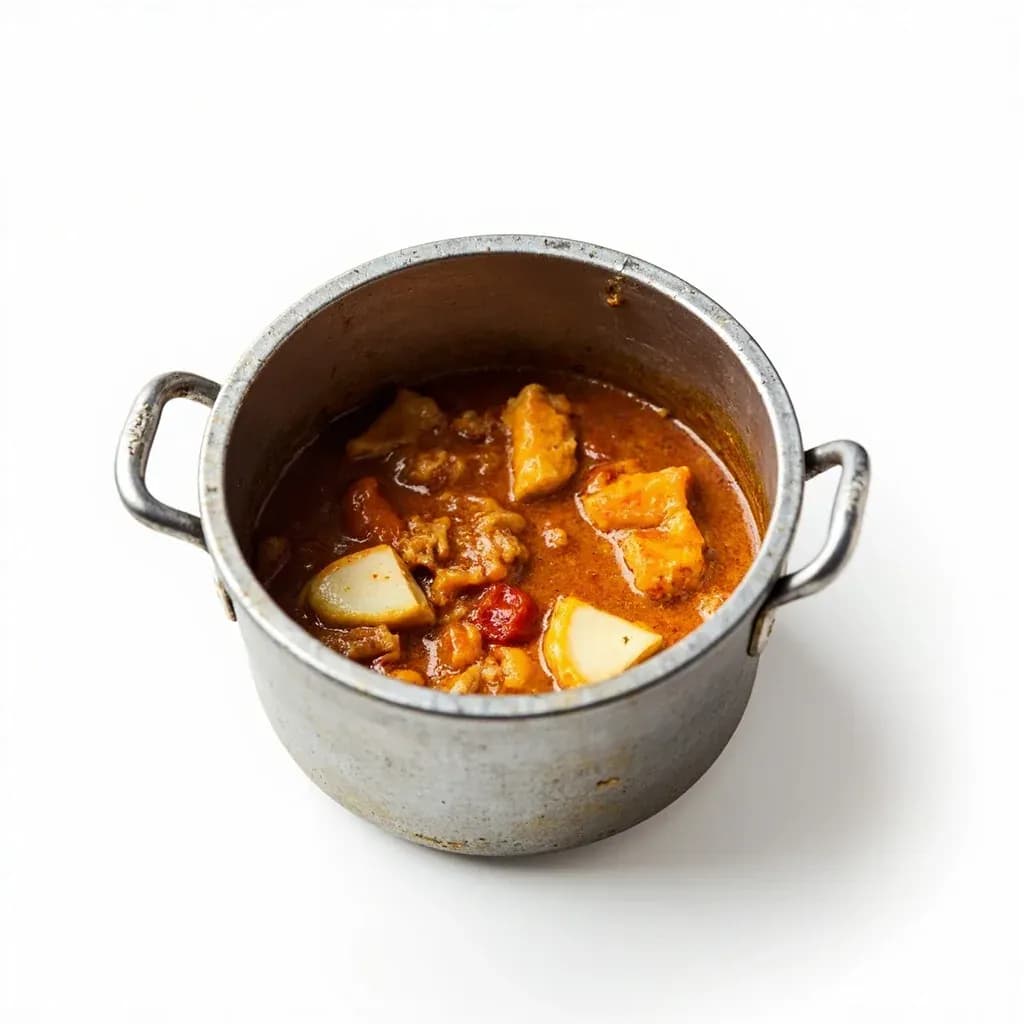
Heavy cast-aluminum Caribbean pot prized for rice, stews, and one-pot dishes.
A caldero is a heavy, thick-walled cast-aluminum pot widely used in Puerto Rican and Caribbean kitchens for rice, stews, and braises. Its weight and even heat make it especially good for arroz con gandules and for forming pegao, the prized crisp layer of rice at the bottom. The Jamaican dutch pot is a close cousin used the same way for one-pot cooking.
A caldero is a heavy, cast-aluminum cooking pot with a rounded bottom, two small looped ear handles, and a snug domed lid — the everyday rice-and-stew vessel of Puerto Rican, Dominican, and Cuban kitchens (known as a "Dutch pot" across much of the English-speaking Caribbean). What separates a real caldero from a generic saucepan is its construction: the body is cast rather than pressed, giving it thick walls and high thermal mass, which means it heats evenly and, more importantly, holds onto heat long after the burner is off. That residual heat is what lets a cook turn the flame down (or off entirely) and trust the pot to finish steaming rice without scorching. The cast aluminum also responds to flame changes faster than cast iron, so a caldero gives you both the steady, even cooking of a Dutch oven and the agility of a lighter pot.
For Caribbean one-pot cooking, this combination is exactly what the food asks for. Rice dishes like arroz con gandules, arroz con pollo, and moro need a pot that can hold a controlled, gentle simmer, hold the lid tightly, and keep delivering steam into the grains even when the stove cycles down. Stews such as sancocho and asopao need a vessel that braises tough cuts (goat, oxtail, pork) into tenderness over a long, even cook. And everyday cooking — beans, boiled tubers, even tostones — leans on the caldero's depth, its tight lid, and its ability to move from a hard boil to a quiet steam without drama. Older, well-used calderos develop a darkened interior patina that cooks prize the way cast-iron cooks prize seasoning; it improves performance and is part of why these pots are passed down through families.
Alternatives
Types & varieties
Mini caldero of 1–3 qt, traditionally dedicated to mofongo, individual sides, and small portions — treated as a separate piece of equipment in most Caribbean kitchens
The 6–10 qt workhorse size used for rice, beans, and weeknight stews for a family
14–20+ qt size used for sancocho, asopao, arroz con pollo, and other gathering-size dishes
Modern version with a harder, darker surface; more resistant to pitting and tolerant of acidic ingredients
Cast aluminum body with a stainless-steel plate bonded to the base for induction cooktops
Cheap thin-wall imitations sold in tourist markets; scorch easily, cook unevenly, and warp — widely considered inferior to genuine cast calderos
The cast-aluminum difference
Genuine calderos from makers like Imusa, Vasconia, and Lincoln are sand-cast, which is why the walls are thick and the pot is heavier than it looks. That mass is the whole point: it smooths out the hot spots of an open flame and keeps the pot delivering steady heat when you turn the burner down to finish rice. Pressed-aluminum lookalikes don't have that mass and tend to scorch where the flame touches, which is why experienced cooks can tell the difference at a glance and by weight alone.
- Cast and pressed aluminum share similar thermal conductivity, but a cast caldero's thicker walls mean much greater thermal mass — slower to heat up, slower to cool down
- The patina that builds on a well-used caldero darkens the interior and is functionally similar to cast-iron seasoning
- Older, darker calderos are often the best-performing — they are typically inherited, not replaced
Caldero vs. Dutch oven
A caldero fills the same role as a cast-iron Dutch oven but in a different register. The Dutch oven is heavier, heats more slowly, and holds heat longer; the caldero is lighter, responds faster to flame changes, and is the everyday pot for rice and beans rather than long braises. In a Puerto Rican or Dominican kitchen the caldero is to rice what a Dutch oven is to beef stew — used several times a week, never put away, and seasoned by years of use.
- Caldero: lighter, faster heat response, ideal for rice and quick stews
- Dutch oven: heavier, slower heat-up, ideal for long braises and bread
- Most Caribbean cooks own both and reach for the caldero by default for daily cooking
Seasoning and care
Unlike cast iron, a caldero does not need to be oiled and baked into a polymerized coating — its surface improves through use alone. Oil, starch, and pigment from rice and beans gradually darken the interior, and that patina is what experienced cooks look for when judging a pot. Care is mostly about not stripping that layer.
- Hand-wash with a soft sponge; steel wool removes the patina and exposes bare metal to pitting
- Dry thoroughly before storing — trapped moisture pits cast aluminum over time
- Avoid long contact with acidic foods (tomato, citrus, vinegar-heavy stews) sitting in the pot overnight
- To pre-season a new pot, rub the interior with a thin coat of oil and heat on low for about 10 minutes before first use
Common uses
Tips & pitfalls
- Cook over medium or medium-low heat — aluminum conducts so efficiently that a high flame scorches rice and caramelizes fond before the food can catch up.
- Turn off the burner 2–3 minutes before rice finishes and leave the lid on; the thick walls keep delivering steam long after the flame is gone.
- Use a long wooden caldero spoon (cuchara de palo) instead of metal, which gouges the soft aluminum and strips the patina you've built up.
- Hand-wash only with a soft sponge — steel wool and abrasive cleaners strip the dark interior seasoning that makes a caldero cook well.
- Expect the interior to darken with use; this is working patina, not dirt, and a darker pot usually cooks better than a shiny new one.
- Pre-season a new caldero by rubbing the inside with a thin coat of oil and heating it on low for 10 minutes before first use.
- Dry the pot thoroughly before storing to prevent pitting in the cast aluminum over months of moisture exposure.
- Don't store acidic foods (tomato sauce, citrus, vinegar-heavy stews) in the caldero overnight; long acid contact pits the metal and dulls the surface.
- Heat the pot gradually — slamming a cold caldero onto a high flame can warp the bottom and ruin its flat contact with the burner.
- Lift with two dry cloths or mitts; both the loop handles and the lid knob get hot fast and the handles are small enough to slip.
Good to know
- Material
- Heavy cast aluminum, noticeably thicker than standard pressed aluminum cookware
- Origin
- Standard cookware across the Spanish-speaking Caribbean — especially Puerto Rico, the Dominican Republic, and Cuba
- Form
- Rounded bottom, two looped ear handles, and a tight-fitting domed aluminum lid
- Typical household size
- 6–8 qt workhorse; family sizes run 10–14 qt; party-size goes to 20+ qt
- Wall thickness
- Substantially thicker than a saucepan, giving high thermal mass and steady heat
- Word origin
- From Spanish 'caldero,' derived from Latin 'caldarium' (vessel for hot water)
- Common alternate name
- 'Dutch pot' throughout the English-speaking Caribbean
- Heat compatibility
- Gas, electric, and ceramic; induction only on models with a bonded magnetic stainless base
- Heat behavior
- Conducts heat very efficiently; thick walls keep delivering steam after the burner is off
Also called
caldero · dutch-pot · heavy-pot
Related

Steamer
Gentle moist heat that keeps vegetables, fish, and dumplings tender

Frying Pan
Shallow sloped pan for frying, sautéing, and quick sears

Saucepan
Tall, straight-sided pot for sauces, grains, and small batches

Sauté Pan
Wide straight-sided pan with room to brown and braise

Dutch Oven
Heavy lidded pot that turns tough cuts tender over hours

Stock Pot
Tall, roomy pot for stocks, pasta, and big-batch cooking

Wok
High-sided bowl pan built for blistering-hot stir-fries

Griddle
Flat, broad surface for pancakes, smash burgers, and breakfast