Cookware
Cast-Iron Grill Grate
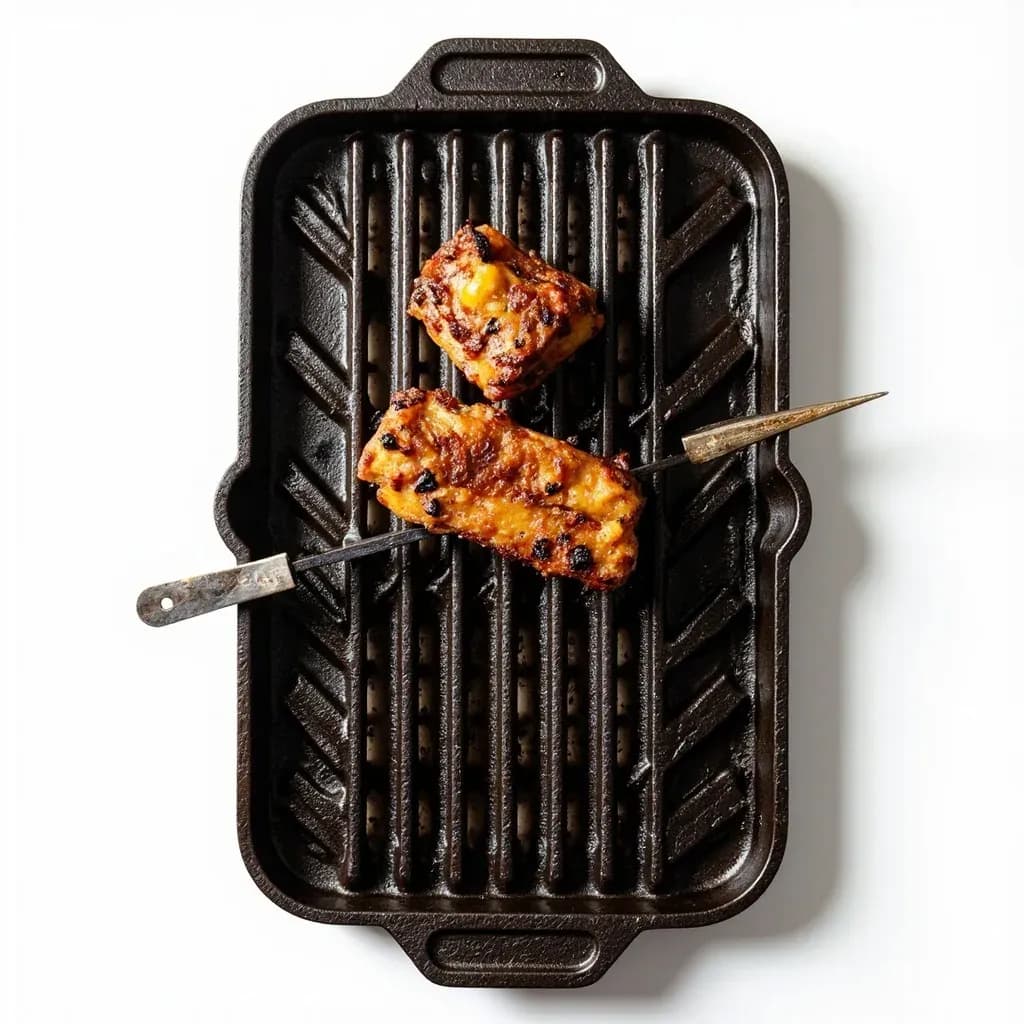
A heavy ribbed iron grate that delivers deep, even sear marks and holds heat over fire.
A cast-iron grill grate is a thick, ribbed iron grid that sits over coals, gas burners, or a fire to sear meat and vegetables. Its high mass holds heat well, branding food with strong grill marks and recovering temperature fast after the lid opens. Seasoning the iron keeps food from sticking and builds a natural nonstick surface over time.
A cast-iron grill grate is a heavy, ribbed cooking surface — usually a set of parallel iron bars or a flat plate with raised ridges — that sits inside a gas, charcoal, wood, or pellet grill in place of (or alongside) the manufacturer's stock grates. The reason cooks reach for cast iron over stainless or porcelain-coated steel is mass: a thick iron grate stores far more thermal energy, so when a cold steak hits the bars the surface barely flinches. That sustained contact temperature is what produces the deep, even sear marks and the kind of Maillard browning that lighter grates lose the moment food arrives.
Cast iron behaves outdoors much the way a well-seasoned cast-iron skillet behaves on the stove: it needs a preheat, it rewards a thin oiled patina, and it gets more nonstick with use. It is safe well above 600 °F / 315 °C, has no synthetic coating to scorch off, and tolerates direct flame, wood smoke, and the occasional flare-up without complaint. The trade-off is weight (a full replacement grate can run 10–30 lb), care (it will rust if left wet), and a short seasoning curve before the surface becomes reliably release-prone.
For cooks who already maintain cast-iron cookware, a bare cast-iron grate is essentially a second skillet turned up to outdoor heat, with the added bonus of open-flame flavor and the drip-and-smoke pattern that defines live-fire cooking.
Alternatives
Types & varieties
Parallel cast-iron bars, the classic open-grate look; direct flame contact and drippings fall through for smoky flavor.
Solid surface interrupted by narrow raised bars; gives grill marks while keeping small or delicate foods (asparagus, shrimp, fish) from falling through.
Cast-iron plate with ridges on one side and a flat griddle on the other; smashburgers on one face, steaks on the other.
Cast iron coated in vitreous enamel; smoother to start and requires no seasoning, but chips on impact and loses its advantage once the coating is compromised.
Uncoated iron that builds a polymerized oil patina over time; produces the best sear once fully broken in.
Single-piece plates retain more heat and sear better; sectional grates are easier to lift and clean individually.
Seasoning and first use
A new bare cast-iron grate is functionally raw iron with a gray machine finish. Treat it the way you would a new cast-iron skillet: wash with hot water and a mild soap to remove machining oils, dry it thoroughly over a flame or on a warm burner, then apply a thin coat of high-smoke-point oil such as flaxseed, grapeseed, or canola. Heat the grate, lid closed, until it just begins to smoke, let it cool, and repeat once or twice more. The goal is not a glossy black coat on day one but a thin polymerized layer that will deepen with every cook.
The first few sessions are the sticking sessions. Food may need a little extra release time, and a flexible fish spatula is more useful here than tongs. After each cook, scrape, wipe, oil, and put the grate back on the still-warm grill. Within a handful of uses the surface darkens, slickens, and releases cleanly — a patina that will continue to build for years.
Cleaning, rust, and long-term care
Routine care is shorter than most cooks expect. While the grate is still warm, scrape it with a stiff grill brush or a flat metal scraper, wipe out loose debris, and finish with a thin oiling. Avoid the dishwasher, prolonged soaking, and harsh degreasers once a patina is established; hot water and mechanical cleaning are enough.
If rust appears — usually after a wet cover or a surprise rain — it is not a death sentence. Scrub the affected areas with steel wool or a wire brush, wash, dry the grate completely on the grill, and re-season with a thin oil coat burned in over high heat. Bare cast iron is forgiving precisely because the seasoning can always be rebuilt.
Choosing over the stock grates
Most gas grills ship with porcelain-coated steel or stamped stainless grates that are light enough to lift with one hand and cheap enough to replace every few years. A cast-iron replacement grate is heavier, more expensive, and requires seasoning — but the trade is heat mass. Light grates cool dramatically when food lands on them; cast iron barely drops. The result is more consistent grill marks, deeper crust on steaks and chops, and less sticking on burgers and fish. On lighter carts, check hinge and frame capacity before swapping in a heavy single-piece plate.
Common uses
Tips & pitfalls
- Preheat the grate with the lid closed for at least 10–15 minutes; a cold grate is the single most common cause of sticking.
- Oil the food, not the grate, when possible; if oiling the grate, wipe a folded paper towel with high-smoke-point oil using tongs, and never spray aerosol oil near an open flame.
- Pat proteins dry and salt them ahead of time — surface moisture is what sticks, not the meat itself.
- Clean while still warm with a stiff grill brush or scraper; skip the dishwasher and avoid prolonged soaking, which strips seasoning and invites rust.
- After cleaning, dry the grate thoroughly on the grill or over a burner, then wipe a thin film of oil (flaxseed, canola, or grapeseed) to maintain the patina.
- Don't fight stuck-on black bits during a cook — let the grate reheat and the carbonized food will release, and each layer helps build seasoning.
- Store indoors or under a breathable cover in dry climates; trapped moisture is the leading cause of flash rust on bare cast iron.
- If rust appears, scrub with steel wool, wash, dry completely on the grill, and re-season with a thin oil coat burned in over high heat.
Good to know
- Material
- Cast iron, bare or coated with porcelain enamel
- Typical weight
- Roughly 10–30 lb (4.5–14 kg) depending on size and thickness
- Heat retention
- Very high; holds steady temperature through cold spots and flare-ups
- Heat tolerance
- Safe well above 600 °F / 315 °C; no synthetic coatings to burn off on bare iron
- Compatibility
- Gas, charcoal, wood, and pellet grills; also works over open fire pits
- Surface styles
- Ribbed (open bars) or flat-with-ridges (griddle/grill hybrids)
- Maintenance
- Requires seasoning like cast-iron cookware; will rust if left wet
- Lifespan
- Decades with reasonable care; enamel-coated versions chip if dropped
Also called
iron grill grate · cast-iron grate
Related

Steamer
Gentle moist heat that keeps vegetables, fish, and dumplings tender

Frying Pan
Shallow sloped pan for frying, sautéing, and quick sears

Saucepan
Tall, straight-sided pot for sauces, grains, and small batches

Sauté Pan
Wide straight-sided pan with room to brown and braise

Dutch Oven
Heavy lidded pot that turns tough cuts tender over hours

Stock Pot
Tall, roomy pot for stocks, pasta, and big-batch cooking

Wok
High-sided bowl pan built for blistering-hot stir-fries

Griddle
Flat, broad surface for pancakes, smash burgers, and breakfast