Cookware
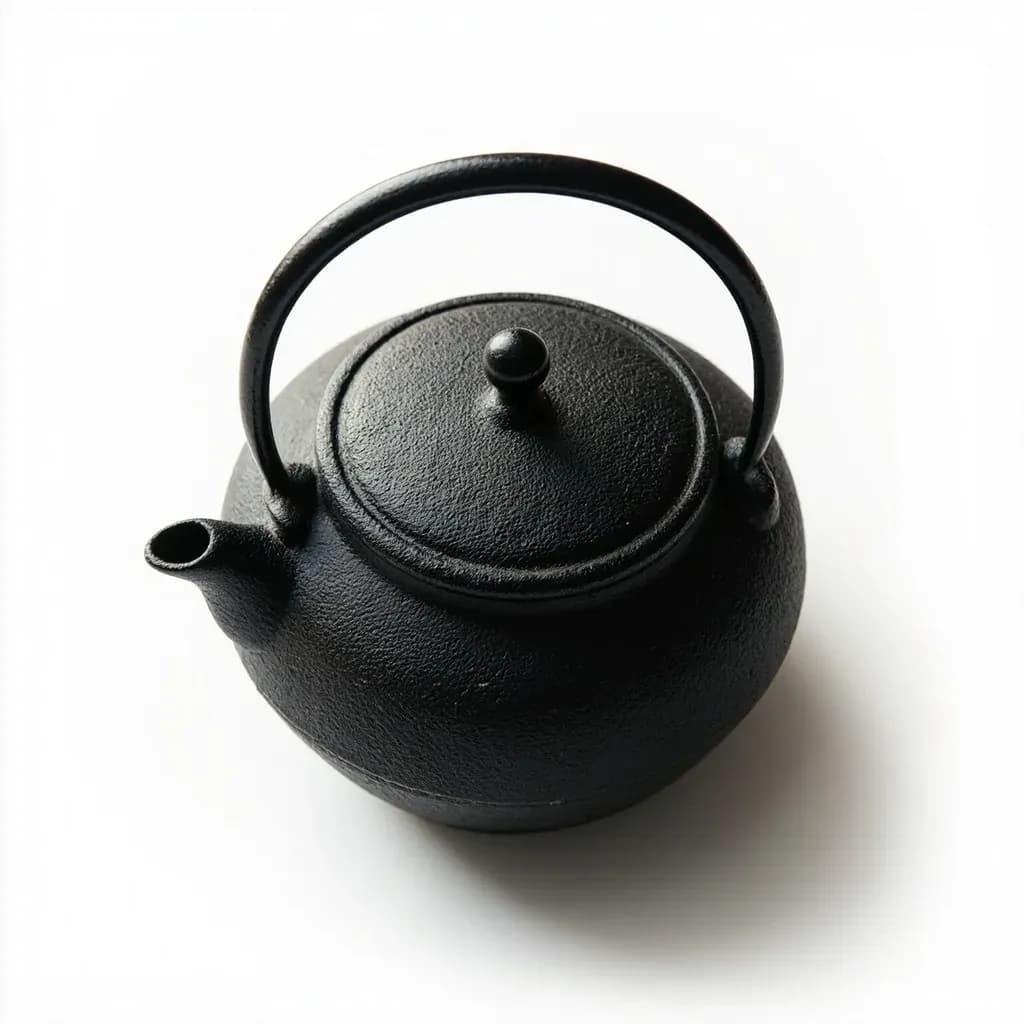
Cast Iron Teapot (Tetsubin)
A heavy enameled or raw cast-iron pot that steeps tea and holds heat for a long pour.
A tetsubin is a Japanese cast-iron teapot used to boil water and steep tea, prized for retaining heat so the brew stays hot through a long session. Enamel-lined versions are used purely for steeping, while raw-iron ones can sit directly on a heat source to boil water. The thick iron walls give slow, even temperature and a distinctive, lasting warmth.
A tetsubin is a small, heavy cast-iron kettle originating in Edo-period Japan, where it sat over a charcoal brazier (hibachi) or sunken hearth (irori) to supply hot water for tea. The casting technique traces back to Chinese ironware brought through trade, but the refined, often ornately textured form is distinctly Japanese — most famously the dark, dimpled kettles of Morioka and Ōshū in Iwate, made under the umbrella of Nanbu Tekki. Cast iron is dense and slow to lose heat, so a tetsubin keeps water near boiling noticeably longer than a thin steel kettle, and the weight of the body gives a controlled, deliberate feel to the pour that tea drinkers come to recognize.
In traditional use the tetsubin was strictly the boiling vessel: water was heated inside it and then poured over leaf in a separate kyūsu (side-handle steeping pot). The raw interior was never meant to hold tea leaves, because tannins react with bare iron — darkening the liquor, staining the pot, and lending a metallic edge. Modern enamel-lined tetsubin collapse those two roles into one and are the model most Western cooks will actually steep tea in, while unlined pieces remain prized for boiling water, for their feel, and for the seasoned patina they develop over years of use.
Alternatives
Types & varieties
The most famous tetsubin tradition, from Morioka and Ōshū in Iwate; heavy, dark, usually with an arare or kikko relief.
Produced around Yamagata City; often lighter and more decorative than Nanbu, frequently inlaid with gold (kin-zōgan) or silver (gin-zōgan).
Uncoated interior in the traditional form; intended for boiling water, not steeping tea directly.
Modern variant with a vitreous enamel interior; safe for direct steeping, far easier to maintain, and the version most Western retailers sell.
Raised 'hailstone' dimples over the body; the most iconic Nanbu surface.
Hexagonal tortoise-shell relief; symbolic of longevity.
High-end Yamagata pieces with floral or arabesque gold or silver inlay set into the iron.
Raw iron vs. enamel-lined: which to choose
The single most important distinction when buying a tetsubin is the interior. A traditional raw-iron kettle is the connoisseur's object: it builds a patina with use, holds heat beautifully, and is reported to soften water slightly and contribute a trace of iron. It is, however, high-maintenance — it cannot be soaped, must be dried on the burner, and will rust if left wet. It is also not where you steep tea.
- Choose raw iron if you want the authentic object, plan to boil water and pour it into a kyūsu, and don't mind the care routine.
- Choose enamel-lined if you want to steep loose-leaf tea directly inside, want dish soap as an option, and want a piece that is safe to leave on a stovetop.
- Enamel linings can crack from thermal shock — never heat an empty enamel tetsubin, and never quench a hot one with cold water.
- Both styles can be induction-compatible in principle, but only if the manufacturer specifically rates the piece for stovetop use; many decorative raw-iron tetsubin are not.
The patina and why you don't scrub it off
The dark, slightly mottled, faintly iridescent surface inside a well-used raw-iron tetsubin is a working seasoning, not dirt. It is built up by repeatedly boiling water in the pot, by the minerals in that water, and by the iron itself oxidizing in controlled ways. The patina is what gives the water its character and what protects the iron from aggressive rust. A pale grey or rust-orange interior means the pot needs attention, not that it needs to be scrubbed back to bare metal.
Tetsubin, kyūsu, yakan: telling the family apart
Japanese tea equipment is full of similarly shaped vessels, and the names get blurred in translation. A tetsubin is a cast-iron kettle with a fixed arched handle (tsuru) that rises from the body to a peak above the lid; the small knob on the lid is decorative, and the kettle is lifted by the handle with one hand while the other supports the body. A kyūsu is a small side-handle steeping pot, usually ceramic or clay, where the leaf actually infuses. A yakan is a general-purpose kettle — often aluminum, copper, or stainless — built to be a workhorse. In a traditional setup the tetsubin boils the water and the kyūsu receives the leaf; in a modern Western kitchen one enamel-lined tetsubin often does both jobs.
Common uses
Tips & pitfalls
- Pre-warm a raw-iron tetsubin with a splash of hot water before filling it; this reduces thermal shock and helps season the interior.
- Never steep tea leaves directly in a raw (uncoated) tetsubin — tannins darken the liquor, blacken the inside of the pot, and add a metallic taste. Pour the water over leaf in a kyūsu or strainer instead, or use an enamel-lined model.
- Empty the pot within a few hours of use; standing water overnight will rust the interior and leave a metallic smell in the next brew.
- After rinsing, dry the inside immediately: leave the lid off on a warm burner for a minute, or wipe with a clean dry cloth. Never store a raw tetsubin wet.
- Skip dish soap and abrasives on raw iron; a soft sponge and hot water are enough. The seasoned interior is part of how the pot performs.
- If rust spots appear inside, scrub them gently with a soft brush or fine abrasive, then re-season by boiling plain water in the pot a few times and discarding it.
- Never heat an empty tetsubin; the heat mass can crack an enamel lining and warp a raw-iron body. If a tetsubin boils dry, pull it off the heat and let it cool naturally — don't add cold water.
- Lift with two hands — one hand on the arched handle (tsuru), the other supporting the body or base. A full liter is heavier than it looks.
- Use filtered or soft water if you can. Hard-water mineral buildup on a raw-iron interior is normal and harmless, but it darkens the water and slowly changes the taste.
Good to know
- Origin
- Japan, Edo period (17th c.); casting technique derived from earlier Chinese ironware traditions
- Material
- Sand-cast cast iron, usually in individual molds
- Typical capacity
- 0.4–1.5 L; most household sizes are 0.6–1.0 L
- Empty weight
- Roughly 1–3 kg depending on size; a full liter runs about 3.5–4 kg
- Heat retention
- Excellent; noticeably longer than ceramic or thin steel kettles
- Interior finish
- Either raw (uncoated) iron or a vitreous enamel lining
- Exterior finish
- Raw iron with a rubbed patina; underside sometimes lacquered; high-end pieces inlaid with gold or silver
- Stovetop use
- Only enamel-lined models or pieces specifically labeled for stovetop use; raw-iron tetsubin are not generally heated on a range
- Cleaning
- Rinse with hot water only; no soap on raw iron; dry immediately over low heat or with a cloth
- Production centers
- Morioka and Ōshū, Iwate (Nanbu Tekki); Yamagata City (Yamagata Tekki)
- Lid interior
- Traditionally left as bare cast iron, even on otherwise finished pieces
Also called
tetsubin · cast-iron tea kettle · iron teapot
Related

Steamer
Gentle moist heat that keeps vegetables, fish, and dumplings tender

Frying Pan
Shallow sloped pan for frying, sautéing, and quick sears

Saucepan
Tall, straight-sided pot for sauces, grains, and small batches

Sauté Pan
Wide straight-sided pan with room to brown and braise

Dutch Oven
Heavy lidded pot that turns tough cuts tender over hours

Stock Pot
Tall, roomy pot for stocks, pasta, and big-batch cooking

Wok
High-sided bowl pan built for blistering-hot stir-fries

Griddle
Flat, broad surface for pancakes, smash burgers, and breakfast