Cookware
Cataplana (Clam-Shell Pan)
A hinged, domed Portuguese copper pan that seals shut to steam seafood in its own juices.
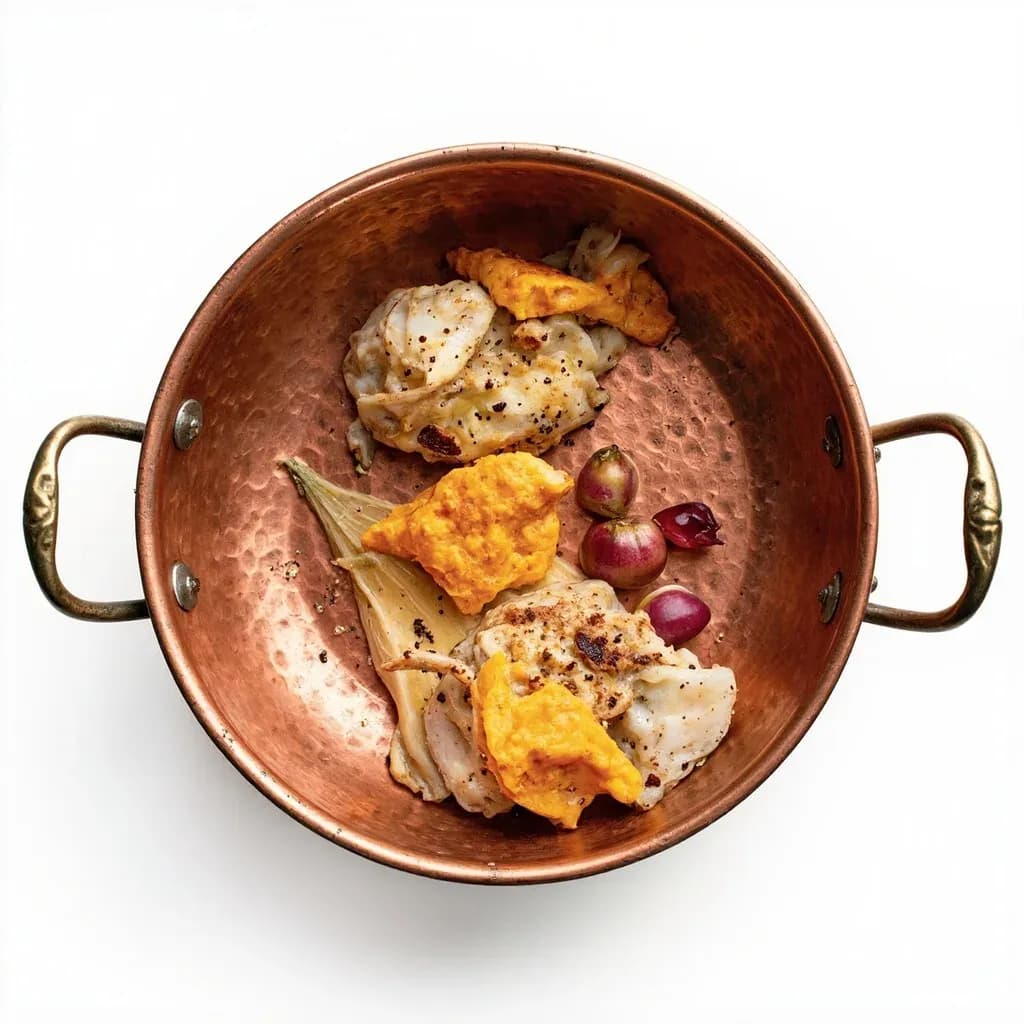
A cataplana is a Portuguese cooking vessel made of two hinged, clamp-sealed domed halves, traditionally hammered copper, that pressure-steams its contents. It is the namesake of dishes like cataplana de marisco, where clams, sausage, and tomatoes cook together and the sealed lid traps every drop of flavor. Opening the dome tableside releases a burst of aromatic steam.
The cataplana is a hinged, two-piece pot from Portugal's Algarve whose two domed halves clamp together to form a sealed cooking chamber. Its silhouette — two shallow bowls joined at the back like a clamshell — is functional, not decorative: the deep interior gives headroom for whole fish, stacked potatoes, and shells that open during cooking, while the tight seal traps every drop of steam so food essentially braises in its own juices. Copper has been the traditional material since the pan's Moorish-influenced origins, prized for the way it responds almost instantly to changes in flame, though modern aluminum and stainless-steel versions are now common.
What the cataplana does best is locked-in, pressurized moist heat. Once the side pins are engaged, the contents cook in a self-basting environment with almost no evaporation, which is why the classic recipes use far less added liquid than an open stew of the same name. The catch is that the seal is the whole point: lift the lid mid-cook and you release the steam that the pan was designed to hold, undoing what makes the tool special. For cooks who treat it as a "set it, time it, open it at the table" vessel, the cataplana produces seafood and braises of remarkable concentration with very little effort.
Alternatives
Types & varieties
Hand-hammered in Algarve workshops; the tin lining protects food from the reactive copper and needs periodic re-tinning when the copper shows through
Modern variant that keeps copper's heat response without the maintenance of a tin lining
Lightweight and affordable, often with a non-stick interior; heats very quickly and can scorch if preheated dry
Most durable, often induction-compatible thanks to a bonded base, but slower to heat and less responsive than copper
0.5–1 L decorative pieces, sometimes engraved; charming for a single-serving seafood dish but not practical for entertaining
5 L and up; the deep dome accommodates whole fish or a generous seafood stew for a crowd
How the sealed environment changes the cooking
An open pot loses steam to the kitchen and concentrates a dish only by reduction. A cataplana reverses the emphasis: the lid never comes off until serving, so the liquid you add stays in the pan and the liquid the food releases also stays in the pan. Aromatics steam, condense on the domed lid, and rain back down. The result is a braise that tastes of itself — shellfish liquor, tomato water, fish exudate — rather than of a stock you poured in. This is why cataplana recipes look almost dry when you assemble them; the contents are supposed to swim in their own juice by the time the clamps come off.
- Use noticeably less added liquid than the equivalent open-pot recipe — the sealed dome returns moisture to the food rather than letting it evaporate
- Cut vegetables (onion, pepper, tomato) in larger pieces than you would for a stir-fry; they soften by steaming, not by simmering in a lot of water
- Layer ingredients with the firmest, slowest-cooking items (potato wedges, monkfish) on the bottom, where direct contact with the hot copper starts the cooking
- Shellfish go in last because they overcook in minutes; the trapped heat of the sealed dome finishes them perfectly even with the flame off
Care, materials, and what to buy
Copper is the soul of the traditional cataplana, but it is also the most demanding material in the kitchen. Tin-lined interiors must be re-tinned by a tinsmith once the copper shows through; stainless-lined copper removes that chore at the cost of slightly slower heat response. Aluminum is the practical everyday choice for most cooks — light, cheap, and forgiving — but it is thin and unforgiving if you crank the burner. Stainless steel is the workhorse option, especially if you cook on induction, though it will never feel as lively as copper. Avoid any "cataplana-style" pot that lacks a true hinged-and-pinned closure: a loose two-part lid lets steam escape and the dish simply becomes an uncovered stew.
- Hand-wash and towel-dry the exterior immediately; water spots etch into polished copper within minutes
- Never preheat an empty cataplana on high — copper can warp and tin or non-stick linings can be damaged
- Use wooden spoons, fish spatulas, or silicone tools; metal utensils scour tin and non-stick coatings
- For induction, confirm the base is magnetic; pure copper and most aluminum cataplanas will not work without a bonded steel plate
Common uses
Tips & pitfalls
- Build the flavor base (oil, onion, garlic, chouriço) with the lid off and the flame on medium, then add liquids and proteins before clamping shut — this prevents raw-onion flavor and gives the aromatics a head start
- Resist opening the cataplana to check progress: every clamp release dumps the steam the cookware exists to capture, and the dish never quite recovers
- Open the pan away from your face at the end of cooking; when the pins are released, a jet of very hot steam escapes forcefully from the seam
- Match pan size to volume — overfilling prevents the two halves from seating and the seal fails, turning the cataplana into a shallow open pan
- Use medium heat rather than high; copper and aluminum conduct so well that a roaring flame scorches the base before the interior has finished steaming
- For tin-lined pans, re-tin when you can see copper showing through; cooking in exposed copper can give acidic dishes (tomato, wine) a metallic taste
- Reduce added wine or stock a touch more than you would in an open pot, because the sealed dome returns moisture to the food instead of letting it cook off
- If cooking for guests, bring the closed cataplana to the table and open it at the table — the hiss of escaping steam is part of the presentation
Good to know
- Origin
- Algarve region of southern Portugal; the hammered-copper form is traced to Moorish-era metalwork traditions
- Traditional material
- Hand-hammered copper, typically lined with tin or stainless steel
- Shape & closure
- Two concave domes joined by a back hinge, locked shut by side pins or a clamp
- Typical sizes
- Roughly 1.5 L, 2 L, 3 L, and 4–5 L for home use; mini (around 0.5–1 L) and party (5 L+) sizes also exist
- Heat source
- Gas and electric work for all versions; induction requires a magnetic base plate on copper or aluminum pans
- Cooking method
- Sealed braising/steaming under self-generated pressure — minimal added liquid, no evaporation
- Signature dish
- Cataplana de marisco — mixed seafood (clams, prawns, monkfish) with onion, garlic, tomato, white wine, and chouriço
- Cleaning
- Hand-wash only; copper exteriors polished with a dedicated cleaner, never dishwasher-safe
Also called
clam-shell pan · Portuguese cataplana
Related

Steamer
Gentle moist heat that keeps vegetables, fish, and dumplings tender

Frying Pan
Shallow sloped pan for frying, sautéing, and quick sears

Saucepan
Tall, straight-sided pot for sauces, grains, and small batches

Sauté Pan
Wide straight-sided pan with room to brown and braise

Dutch Oven
Heavy lidded pot that turns tough cuts tender over hours

Stock Pot
Tall, roomy pot for stocks, pasta, and big-batch cooking

Wok
High-sided bowl pan built for blistering-hot stir-fries

Griddle
Flat, broad surface for pancakes, smash burgers, and breakfast