Cookware
Cedar Fermentation Vat (Kioke)
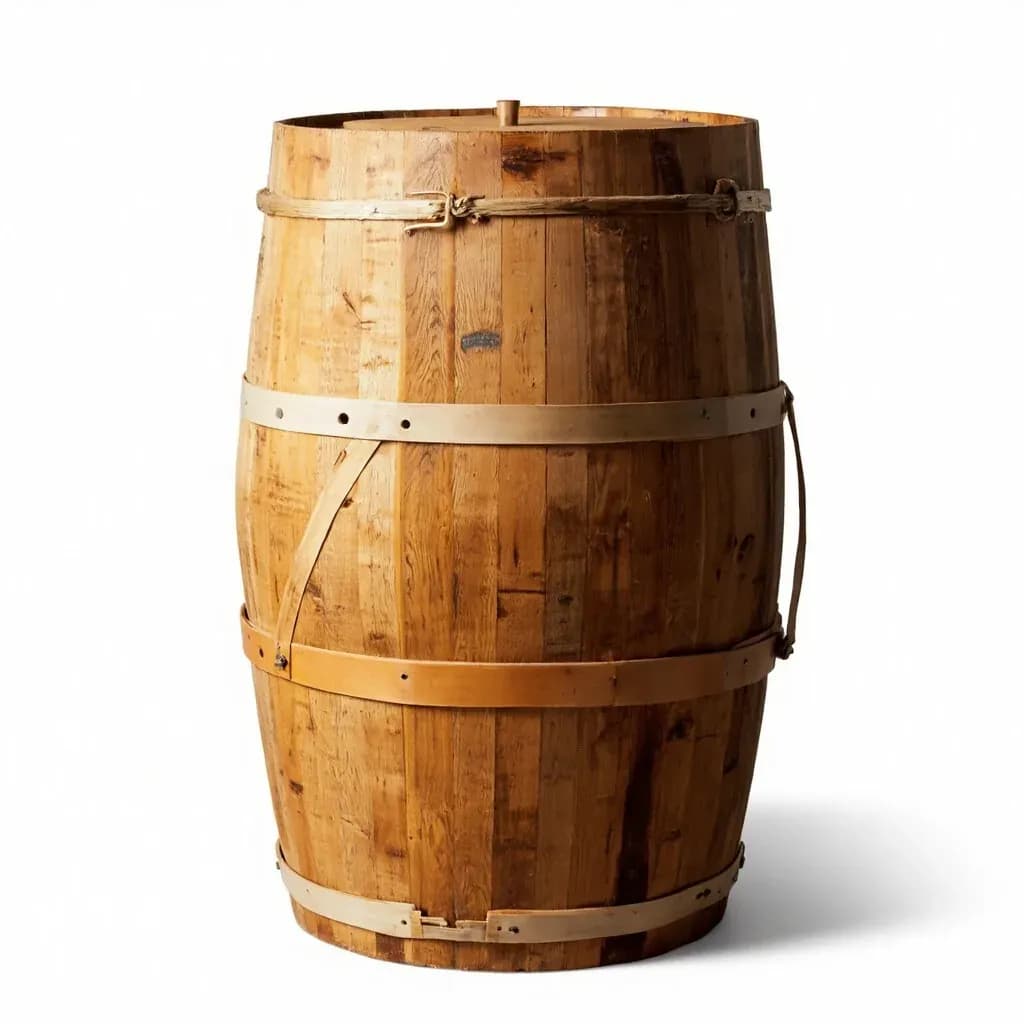
A giant wooden barrel used in Japan to ferment soy sauce, miso and sake over long periods.
A cedar fermentation vat, or kioke, is a large wooden barrel bound with bamboo hoops, traditionally used in Japan to ferment soy sauce, miso, sake and vinegar. The wood houses a stable community of microbes that builds up over decades of use and shapes the finished flavor. These barrels can be many feet tall and are now rare and prized by artisanal makers.
A kioke is the heart of traditional Japanese fermenting: a coopered vat of Japanese cedar (sugi, Cryptomeria japonica) in which soy sauce, miso, sake, mirin, and rice vinegar spend months to years developing flavor. Unlike a passive container, a mature kioke is a working ecosystem — its inner walls are colonized by lactobacilli, wild yeasts, and other microbes that quietly shape every batch. Brewers speak of their kioke's house flora the way cheesemakers speak of their caves; the vessel itself is considered part of the recipe.
What makes cedar the right wood is a combination of practical and sensory factors. Sugi is naturally rot-resistant thanks to antimicrobial compounds in the heartwood, and its tight, straight grain lets a cooper split staves along the fiber rather than sawing them, producing staves that resist splitting under repeated wet/dry cycles. The wood is mildly aromatic, contributing a faint resinous, cedary note that reads as part of the finished product rather than as a flavoring. Equally important, the wood allows a slow, controlled exchange of oxygen through the staves — enough micro-oxygenation to feed aerobic reactions in a shoyu moromi or sake mash, far less than an open tank.
The craft is vanishingly rare. Only a handful of kioke-shi (vat coopers) remain in Japan, and they work primarily for a few traditional shoyu makers in Hokkaido and Shizuoka and a small number of premium sake breweries. Stainless-steel and fiberglass tanks have largely replaced kioke for reasons of cost, sanitation, and shipping weight, but the producers who have stayed with wood argue — convincingly — that their fermentations simply do not taste the same.
Alternatives
Types & varieties
Mid-sized vats, roughly 200–1,000 L, used for 1–3+ year koji-and-moromi fermentations of soy sauce
Wide, relatively short vats (often 100–500 L) shaped to allow tamping and mixing of heavy miso paste
Large vats of 1,000 L up to many thousands, used for the main moromi fermentation of premium sake
Smaller vats used by a few traditional mirin and rice-vinegar producers
Small portable cedar casks used to age or finish shoyu or sake for service; not large enough to ferment in and not interchangeable with kioke
The living vat: how wood shapes the ferment
A new kioke is essentially a blank canvas. Within the first few fermentations its inner surface colonizes with microbes from the koji, the raw ingredients, the ambient air, and the producer's hands — and once established, that community is remarkably stable. Lactobacilli drive the lactic acidification of shoyu moromi and miso; wild yeasts contribute esters and floral notes to sake; together they crowd out spoilage organisms and keep the vat's ecology healthy. Brewers describe a mature kioke as having a 'memory' — it carries residues of every batch it has held, and each new batch inherits that history.
Cedar contributes more than microbes. Sugi heartwood contains volatile terpenes and phenolic compounds that exert a mild antimicrobial effect, contributing to the selective ecology of the vat alongside the established biofilm. The wood is also slightly porous: oxygen migrates inward and outward through the staves at a rate that depends on grain density, stave thickness, and how long the kioke has been in use. This micro-oxygenation is thought to support aerobic reactions in shoyu aging and to soften the reductive character of sake moromi.
Caring for a kioke
A kioke is closer to a sourdough starter or a wheel of aging cheese than to a stockpot: neglect it and it dies; over-clean it and you destroy the very thing that makes it work.
- Between batches, keep the vat filled with shiomizu (saltwater) solution at roughly shoyu-moromi strength (about 18–20% salt), topped up monthly, and covered with a lid or weighted cloth.
- Never use soap, bleach, or scrubbers inside. Rinse with shiomizu and let the resident flora do the cleaning.
- Store in a cool, shaded cellar — direct sun dries the wood and cooks the microflora. 15–25 °C (59–77 °F) suits shoyu and miso; sake moromi wants tighter control, typically 10–20 °C depending on style.
- Inspect hoops seasonally. Bamboo hoops stretch and may need re-tensioning; steel bands should be checked for rust at the joints.
- If a leak develops, do not caulk from the inside with anything that will contact the moromi. Call a kioke-shi; this is a stave-fitting problem, not a sealing problem.
Sourcing and buying
New artisan kioke are made to order by a kioke-shi and typically run from several thousand to tens of thousands of USD depending on size. Lead times are long, often months, because the maker may also be running a small repair and maintenance practice for existing breweries. Used kioke occasionally come up for sale, but shipping is expensive and risky: the vat must travel filled with saltwater or kept wet by other means, and a kioke carrying another maker's house flora will impose its flavor on your ferment for years. For most cooks the practical takeaway is that kioke are acquired only when a serious fermentation project justifies them.
- For shoyu, plan on a 200–1,000 L kioke; for miso, 100–500 L; for sake, 1,000 L and up.
- Ask the kioke-shi whether the staves were split-riven or sawn; riven staves are stronger and more resistant to splitting.
- Confirm whether the vat has been pre-seasoned (some makers offer this as a service) or whether you are responsible for the first few saltwater rinses.
- Budget for a fitted wooden lid and weighted pressing board; these are part of the working kit, not accessories.
Common uses
Tips & pitfalls
- Never let a kioke dry out. Dry staves shrink, joints leak, and a cracked vat may be unrepairable — this is the single most common way kioke are lost.
- Season a brand-new kioke with several rounds of saltwater before a real ferment; the first batch almost always tastes harshly woody and is best discarded or downgraded to cooking shoyu.
- Expect a long startup. A new kioke takes months of regular use before its microbial biofilm is mature enough to behave like an established one.
- Keep moromi fully submerged under a weighted cloth or fitted wood cap to limit surface oxygen and keep spoilage yeasts from colonizing the top layer.
- Treat temperature more carefully than you would with stainless. Cedar insulates, so a kioke in a warm room runs hot; a cool cellar (15–25 °C / 59–77 °F) is ideal for shoyu and miso, and sake moromi is even more sensitive.
- Avoid strong detergents or scrubbing the interior — you will strip the resident microflora and effectively reset the vat to 'new,' with months of recovery ahead.
- Use an experienced kioke-shi for repairs; Western-style coopers usually do not understand Japanese stave geometry and hoop tension, and a poorly re-hooped vat will leak or split.
- Buy used with eyes open. A kioke carrying another maker's house flora will impose that flavor on your ferments for years — sometimes a gift, sometimes a problem.
- Do not confuse kioke with taru. Taru are small portable cedar casks used for shipping, aging, or table service of shoyu or sake; they are far too small to ferment in and are built differently.
Good to know
- Japanese name
- Kioke (木桶), literally "wooden tub"
- Material
- Japanese cedar (sugi, Cryptomeria japonica), typically heartwood; staves traditionally split (riven) along the grain, not sawn
- Construction
- Coopered staves bound by bamboo hoops (historically) or stainless-steel bands; no interior lacquer, sealant, or lining
- Capacity range
- Roughly 100–1,000 L for shoyu, 100–500 L for miso, and 1,000–10,000+ L for sake; historical sake kioke have held tens of thousands of liters
- Microbial role
- Inner stave surfaces become a living biofilm of lactobacilli, yeasts, and related microbes that persist for decades
- Lifespan
- Decades with proper care; documented shoyu kioke in continuous use for 50–100+ years
- Critical care
- Must be kept damp when empty; allowed to dry, the staves shrink, the joints leak, and the vat can crack beyond repair
- Cooperage status
- Only a handful of kioke-shi remain in Japan; the craft is recognized as endangered intangible knowledge
Also called
Kioke · Wooden Fermentation Barrel
Related

Steamer
Gentle moist heat that keeps vegetables, fish, and dumplings tender

Frying Pan
Shallow sloped pan for frying, sautéing, and quick sears

Saucepan
Tall, straight-sided pot for sauces, grains, and small batches

Sauté Pan
Wide straight-sided pan with room to brown and braise

Dutch Oven
Heavy lidded pot that turns tough cuts tender over hours

Stock Pot
Tall, roomy pot for stocks, pasta, and big-batch cooking

Wok
High-sided bowl pan built for blistering-hot stir-fries

Griddle
Flat, broad surface for pancakes, smash burgers, and breakfast