Cookware
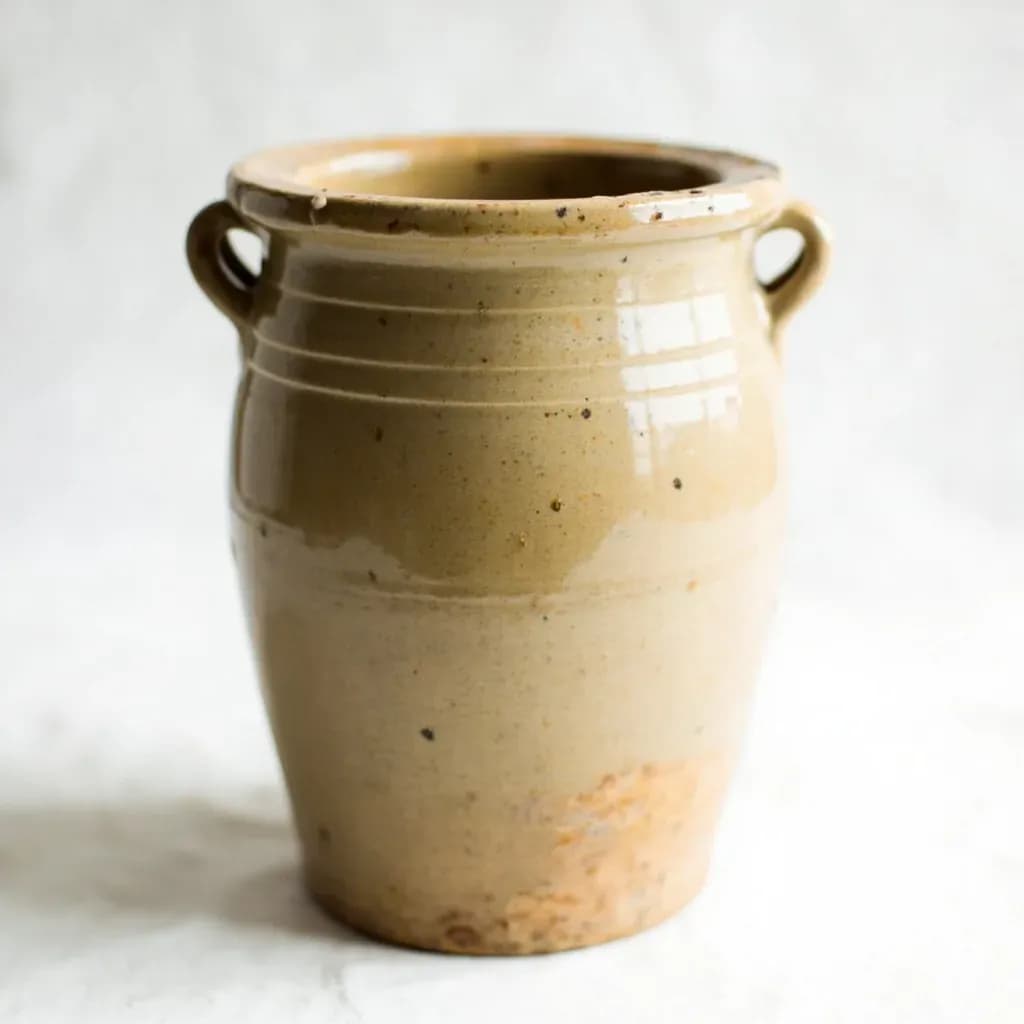
Ceramic Fermentation Crock
A glazed stoneware crock with a water-seal moat for fermenting kraut, kimchi and pickles.
A ceramic fermentation crock is a heavy glazed stoneware vessel made for fermenting vegetables such as sauerkraut, kimchi and pickles. Many feature a water-filled channel around the rim that seals the lid, letting fermentation gases escape while keeping out air and contaminants. Weight stones hold the vegetables under the brine so they ferment cleanly without molding.
A ceramic fermentation crock is the most reliable vessel a home cook can buy for lacto-fermenting vegetables. It is a heavy, glazed stoneware pot built around a single clever feature: a channel molded into the rim that you fill with water. The recessed lid sits inside this channel, so any gas leaving or entering the crock has to bubble through the water. Carbon dioxide from active fermentation escapes freely, but oxygen, dust, and stray microbes cannot get in. The result is a near-perfect anaerobic environment for the lactic acid bacteria that turn cabbage into sauerkraut and cucumbers into half-sours, with almost no daily intervention.
What separates a proper fermentation crock from an ordinary ceramic bowl is that water seal plus the matched stone weights that ship with it. The weights nest on top of the packed vegetables and hold them under the brine — exposure to air is the single biggest cause of surface yeast and mold, and the weights solve it mechanically. Modern crocks from German and American potteries are glazed inside and out with food-safe, lead-free finishes rated for acidic, salty brines, so a well-made crock will outlast decades of kraut seasons if it is cared for properly.
In practice, a water-seal crock replaces the old cloth-and-plate cover with something close to a true airlock, but without the fuss of rubber stoppers and tubing. It is not strictly necessary for a successful ferment — any clean vessel with a loose cover works — but it removes most of the variables that trip up beginners and lets you leave a ferment alone for a week without worry.
Alternatives
Types & varieties
The benchmark design: glazed stoneware with a deep water channel and recessed lid, usually shipped with two half-moon stone weights. Made in Germany and widely considered the reference standard.
Produced by potteries such as Ohio Stoneware, Missouri Stoneware, and other regional makers. Same water-seal form, often marketed for sauerkraut and kimchi, with lead-free glazes.
Older, plainer stoneware crocks without a water seal, relying on a weighted plate or cloth cover. The direct ancestor of the modern water-seal design.
Unglazed, porous earthenware jars used for kimchi, doenjang, and ganjang. Functionally different — they allow controlled micro-oxygen exchange — but a parallel fermentation-vessel tradition. Not a water-seal crock.
Compact versions for a single jar of kraut, half-sour pickles, or an ongoing kitchen ferment. Often sold as starter or beginner crocks.
An occasional modern variant with a tap at the base for drawing off finished brine or kraut juice without disturbing the ferment or breaking the seal.
How the water seal actually works
The physics are simple but elegant. As lactic acid bacteria consume sugars, they release carbon dioxide, which builds up in the headspace and pushes its way out through the water in the moat. The water in the channel is a one-way valve for that gas: bubbles rise through it on the way out, but the water physically blocks oxygen, fruit flies, and airborne molds from drifting in. The seal is not airtight — and it should not be, because a fully airtight vessel would risk building up enough CO2 pressure to crack the stoneware. Even a shallow layer of water in the channel is enough to keep contaminants out without trapping dangerous pressure.
The stone weights do the rest. Packing vegetables tightly and weighting them keeps the food under the brine, so only lactic acid bacteria — which thrive in salty, anaerobic conditions — do the work. Anything that floats above the brine surface invites yeasts and molds, which is why crocks come with weights rather than expecting you to improvise with a plate and a jar of water.
- The seal is anaerobic, not airtight — CO2 vents, oxygen does not enter.
- Check the moat every day or two and top it up with clean water; evaporation is the most common way the seal fails.
- A very active ferment can push brine up into the moat; place the crock on a tray or sheet pan to catch overflow.
- If the moat bubbles vigorously or the water turns cloudy, skim and replace it and move the crock to a slightly cooler spot.
Choosing the right size
Pick a crock that matches how often you actually ferment. A 1–2 L crock is right for someone making a single jar of sauerkraut a month or running a small ongoing ferment of carrots or kimchi on the counter. A 3–5 L crock is the sweet spot for most home cooks — large enough to pack down a head of cabbage with room left for the weights, small enough to fit in a cool closet or pantry. Anything in the 8–15 L range is a batch-cooking workhorse, the kind of size you want for a fall sauerkraut day with several heads of cabbage, but it is heavy, needs counter space, and a partially filled large crock ferments unpredictably because there is too much headspace.
- Buy the size you will fill at least two-thirds full; underfilled large crocks ferment slowly and spoil more easily.
- A 5 L crock holds roughly 2–2.5 kg (4.5–5.5 lb) of packed vegetables — about one large head of cabbage.
- Smaller is easier to manage for beginners: faster ferment, less brine, easier to lift and clean.
- If you ferment beets, turmeric kraut, or other strongly pigmented foods, dedicate a crock to them or accept that the light glaze will stain permanently.
Care and longevity
A good ceramic crock should outlast you, but only if you treat the glaze with respect. The stoneware is forgiving, but the glaze is not — abrasive scrubbers, bleach, and the dishwasher will eventually dull it and create microscopic scratches that harbor bacteria. Between batches, hot water and a soft brush are enough. Many experienced fermenters skip dish soap entirely; a thorough rinse and a few hours of air-drying in the sun handles residual odors.
- Always store the crock dry with the lid off, never sealed in the moat for weeks at a time — the glaze can stick to itself.
- Use only wood, plastic, or ceramic utensils to remove ferments; metal spoons can chip glaze over years of use.
- Older or imported crocks, especially those with bright interior colors, should be checked for lead before use.
- A persistent smell after washing usually means the crock needs a longer sun-dry or a soak with baking soda, not stronger soap.
Common uses
Tips & pitfalls
- Keep the water moat filled at all times during fermentation; check it every day or two and top up with clean water so the seal does not break from evaporation.
- Pack vegetables tightly and weigh them down so they stay fully submerged under the brine — exposed surface is the single most common cause of surface yeast and mold.
- Salt by weight rather than volume — typically 2–2.5% of vegetable weight — for predictable, safe ferments that finish on schedule.
- Use a cool, even room temperature around 18–20 °C; avoid direct sunlight, radiators, and temperature swings of more than a few degrees.
- Resist opening the lid to peek; every opening lets oxygen in. The whole point of the water seal is that you do not have to burp the crock.
- If bubbles stop rising well before the ferment tastes tangy enough, top up the brine and move the crock to a slightly warmer spot to restart bacterial activity.
- Never store the crock long-term with the lid seated in the moat — the glaze can seal itself to the rim. Store dry with the lid off.
- Always use non-metallic utensils (wood, plastic, ceramic) when removing ferments to protect the glaze and avoid metallic off-flavors in the brine.
Good to know
- Material
- Glazed stoneware with lead-free, food-safe glaze (modern production)
- Defining feature
- A water-filled channel (moat) around the rim that holds the recessed lid and creates an anaerobic seal
- Typical capacities
- 1 L to 10–15 L; 2 L, 3 L, 5 L, and 8 L are the most common sizes
- Origin
- Water-seal crocks are rooted in German and Central/Eastern European pickling traditions; simple clay fermentation vessels are ancient and nearly universal
- Primary use
- Lacto-fermentation of vegetables under anaerobic conditions
- Ideal temperature
- 18–22 °C (65–72 °F); cooler slows fermentation, warmer accelerates it and raises spoilage risk
- Fermentation time
- Typically 3–14 days for vegetables, depending on temperature, salt level, and desired tang
- Care
- Hand wash only, air dry thoroughly with the lid off; no dishwasher, no abrasive scrubbers, no bleach
- Not for
- Vinegar-based quick pickling (the crock is unnecessary) or alcoholic fermentation without a proper airlock
Also called
Fermentation Crock · Water-Seal Crock · Gärtopf
Related

Steamer
Gentle moist heat that keeps vegetables, fish, and dumplings tender

Frying Pan
Shallow sloped pan for frying, sautéing, and quick sears

Saucepan
Tall, straight-sided pot for sauces, grains, and small batches

Sauté Pan
Wide straight-sided pan with room to brown and braise

Dutch Oven
Heavy lidded pot that turns tough cuts tender over hours

Stock Pot
Tall, roomy pot for stocks, pasta, and big-batch cooking

Wok
High-sided bowl pan built for blistering-hot stir-fries

Griddle
Flat, broad surface for pancakes, smash burgers, and breakfast