Baking & Pastry
Chebka Honeycomb Pastry Mold
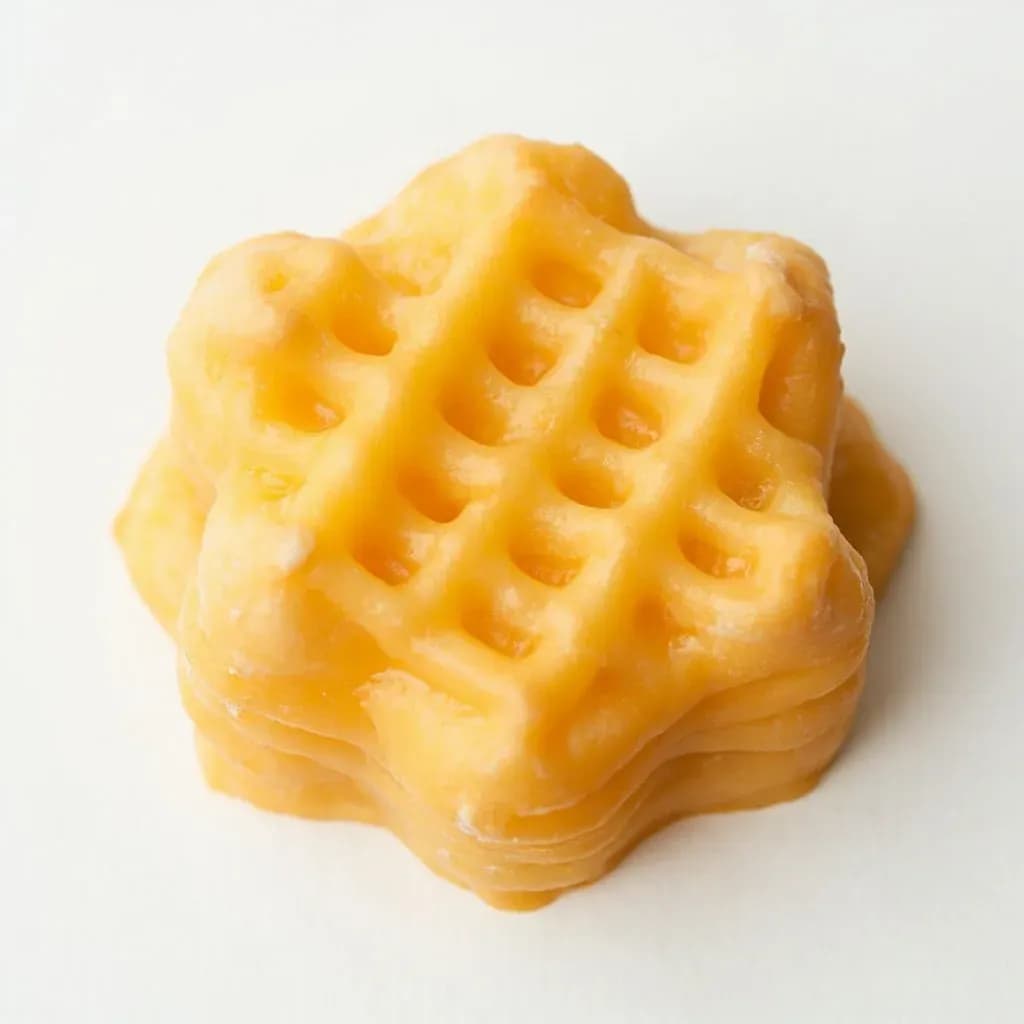
A shaping tool that crimps and folds dough into the lattice rosette for North African chebakia.
A chebka mold is a small tool, often a pronged stamp or grooved board, used to fold and pinch strips of sesame dough into the interlaced flower-like shape of chebakia, the honey-soaked Moroccan and Algerian pastry. After shaping, the pieces are fried until crisp and then dipped in warm honey and sesame seeds. Skilled bakers shape them by hand, but the mold gives a uniform lattice.
The chebka mold is a specialized shaping tool used to form the iconic Moroccan pastry chebakia (also written shebakia, chebbakia, or kebbakia). It is typically a hinged, hand-carved block of hardwood — traditionally thuya, cedar, or olive wood — with a deeply cut negative impression of a five-petal rosette whose center is a fine crimped lattice. The Arabic name "chebka" (شبكة) means "net" or "lattice," and the pattern the mold presses into the dough is both decorative and functional: the open mesh gives hot frying oil and warm honey a path into the interior of the pastry, which is why a properly molded chebakia is at once crisp on the outside and saturated through with honey within.
To use it, a thin sesame-seed dough — often scented with mahleb, anise, cinnamon, and orange-blossom water — is rolled out and cut into narrow strips, which are laid across the open mold. The mold is closed so its edges meet to slice the petals and crimp the center in a single press; the rosette is then lifted off and fried. This synchronized cut-and-crimp is essentially impossible to reproduce by hand, which is why the mold is treated by Moroccan bakers as a non-negotiable piece of equipment rather than an optional nicety. The pastry it produces is tightly bound to Ramadan, when chebakia is one of the most recognizable sweets on the iftar table from Fez to Marrakech, and the tool is what allows bakeries and home cooks to turn out the dozens or hundreds of identical rosettes the holiday demands.
Alternatives
Types & varieties
The traditional Moroccan form, usually a hinged thuya or olive-wood block with a hand-cut five-petal rosette; prized for the sharpness and depth of its imprint.
Brass, aluminum, or stainless-steel press used in larger bakeries; more durable and easier to sanitize, but heavier and the pattern can be slightly less crisp than hand-carved wood.
Small home molds press one rosette at a time; industrial or production versions may carry several cavities in a row to speed up a Ramadan-sized batch.
Different Moroccan cities (Fez, Marrakech, and others) are associated with subtle differences in petal count, crimp density, and rosette proportions, though the five-petal rosette is the most widely recognized form.
Why the lattice pattern matters
The openwork center is not purely decorative. Chebakia is finished by a long soak in warm honey scented with orange-blossom water, anise, and sometimes saffron, and the crimped mesh acts as a set of channels that draw the syrup into the body of the pastry. The same channels also let hot oil escape cleanly during frying, so a well-molded rosette puffs evenly and crisps at the edges while staying tender at the center. A hand-cut approximation, no matter how careful, cannot reproduce this combination of crisp edge and honey-saturated interior — which is why Moroccan bakers treat the mold as essential equipment rather than a nicety.
Wooden vs. metal molds in practice
Wooden molds give the sharpest impression and the lightest weight in the hand, which matters when you are pressing a hundred rosettes in a sitting. They do, however, demand care: they should never be soaked, only wiped, and chilling them briefly between batches helps if the dough softens from the warmth of your hands. Cast metal molds are heavier, but they sanitize more easily and are a sensible choice for cooks outside Morocco or for very large batches. The trade-off is that the cast pattern tends to be a little softer than hand-carved wood, so you may need to press a fraction more firmly to get the same crispness of crimp.
Common uses
Tips & pitfalls
- Brush or dust the mold lightly with neutral oil or flour before each press so the dough releases cleanly and the lattice stays sharp.
- Roll the dough thin — about 2–3 mm — and cut strips the width of the mold; thicker dough refuses to crimp cleanly and puffs unevenly in the oil.
- Press firmly and evenly across the whole mold; weak pressure gives blurred petals that open up and lose their shape during frying.
- Let the crimped dough sit on the mold for a few seconds before lifting; this lets the cuts set so the piece transfers intact.
- Common mistake: over-flouring the mold — it leaves pale streaks on the fried pastry and dulls the crisp lattice pattern.
- Common mistake: lifting the piece too quickly with a fingernail or the tip of a knife — use a thin skewer or the back of a knife, sliding it flat under the whole rosette.
- If the dough starts sticking during a long session, chill the mold briefly between batches; warmth from the dough softens the fat and causes tearing.
- Wipe wooden molds with a dry or barely damp cloth only — never soak, as the wood swells and the fine carved pattern is lost. Wipe metal molds with a paper towel between presses and dry steel versions immediately to prevent rust.
Good to know
- Origin
- Morocco; the tool belongs to the country's chebakia tradition, with regional styles associated with cities including Fez and Marrakech.
- Traditional material
- Hand-carved hardwood, typically thuya (the most prized), cedar, or olive wood.
- Modern alternatives
- Cast brass, aluminum, or stainless-steel press molds, used by larger bakeries and by cooks outside North Africa.
- Pattern produced
- A five-petal rosette with a crimped lattice center; "chebka" (شبكة) means "net" or "lattice."
- Construction
- Most commonly a hinged two-piece block; some production versions are a single press plate with a deep negative, or a multi-cavity strip.
- Approximate finished size
- Rosettes are typically 7–10 cm (3–4 in) across; mold dimensions are not standardized and vary by maker.
- Cultural context
- Strongly associated with Ramadan in Morocco, where it is one of the most iconic iftar sweets.
- How it works
- Thin strips of dough are laid across the open mold; closing the mold cuts the petals and crimps the lattice in one motion, and the shaped piece is lifted off for frying.
Also called
Chebakia Mold · Honeycomb Pastry Stamp
Related

Muffin Pan
Multi-cup pan for muffins, cupcakes, and egg bites

Bundt Pan
Fluted ring mold for showstopping cakes with a center hole

Springform Pan
Latch-release pan that frees delicate cakes without flipping

Pie Dish
Sloped round dish for crisp-bottomed pies and quiches

Tart Pan
Fluted pan with a pop-out base for clean-edged tarts

Rolling Pin
Rolls dough into even sheets for pastry and bread

Pastry Brush
Brushes on egg wash, glaze, butter, and marinades

Bench Scraper
Flat blade that divides dough and clears your work surface