Cookware
Cheena Chatti (Curved Frying Pan)
A deep, rounded South Indian frying pan used for deep-frying and sautéing.
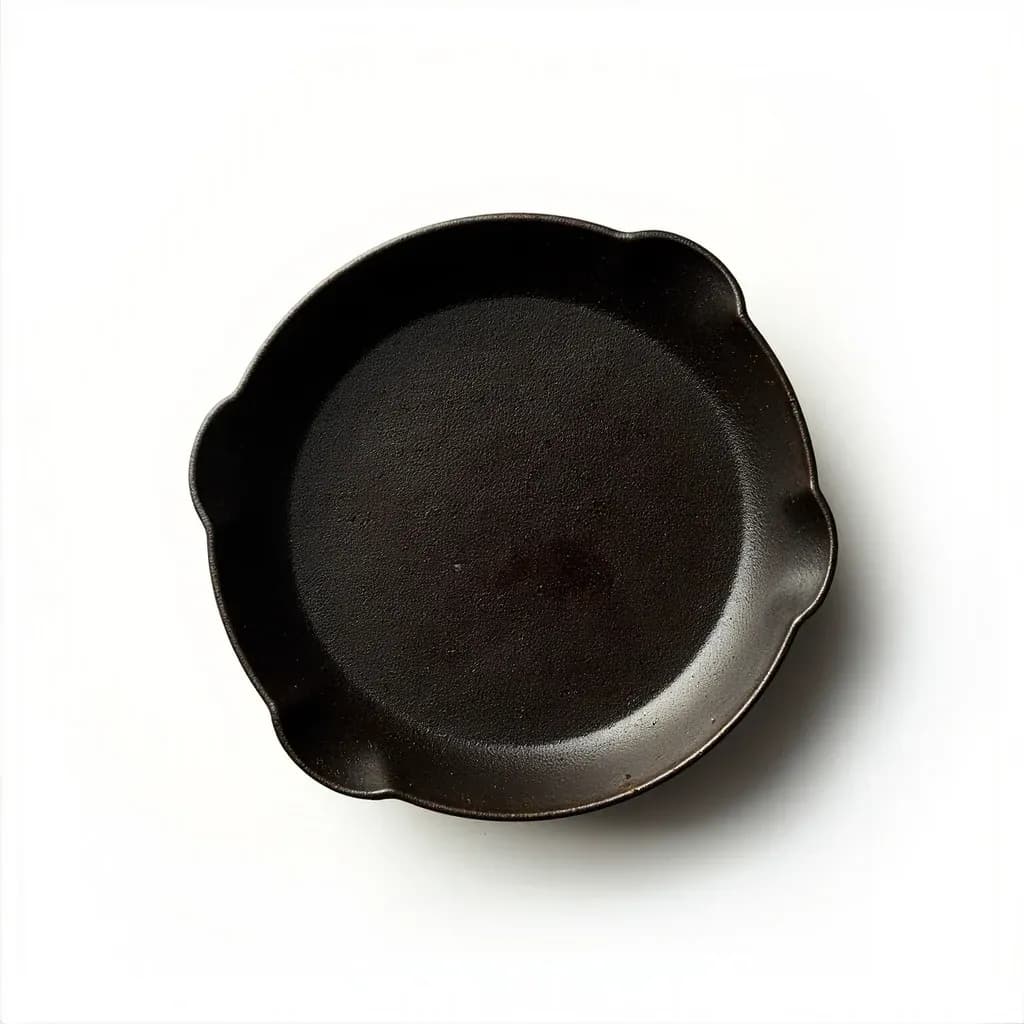
A cheena chatti is a deep, curved frying pan from Kerala, similar to a small wok, used for deep-frying snacks, sautéing, and stir-frying. Its rounded bottom pools oil in the center, making it efficient for frying with less oil and for tossing vegetables and curries. Traditionally made of iron or brass, it heats fast and is a everyday vessel in South Indian kitchens.
A cheena chatti is the deep, steeply rounded pan you'll find in most Kerala kitchens, traditionally tinned cast iron with a finish that gives the pan its name. Where a standard kadai tapers gently and a wok has a long sloping shoulder, the cheena chatti is shaped more like a deep bowl: steeply curved walls rise from a flat or slightly rounded base, holding a modest pool of oil at the bottom for deep-frying while giving you the depth to turn and scoop thin, fragile foods like banana chips (kaya varuthathu), jackfruit chips, and small whole fish without splashing or breaking them.
The pan earned its place in South Indian cooking because the dishes it handles best — thin vegetable chips, small fish, coconut-rich masalas — all benefit from a vessel that holds heat, holds oil, and lets you work in volume. A cast iron or tinned cheena chatti retains temperature remarkably well, so when you drop a batch of marinated fish into hot oil the temperature barely dips and the food sears rather than steams. The same heat mass makes it a workhorse for sautéing coconut-based preparations like aviyal or thoran, where curry leaves and mustard seeds need consistent contact with a hot surface.
The 'cheena' in the name comes from the Malayalam and Tamil words for tin or for a china/enamelware finish, hinting at the pan's older identity as a tin-coated iron vessel — and that history still shapes how cooks season and care for modern stainless and hard-anodized versions. One regional caveat: sellers use 'cheena chatti' loosely, sometimes for tinned iron, sometimes for enamelware, sometimes for plain stainless steel, so confirm the material before you buy.
Alternatives
Types & varieties
Traditional heavy version with excellent heat retention; requires seasoning like any cast iron and reacts with acidic foods if not well seasoned.
Iron pan coated with tin to prevent rusting and reduce reactivity; once the standard in older Kerala kitchens, now harder to find new.
Iron or steel with porcelain enamel coating; non-reactive and easy to clean, but cannot be re-seasoned and chips if knocked.
Modern lightweight version; induction-compatible when the base is flat; food sticks more without ample oil.
Non-reactive, durable surface sold by Indian cookware brands like Hawkins, Prestige, and Tirupati; a practical everyday choice.
How the Curved Geometry Shapes Your Cooking
The cheena chatti's profile isn't a stylistic quirk — it changes how the pan behaves compared to a flat-bottomed kadai or a sloping wok. Understanding the geometry helps you choose the right size and technique.
- The contained, rounded base keeps oil pooled centrally and at useful depth, so a cheena chatti can deep-fry with less oil than a wide, flat-bottomed kadai would require.
- Steep walls contain splatter when frying wet batters or moist, freshly washed fish, keeping the stovetop cleaner.
- When you toss, food slides back toward the center of the pan rather than skating toward a flat edge, so chips and small fish rarely escape the oil.
- The deep, smooth interior lets you scoop with a slotted ladle in one clean arc — useful for lifting large batches of chips out at once.
- Cast iron and tinned versions hold heat through long frying sessions, so successive batches don't drop the oil temperature the way thin steel would.
Common uses
Tips & pitfalls
- Season a new cast iron or freshly retinned cheena chatti with a thin coat of oil over low heat before first use — this builds the patina that prevents sticking and rust.
- Never use metal scrubbers or steel wool on enamel-coated or tinned cheena chattis; they strip the coating and expose the reactive metal underneath.
- Reach for a wooden ladle or a slotted steel spoon, not a sharp-edged metal spatula, to preserve tinned or enamel surfaces.
- Cook on medium flame: the deep shape holds oil and heat, and a high flame can scorch the oil and damage tinned or enamel coatings fast.
- Dry the pan thoroughly on the stove over low heat after washing — tinned and iron versions rust quickly in humid Kerala conditions if stored damp.
- Don't pour cold oil or add cold ingredients into a screaming-hot cheena chatti; thermal shock can crack enamel versions outright.
- Keep salt-heavy brines and acidic ingredients like tamarind, tomato, or lime juice away from tinned iron — they strip the tin over time; switch to steel or enamel for those dishes.
- If the tin on an older cheena chatti wears through and the iron beneath shows gray or rust spots, have it retinned by a local tinsmith rather than retiring the pan.
Good to know
- Origin
- Kerala and broader South India, especially Tamil Nadu and Kerala kitchens
- Also called
- Cheena chatti, cheenachatti, or tin chatti; sometimes 'enamel kadai' in other regions
- Shape
- Deep, rounded bowl with steeply curved walls and a flat or slightly rounded base; resembles a deep wok but with more vertical sides
- Traditional material
- Cast iron, often tinned (coated with a thin layer of tin) to prevent rust and reduce reactivity
- Modern materials
- Stainless steel, hard-anodized aluminum, and porcelain enamelware versions are widely sold
- Etymology
- 'Cheena' refers to tin or an enamel/chinaware finish in Malayalam and Tamil; 'chatti' means pot or pan
- Typical diameter
- 8 to 14 inches for home use; commercial units run larger
- Typical depth
- 4 to 6 inches — noticeably deeper than a standard kadai
Also called
cheenachatti · Kerala frying pan
Related

Steamer
Gentle moist heat that keeps vegetables, fish, and dumplings tender

Frying Pan
Shallow sloped pan for frying, sautéing, and quick sears

Saucepan
Tall, straight-sided pot for sauces, grains, and small batches

Sauté Pan
Wide straight-sided pan with room to brown and braise

Dutch Oven
Heavy lidded pot that turns tough cuts tender over hours

Stock Pot
Tall, roomy pot for stocks, pasta, and big-batch cooking

Wok
High-sided bowl pan built for blistering-hot stir-fries

Griddle
Flat, broad surface for pancakes, smash burgers, and breakfast