Knives & Cutting
Cheese Wire
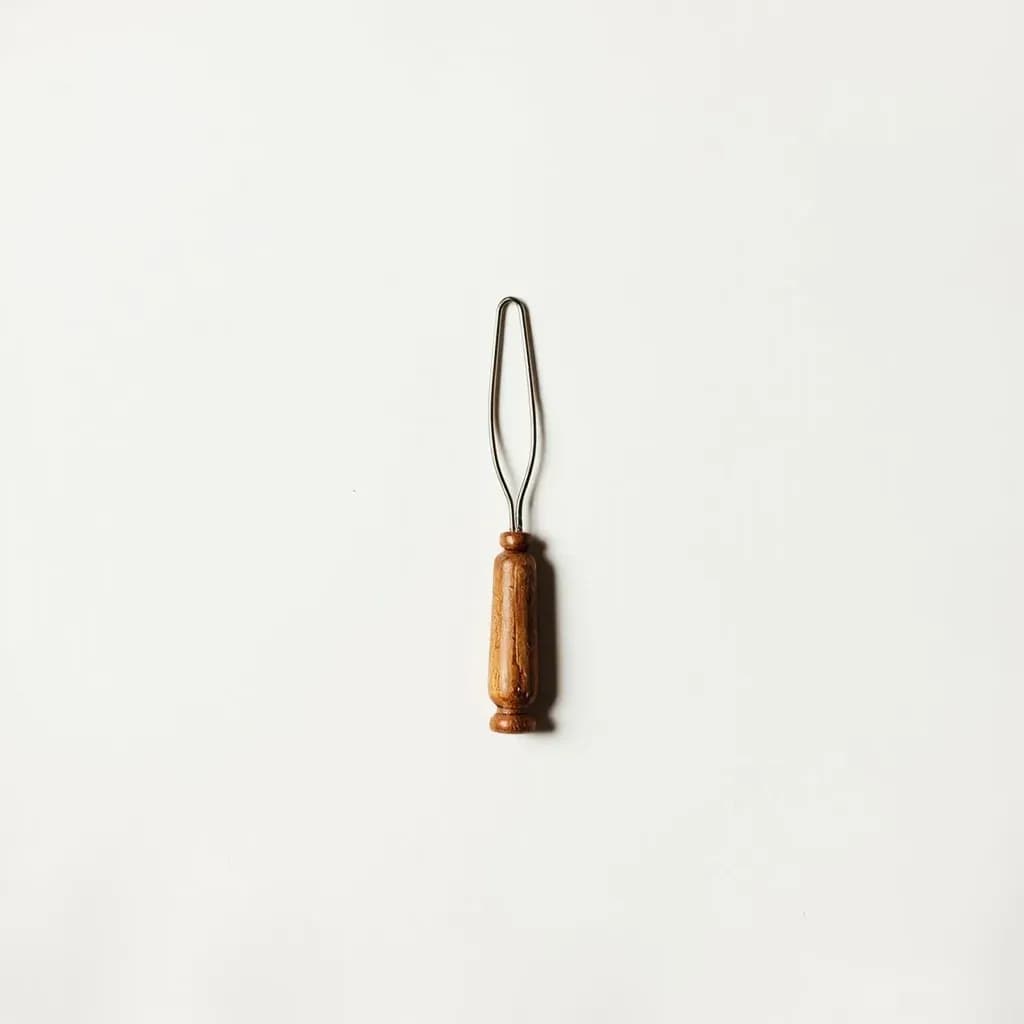
A thin taut wire, usually with two handles, that cleanly cuts large blocks or wheels of cheese without crumbling.
A cheese wire is a fine, strong wire stretched between two handles or mounted on a board, used to slice through soft and semi-soft cheeses where a blade would smear or stick. It cuts cleanly with minimal drag, making it ideal for portioning wheels and large blocks. The same principle is used by butter cutters and some pastry tools.
A cheese wire is a simple, deceptively specific tool: a thin, taut wire stretched across a frame that parts cheese with a clean, almost frictionless cut. Unlike a knife blade, which crushes, drags, and fractures the paste of aged or crumbly wheels, a wire slices along the cheese's grain with minimal resistance, leaving a flat, tidy cut face and very few wasted crumbs. It is a fixture of cheesemonger shops in Alpine France, Switzerland, the Netherlands, and Italy, and a quiet workhorse in any kitchen that buys whole or half wheels of hard and semi-hard cheese.
The wire does the work because it is so thin. Tension is everything: the taut line cuts as the cook draws it through the cheese with a single smooth motion, and the narrow contact area means the cut face stays intact even in notoriously crumbly styles like aged Cheshire, young Asiago, or a long-aged Gouda. The trade-off is that a cheese wire is a specialist, not a generalist — it is poorly suited to soft, high-moisture cheeses, which smear and stick to the wire rather than parting cleanly. There, a knife or cheese plane is the right tool.
In practice the cheese wire is what you reach for when a knife would ruin the presentation, waste curd, or both. A wedge cut from a Parmigiano-Reggiano wheel with a wire looks and behaves differently from one chopped with a heavy blade — the paste holds together, the rind stays sharp at the corner, and the portion is easier to handle at the table.
Alternatives
Types & varieties
The classic U-shaped frame with a single horizontal wire strung between two upright arms. The iconic tool for cutting wedges from a wheel or portioning large blocks; common in cheesemonger shops.
A flat rectangular frame with wire strung across the width. Suited to slicing uniform slabs or cutting large rectangular blocks of semi-hard cheese into portions.
A smaller, often wooden-framed version sized for the dining table or cheese board, designed for portioning in front of guests.
A simple loop of wire with two handles, similar in form to an egg slicer. A budget-friendly option for slicing smaller pieces of semi-hard cheese into thin rounds.
A reinforced stainless-steel frame with thicker wire and proper tensioning hardware, intended for production-scale cheesemongers and delis cutting through very hard, dense wheels daily.
How to use a cheese wire well
The wire rewards a calm, deliberate hand. Place the wheel or block on a stable cutting board with the rind down. Position the wire where you want the cut and draw it through the cheese in one smooth motion — never saw. On a wheel, work from the rind inward; this keeps the rind corner crisp and the cut face flat.
- Mark the cut line with a knife nick or a small spacer if you want uniform wedges from a wheel.
- Keep your pulling hand directly behind the wire; pulling off-axis flexes the wire and bends the cut.
- For very hard wheels (Parmigiano-Reggiano, aged Gruyère), score or split the rind with a heavy knife or cleaver first, then use the wire for the paste — the wire alone often cannot bite cleanly through a thick, hardened rind.
- Wipe the wire with a damp cloth between cuts when working across styles — residue from a blue, for example, will flavor the next cheese.
- Slide the cut wedge off the board rather than lifting it; the clean wire-cut face holds together best when undisturbed.
Cheese wire vs. cheese knife vs. cheese plane
These three tools overlap in name but not in function, and using the wrong one is the most common mistake home cooks make. A cheese knife slices on a board and works for most semi-hard and soft styles at the table. A cheese plane shaves — it is designed to produce thin, even slices for service. The cheese wire's specific role is portioning whole wheels and blocks with a clean, low-crumb cut, particularly where a knife blade would drag or fracture the cheese. Each tool has its place; none is a true substitute for the others.
When not to reach for a cheese wire
The cheese wire is excellent for aged, firm, and crumbly cheeses, but it is the wrong tool for soft and creamy styles. High-moisture cheeses like fresh mozzarella, burrata, ricotta, and bloomy-rind wheels like Brie or Camembert will simply smear and stick to the wire, leaving a ragged, sticky face. A thin-bladed cheese knife or a cheese plane will give cleaner results on those styles.
Common uses
Tips & pitfalls
- Keep the wire taut — slack wire causes ragged cuts and drag. Check the tension thumbscrew before each session and retighten if the wire gives under finger pressure.
- Use a single smooth pulling motion, not a sawing stroke. Sawing tears the paste and pulls crumbs, which defeats the whole point of using a wire.
- Replace the wire at the first sign of kinking, permanent stretch, or rust. A fatigued wire frays the cheese face and can snap under load, especially on hard wheels.
- For very hard aged cheese (Parmigiano-Reggiano, aged Gouda, aged Comté), choose a heavier-gauge wire — it resists snapping better than the ultra-thin wires sold for table use.
- Wipe the wire between cuts, particularly when moving from a blue or washed-rind cheese to a mild one. Residue transfers flavor and clogs the wire.
- Cut from the rind inward on a wheel so the rind corner stays sharp; forcing the wire from the center outward often splinters the rind.
- Do not use a cheese wire on soft, high-moisture cheeses such as fresh mozzarella, ricotta, or Brie — the wire will drag, stick, and smear the paste. Use a knife or cheese plane instead.
- Buy a spare coil of food-grade stainless steel wire. Most bow cutters accept a standard diameter, and a fresh wire restores a tired tool to like-new performance for a few cents.
Good to know
- Also known as
- Cheese harp, cheese bow, cheese cutter
- Primary material
- Stainless steel wire, typically 0.5–0.8 mm in diameter
- Frame materials
- Wood, stainless steel, or molded plastic
- Traditional origin
- European cheesemaking regions — Alpine France, Switzerland, the Netherlands, Italy
- Mechanism
- A thin, taut wire drawn through the cheese under tension; the fine contact line parts the paste rather than crushing it
- Best for
- Semi-hard to hard wheels and blocks, including crumbly aged styles
- Tension control
- Most bow and frame models have a thumbscrew or bolt to keep the wire taut; slack wire drags and tears
- Maintenance
- Replace the wire at the first sign of kinking or stretch; sanitize between uses, especially across different cheeses
Also called
Cheese Cutting Wire · Wire Cutter
Related

Knife
The fundamental cutting tool every kitchen is built around

Chef's Knife
The do-everything blade for chopping, slicing, and mincing

Paring Knife
Small, nimble blade for peeling and detailed in-hand work

Serrated Knife
Saw-toothed blade that slices crusty bread without crushing

Cleaver
Heavy broad blade for chopping through bone and bulk prep

Cutting Board
The stable surface every cut starts on

Mandoline
Adjustable blade for paper-thin, perfectly even slices

Kitchen Shears
Heavy-duty scissors for poultry, herbs, and packaging