Knives & Cutting
Chinese Cleaver
A broad rectangular blade used as an all-purpose knife for chopping, slicing, and smashing.
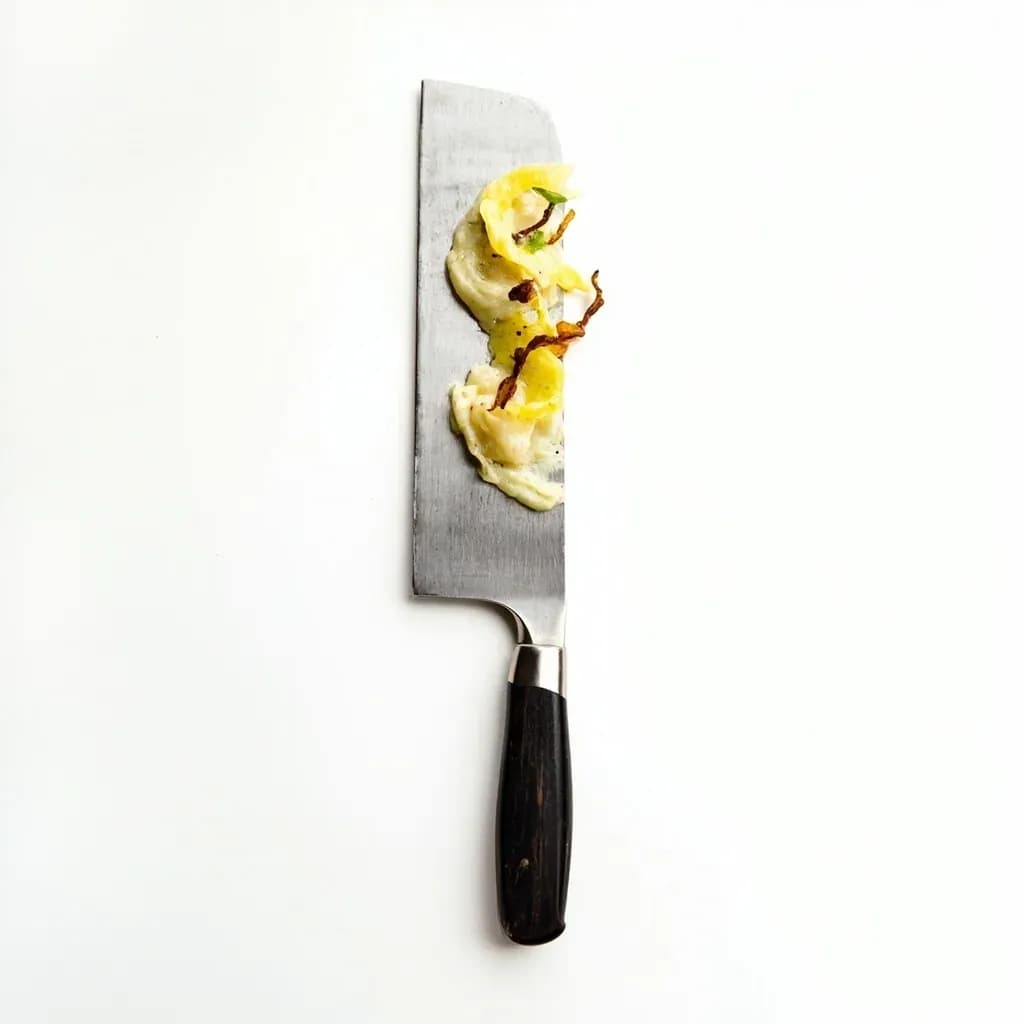
A Chinese cleaver, or cai dao, is the workhorse knife of many Asian kitchens, a wide thin rectangular blade that slices, dices, and minces with ease. Despite its bulk it is lighter than a Western meat cleaver and is meant for vegetables and boneless meat rather than hacking bone. The broad flat side scoops chopped food off the board and smashes garlic and ginger in one motion.
The Chinese cleaver most cooks mean when they say "cleaver" is the cai dao (菜刀, literally "vegetable knife"): a broad, rectangular blade with a tall, flat profile, a thin grind, and a relatively light handle. It is the everyday knife of Chinese kitchens — the single tool a home cook reaches for to slice cabbage, trim scallions, break down a chicken thigh at the joints, shave ginger, and crush garlic. Its defining trait is a long, straight edge ground thin enough to slice cleanly through a ripe tomato, paired with a flat face broad enough to scoop the cut ingredients off the board and straight into a hot wok.
Its geometry is the opposite of a Western cleaver's. Where a Western cleaver is thick, heavy, and blunt-backed for splitting bones, the cai dao is thin, light, and finely edged — closer in spirit to a chef's knife than to a hatchet. That thin edge is what allows it to do the work a Western cook would spread across three or four tools: a chef's knife for produce, a santoku for boneless meat, a bench scraper for transfer, and a small cleaver for the occasional bone. The tall, rectangular blade knuckles-clears the guiding hand, rides flat against the board for even slices, and uses its corner and spine for finer work.
The confusion with the bone-splitting Western cleaver is the single biggest source of damage to these knives. They share a silhouette but little else: a cai dao is used with a straight up-and-down chop, never rocked, never twisted, never torqued sideways, and never driven through thick bone. Used as designed, it is one of the most versatile and forgiving knives a cook can own.
Alternatives
Types & varieties
The classic rectangular Chinese cleaver and the default 'chef's knife' of Chinese kitchens. Square corner, medium-thin spine, used for vegetables, herbs, boneless meat, and crushing aromatics.
Longer, thinner, lighter, and more flexible than a cai dao. Built for slicing boneless meats and whole fish in long single pulls. Edge is delicate and not for general work.
Thick, heavy, blunt-backed cleaver in the Chinese tradition, closer in role to a Western cleaver. Used to split poultry carcasses and crack bones. Not an everyday knife.
Sometimes narrower and lighter than a standard cai dao; favored for portioning blocks of tofu, scoring noodles, and fine herb work. Many cooks simply use a regular cai dao.
Not a different shape but a meaningful split. Hand-forged high-carbon cai dao from Guangdong or Yangjiang are thinner, harder, and take a keener edge than common stamped stainless versions.
Blade Geometry and Why It Matters
The cai dao is, functionally, a tall rectangle of thin steel with a fine edge running along its base. The thinness — typically 2–3 mm at the spine and tapering to almost nothing at the edge — is what allows it to slice the way it does. A thick Western cleaver pushes food aside and crushes cells; the cai dao passes through, leaving clean cuts on aromatics and intact slices on cucumber. The tall profile is a knuckle guard: the blade rides the board flat, and the cook's guiding hand sits clear of the cutting line. The flat face doubles as a bench scraper, picking up chopped aromatics and sliding them into a wok without a separate tool. None of these traits are decorative; remove the thin grind or the flat face and the knife stops being itself.
Grip, Stance, and Motion
Hold the handle with a pinch grip: thumb on the side of the blade, index finger curled along the flat near the heel. A hammer fist on the pommel is wrong here — it throws the geometry off and torques the thin edge. Stand close to the board, shoulder over the cut, and bring the blade straight down in a clean vertical stroke. Let the weight of the knife do the work; do not bear down with the wrist. For herbs and aromatics, a fast, repeated tap-and-go rhythm is faster than one heavy chop. For uniform slices — ginger coins, daikon rounds, scallion disks — a slow, deliberate downstroke with the previous slice as a guide produces the cleanest results. The square corner of the blade is the thinnest, sharpest part of the tool; reserve it for fine work like scoring duck skin, trimming silver skin, or sliding under a fillet.
Care of Carbon Steel
A traditional cai dao is plain high-carbon steel, often labeled white steel or blue steel in catalogs influenced by Japanese cutlery terms. It sharpens easily, takes a keener edge than most stainless, and darkens with use into a gray-blue patina that is normal and protective. It also rusts if neglected. Wipe the blade dry between tasks and again before putting it away; a thin film of food-safe oil (camellia, grapeseed, or mineral oil) on a stored carbon-steel blade prevents spotting. Acidic ingredients — lemon, tomato, onion — left sitting on a carbon blade will etch. A mild patina actually slows this, so do not scrub the blade back to bare steel after every use. Stainless and laminated san-mai versions are more forgiving but rarely hold as fine an edge; they are the right choice for cooks who will not maintain a carbon blade.
What It Is Not
A cai dao is not a bone-splitting tool, and using it as one is the fastest way to chip or crack the blade. Light poultry bones — wing tips, neck bones, the small ribs of a chicken back — are tolerable on a heavy cai dao with deliberate force. Thick beef bones, frozen anything, and whole chicken carcasses belong to the heavy bone cleaver or a butcher's saw. Likewise, the cai dao is not a hatchet: do not pry, twist, or lever with it. The thin edge snaps or chips under sideways load, especially near the bolster. Treat it as a slicing-and-smashing tool, not a wedge, and it will last decades.
Common uses
Tips & pitfalls
- Sharpen at roughly 15–20° per side; the thin edge geometry is the whole point of the tool, and a steeper angle turns it into a wedge that wedges instead of slices.
- Hone with a steel or ceramic rod before each session — carbon-steel cai dao edges respond well to light, frequent touch-ups rather than occasional heavy resharpening.
- Use a wood or end-grain board. Bamboo and glass chip the fine edge quickly, and end-grain boards let the blade glide without dulling.
- Always cut straight down. Do not twist or pry. The thin blade can snap if torqued sideways, especially near the bolster.
- Reserve a heavy bone cleaver for bones. Driving an all-purpose cai dao through thick poultry bone is the most common way to chip a Chinese cleaver.
- Wipe a carbon-steel blade dry between cuts and oil it lightly after use. Even 'stainless' Chinese carbon steel will patina and can spot if left wet.
- Use the spine, not the edge, to tap or crush aromatics when you want a cleaner, less splattery result. Reserve the flat-of-blade smash for a faster, more rustic crush.
- The square corner of the blade is the thinnest, sharpest part of the tool — use it for detailed work like trimming silver skin, scoring skin, and fine herb cuts.
Good to know
- Chinese Name
- Cai Dao (菜刀, "vegetable knife")
- Origin
- China; the form has been used for centuries across Chinese home and restaurant kitchens
- Typical Blade Length
- 18–22 cm (7–9 in) most common; up to 25 cm for professional use
- Blade Profile
- Tall and rectangular; blade height roughly 8–12 cm and held full-length
- Weight
- 300–500 g for an all-purpose cleaver; heavy bone-style versions run 700 g+
- Edge Angle
- Ground to roughly 15–20° per side — far thinner than a Western cleaver
- Common Steels
- High-carbon (traditional hand-forged, white steel, blue steel), stainless (including 5Cr15Mov), or laminated san-mai carbon-cored stainless
- Cutting Motion
- Straight up-and-down chop; not a rocking cut
- Dishwasher
- No — especially not for carbon-steel versions
- Storage
- Magnetic strip, wooden saya, or block; never loose in a drawer
Also called
菜刀 · Cai Dao · Chinese Chef's Knife · Vegetable Cleaver
Related

Knife
The fundamental cutting tool every kitchen is built around

Chef's Knife
The do-everything blade for chopping, slicing, and mincing

Paring Knife
Small, nimble blade for peeling and detailed in-hand work

Serrated Knife
Saw-toothed blade that slices crusty bread without crushing

Cleaver
Heavy broad blade for chopping through bone and bulk prep

Cutting Board
The stable surface every cut starts on

Mandoline
Adjustable blade for paper-thin, perfectly even slices

Kitchen Shears
Heavy-duty scissors for poultry, herbs, and packaging