Knives & Cutting
Clam Knife
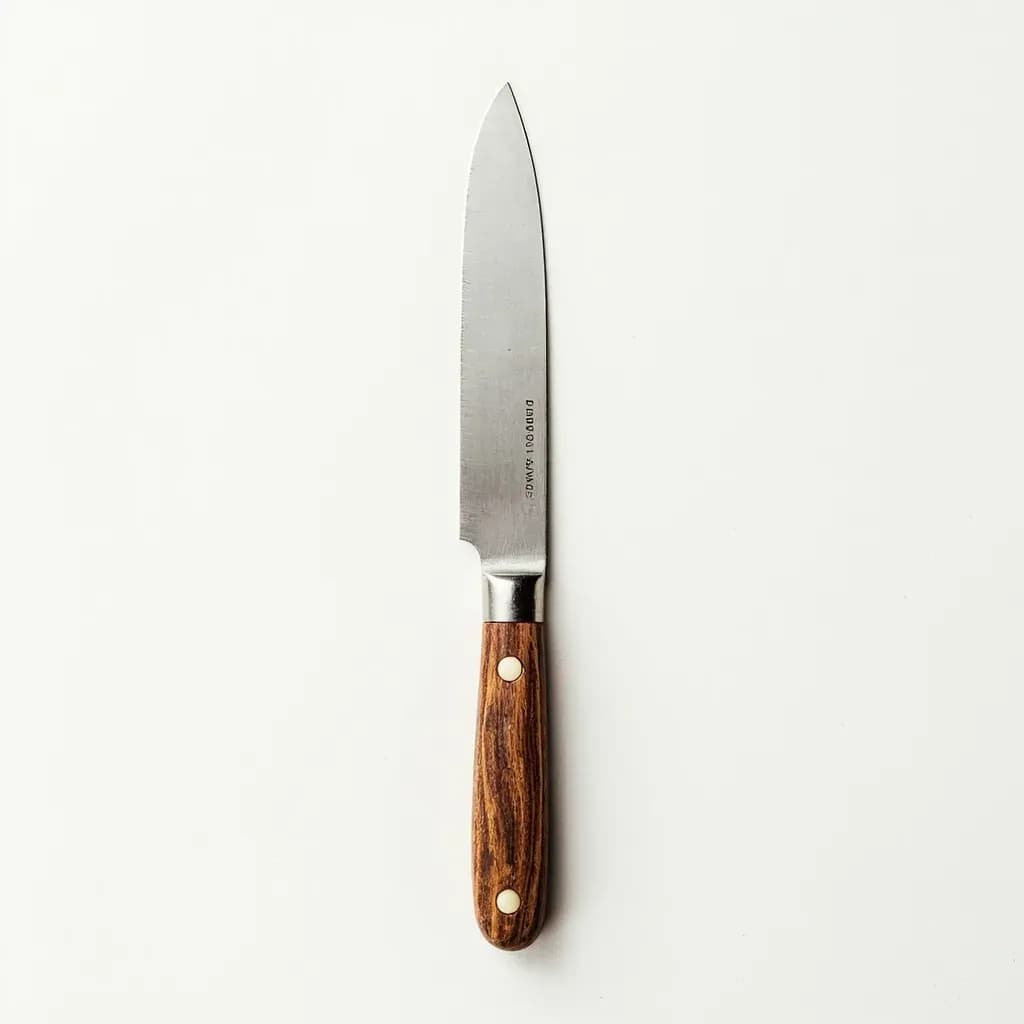
A short, blunt-edged knife for prying open hard-shell clams without crushing the meat.
A clam knife is a stubby blade with a rounded, dull edge designed to slip between the shells of a tight clam and sever the hinge muscle. It is used at the prep station or raw bar to shuck clams quickly while keeping the briny liquor inside. The thin, slightly flexible blade is safer for clams than the heavier oyster knife, which has a sharper point for prying.
A clam knife is a short, stiff-bladed tool built for one job: forcing apart the two hinged shells of a live bivalve and slicing through the adductor muscle that holds the top shell closed. The blade is deliberately short (usually 2–3 inches), with a thick spine and a relatively blunt edge that is sharp enough to sever muscle but not to slice food the way a chef's knife does. The tip is typically flat, rounded, or only modestly pointed, because the work is prying and twisting, not piercing. A long, fine paring knife is the wrong tool for this — the leverage is wrong, the tip snaps off in the shell, and the geometry invites the blade to slip into your holding hand.
What sets a clam knife apart from an ordinary kitchen knife is the combination of a stout, non-flexing spine and a working edge that has been ground to be functional rather than refined. The thicker the spine, the more twisting force the knife can transmit to the hinge without bending or breaking. Most models also carry a short finger guard, a flared bolster, or a chunky wooden handle that keeps the heel of your hand from sliding forward onto the shell edge when you pop the hinge. Together these features turn a task that is genuinely dangerous with the wrong equipment into a controlled, repeatable motion an experienced shucker can perform in a few seconds.
Alternatives
Types & varieties
Stubby 2–2.5 in blade, rounded tip, often wooden handle; the classic tool for littlenecks, cherrystones, quahogs, and Eastern oysters
Longer 3–3.5 in blade with a more tapered, pointed tip, designed to work into the hinge of larger, thicker-shelled Gulf oysters
Slimmer, slightly longer blade than the New England pattern, originating with the Rhode Island oyster trade
Regional New England variants with subtly different tip shapes; functionally interchangeable with the standard short clam knife
Thicker spine, often with a pronounced guard and plastic or rubber grip, used in oyster bars and processing houses where dozens of shells are opened per shift
Slim, short, often with a stout wooden handle; the traditional European counterpart, used the same way at the hinge
Anatomy of a clean shuck
Opening a bivalve cleanly is mostly about leverage, not strength, and the clam knife is engineered to deliver that leverage safely. A bivalve has two adductor muscles — one attaching the meat to the top shell, one to the bottom. The classic sequence is to break the hinge first, slip the blade under the top shell to sever the upper adductor, then flip the animal and sever the lower adductor against the bottom shell. Once both muscles are cut, the meat rests loose in its cupped lower shell, swimming in its own liquor — which is how a proper oyster or clam on the half shell should arrive at the table.
- Hinge first: locate the pointed end where the two shells meet, work the tip in with a short back-and-forth, then twist to pop it — prying from the sides shatters the lip and loses the liquor
- Top muscle: slide the blade just under the loosened top shell and scrape across to sever the upper adductor; the top shell will lift free cleanly
- Bottom muscle: flip the bivalve and run the blade under the meat to cut the lower adductor, leaving the oyster or clam resting in its half shell of brine
- Cold helps: 15–20 minutes on ice tightens the muscle and the animal, so the knife parts it more cleanly and the meat tears less
Choosing the right knife for the bivalve
Regional variation in clam knives tracks the bivalves each coast actually harvests. The short, stubby New England pattern is sized for Atlantic hard clams and Eastern oysters, whose shells are moderate in size and thickness. The longer, more tapered Galveston pattern is built for Gulf oysters, which grow larger and develop a thicker, more muscular hinge that needs a blade with more reach. Picking the wrong size either wastes effort (too short to reach into a big hinge) or risks slipping (a long, fine tip on a small clam is overkill and dangerous).
Common uses
Tips & pitfalls
- Chill both the knife and the shellfish in ice for 15–20 minutes before shucking — cold muscle and a cold blade open more cleanly with less tearing of the meat
- Always aim for the hinge: locate the point where the two shells meet, work the tip in with a short back-and-forth, then twist to pop it; never pry from the sides, which shatters the shell and wastes the liquor
- Wrap the holding hand in a folded heavy kitchen towel, or wear a cut-resistant shucking glove — the most common shucking injury is the blade slipping off the hinge and stabbing the palm
- Discard any shell that does not close when tapped, and any opened clam or oyster that smells strongly off or shows dry, collapsed flesh; a clean ocean or cucumber smell is what you want
- Rinse opened clams and oysters briefly in their own liquor rather than fresh water, which would dilute the briny flavor you paid for
- Resist the urge to sharpen a clam knife to a razor edge — a slightly blunt, thin, well-polished bevel is safer and still cuts the adductor cleanly; kitchen-knife sharpness is both unnecessary and more likely to slip
- Hand-wash, towel-dry, and store the knife dry immediately after use; carbon-steel blades benefit from a thin film of food-safe oil if they will sit unused for more than a day or two
- Match the knife to the bivalve: a short, stubby New England knife for Atlantic clams and Eastern oysters, a longer, more tapered blade for larger Gulf oysters — using too small a knife on a big oyster is a recipe for a slipped blade
Good to know
- Also called
- Oyster knife, clam shucker, shucking knife; dedicated oyster knives tend to run slightly longer than clam knives, but the tools are functionally interchangeable for most home work
- Blade length
- Typically 2–3 in (5–7.5 cm) for clam knives; 3–4 in (7.5–10 cm) for dedicated oyster knives
- Blade profile
- Short, stiff, thick spine with a relatively blunt edge and a tip that is flat, rounded, or only modestly pointed
- Edge
- Sharp enough to sever the adductor muscle, not razor-sharp; the tool relies on prying and twisting rather than slicing
- Primary material
- High-carbon stainless steel in most modern versions; traditional knives are carbon steel, which holds a stout spine but patinas and must be dried promptly
- Handle
- Wood (rosewood or birch on traditional models), molded plastic, or rubberized grip; many include a short finger guard or flared bolster to keep the hand from sliding onto the blade
- Origin
- Specialized form evolved with the 19th-century commercial oyster industry of New England and the U.S. East Coast; the short, blunt New England style is the direct ancestor of the modern clam knife
- Maintenance
- Hand-wash and dry immediately; carbon-steel versions benefit from a light food-safe oil film if stored for any length of time
Also called
clam shucker · clam shucking knife
Related

Knife
The fundamental cutting tool every kitchen is built around

Chef's Knife
The do-everything blade for chopping, slicing, and mincing

Paring Knife
Small, nimble blade for peeling and detailed in-hand work

Serrated Knife
Saw-toothed blade that slices crusty bread without crushing

Cleaver
Heavy broad blade for chopping through bone and bulk prep

Cutting Board
The stable surface every cut starts on

Mandoline
Adjustable blade for paper-thin, perfectly even slices

Kitchen Shears
Heavy-duty scissors for poultry, herbs, and packaging