Cookware
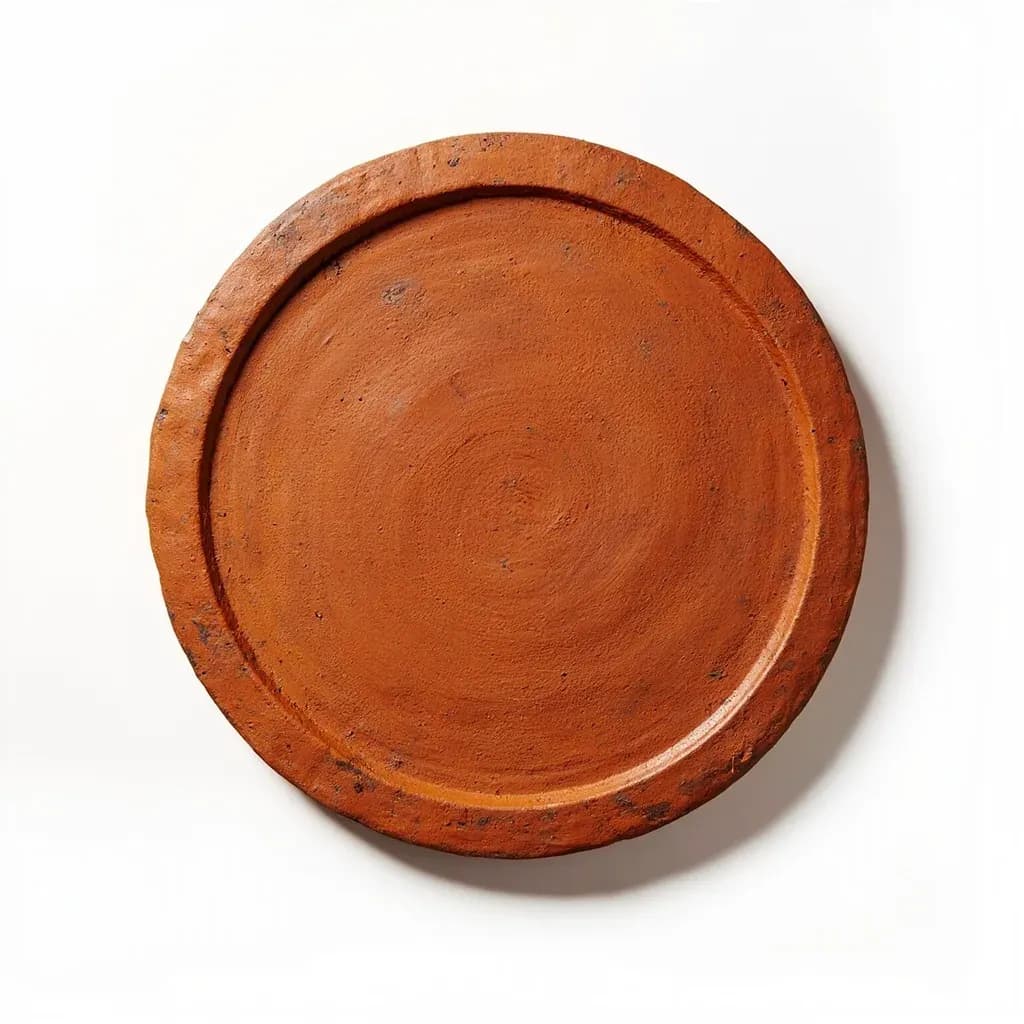
Clay Comal (Comal de Barro)
A flat unglazed clay griddle for toasting tortillas, chiles and spices over an open flame.
A clay comal is a round, flat earthenware griddle used across Mexico to heat tortillas, char tomatoes and chiles, and toast seeds and spices. It sits directly over coals or a burner and imparts a subtle smoky, earthy flavor that metal griddles cannot match. The porous clay must be seasoned and cured before first use to prevent cracking.
The clay comal — comal de barro in Spanish — is one of the oldest continuously used cooking implements in the Americas: a flat or gently concave unglazed earthenware disc that sits directly over flame to toast, warm, and dry-roast. Its pre-Hispanic roots run deep in Mesoamerica, where clay was the everyday cookware long before metal, and the tool's character — a dry, even heat and a faint earthy note — still shapes the flavor of Mexican chiles, moles, and tortillas today.
Unlike a metal comal, which runs hot and fast, a clay comal heats gently and stores warmth in its thick body. That slower, steadier heat is why cooks reach for it specifically when toasting chiles for mole or cacao for chocolate: it dries the surface without scorching, and the porous unglazed clay lends a smoky, earthy whisper to whatever touches it. The trade-off is fragility — low-fired earthenware is porous, sensitive to thermal shock, and demands a careful first-use curing, soap-free cleaning, and slow drying before storage.
In practice, a clay comal is a dry-heat tool, meant for toasting, warming, and charring rather than simmering wet foods. A well-kept one develops a dark patina from years of use, and many Mexican cooks keep one reserved for chiles and spices alone, since the clay absorbs aromas and rarely lets them go.
Alternatives
Types & varieties
Burnished, smoke-fired black clay from San Bartolo Coyotepec; dense, smooth surface, prized for toasting chiles for mole.
Often reddish-brown earthenware, sometimes with a low foot ring; common for daily tortilla toasting in Purépecha households.
Larger, thicker pieces from the Puebla–Tlaxcala region, typically used over a wood-fired hearth for family meals.
Hand-held 15–20 cm size used directly on a burner or coals for one or two tortillas at a time.
Oversized 40–55 cm comal set on a tripod or stones over an open fire, for large batches of tortillas, chiles, or tomatoes.
Variant with three small clay feet that lift the disc off the heat source, useful for gentler indirect toasting.
Curing a new clay comal
A new clay comal must be cured before its first real use. The slow, even heating drives out remaining moisture from the low-fired clay and stabilizes the body so it won't crack the first time it meets a serious flame. Skipping this step is the most common reason a brand-new comal splits on its debut.
- Wipe the dry disc with a clean cloth; do not rinse or wet it before curing.
- Set it on the coolest possible burner, or on a metal diffuser over a low gas flame.
- Hold the heat low for about 5 minutes, then raise it a notch every few minutes until the comal is evenly hot across the surface — roughly 20 to 30 minutes total.
- Let it cool down in place on the turned-off burner; don't move it while the clay is contracting.
- After curing, a thin wipe of neutral oil is optional; many cooks leave the surface bare to keep the dry-roast flavor clean.
Care, cleaning, and storage
Because the clay is unglazed and porous, the comal behaves a little like a sponge — it absorbs and slowly releases aromas, and it holds onto moisture if you let it. The habits that keep a clay comal in service for decades are simple: hot-water rinses, no soap, thorough drying, and a dry, ventilated home.
- Rinse with hot water and scrub stubborn bits with a stiff brush or a handful of coarse salt; dish soap is unnecessary and can leave a taste in the clay.
- Never soak the comal, and never pour cold water onto a hot one — either can crack the disc.
- Towel-dry, then set it back on a warm (off) burner or in the sun for a few minutes to drive off remaining moisture before storing.
- Store in a dry, ventilated cupboard; never stack it while still damp, and never seal it in plastic.
- If a hairline crack appears, retire the comal from wet work and reserve it for dry-toasting — it often keeps going for years in that limited role.
Common uses
Tips & pitfalls
- Cure a new comal by wiping it clean and setting it over the lowest possible flame, then gradually increasing the heat over 20–30 minutes until evenly hot; let it cool inside the stove.
- Never put a cold or damp clay comal on a hot burner, and never add cold water to a hot one — thermal shock will crack it.
- On glass, electric, or induction cooktops, always use a metal diffuser between the comal and the element to spread heat and protect the cooktop.
- Use low-to-moderate flame only; clay conducts heat gently, and uneven or harsh flames create hot spots that crack the disc.
- If a hairline crack appears, keep the comal in service for dry-toasting tasks only — avoid liquids, which will widen the crack.
- Clean by rinsing with hot water and scrubbing with a stiff brush or coarse salt; skip dish soap, which is unnecessary on unglazed clay and can leave a taste.
- Dry the comal thoroughly — briefly on a warm (off) burner or in the sun — before storing to prevent mildew and moisture-driven cracks.
- When toasting chiles, press them flat with a wooden spatula or tongs so they toast evenly without curling and scorching.
- Reserve a clay comal for dry-toasting rather than cooking wet foods, which can weaken unsealed clay over time.
Good to know
- Origin
- Mexico; continuous use since pre-Hispanic Mesoamerican times, when clay was the dominant cookware material.
- Material
- Unglazed low-fired earthenware clay (barro); some regional styles are burnished or smoke-fired (e.g., Oaxaca's barro negro).
- Typical diameters
- Roughly 20–55 cm (8–22 in); small hand-held sizes to large family pieces.
- Heat source
- Traditionally an open wood flame (fogón); works on a gas burner at low-to-moderate flame; needs a metal diffuser on electric, induction, or glass-top stoves.
- Curing required
- Yes — a slow first-use curing (curado) is essential to drive out moisture and prevent cracking.
- Cleaning
- Rinsed with hot water only, no soap; stubborn residue scrubbed with a stiff brush or coarse salt.
- Heat tolerance
- Sensitive to thermal shock — a cold or damp comal on a hot flame, or cold water on a hot comal, will crack it.
- Flavor effect
- Imparts a faint earthy, smoky note that many cooks value specifically for chiles, cacao, and coffee.
Also called
Comal de Barro · clay griddle
Related

Steamer
Gentle moist heat that keeps vegetables, fish, and dumplings tender

Frying Pan
Shallow sloped pan for frying, sautéing, and quick sears

Saucepan
Tall, straight-sided pot for sauces, grains, and small batches

Sauté Pan
Wide straight-sided pan with room to brown and braise

Dutch Oven
Heavy lidded pot that turns tough cuts tender over hours

Stock Pot
Tall, roomy pot for stocks, pasta, and big-batch cooking

Wok
High-sided bowl pan built for blistering-hot stir-fries

Griddle
Flat, broad surface for pancakes, smash burgers, and breakfast