Baking & Pastry
Cooling Rack
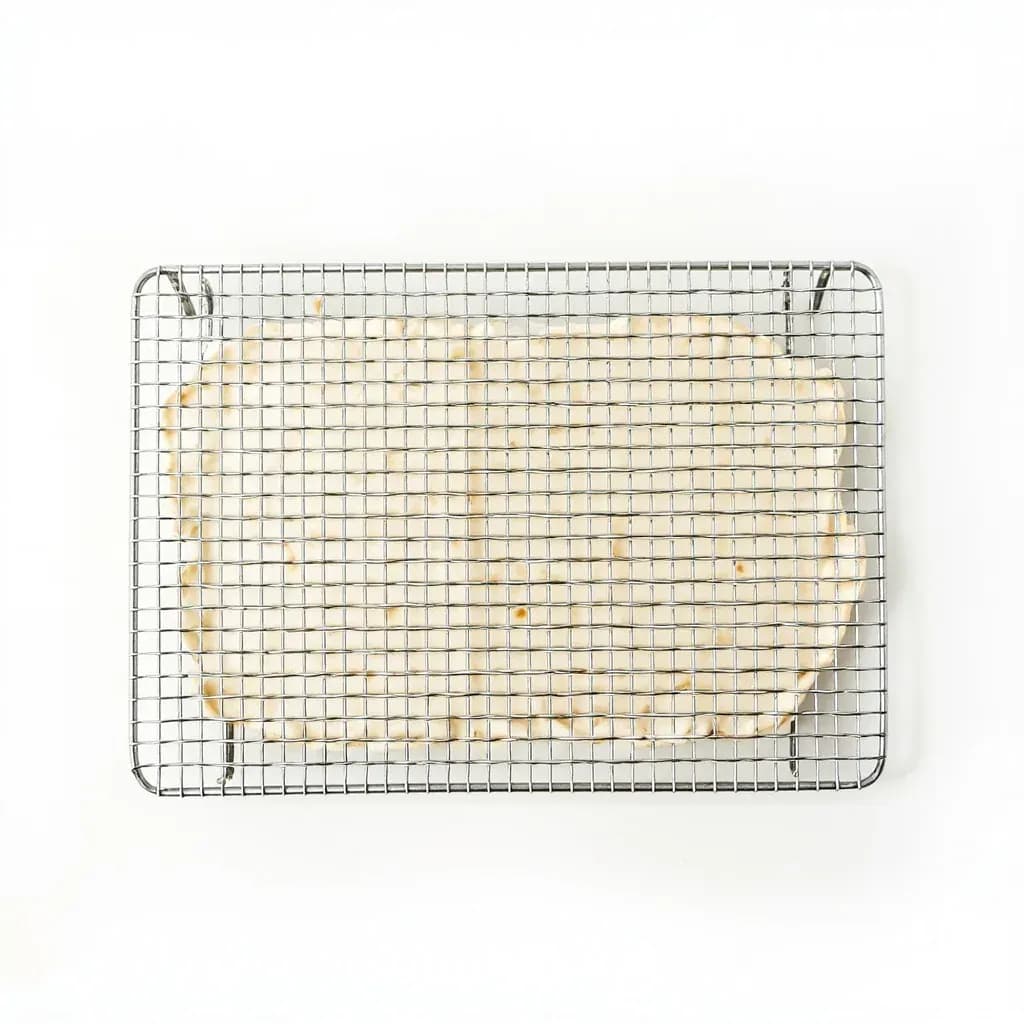
A raised wire grid that lets air circulate under baked goods or fried food so they cool and stay crisp.
A cooling rack is a stiff wire grid on short feet that lifts food off the counter so air reaches all sides. Bakers use it to cool cookies, cakes, and bread evenly without trapped steam softening the bottoms, and cooks set it over a sheet pan to drain fried foods or catch drips when glazing. Oven-safe metal racks can also roast or crisp food while excess fat drips away below.
A cooling rack is a simple raised wire grid, but its job is to solve one of the most common problems in home baking and roasting: trapped steam. When cookies, cakes, fried foods, or roasted vegetables sit on a flat surface or in their own hot pan, the moisture they release condenses underneath, softens crusts, and traps residual heat, intensifying carryover browning on the underside. Lifting the food a few inches off the counter on a wire grid lets air move on all sides so steam escapes, bottoms stay dry, and the food finishes cooling (or crisping) the way the recipe intended. It is the difference between a snappy cookie and a leathery one, a clean cake layer and a gummy one, a roast chicken with crackling skin and one that stewed in its own juices.
The design is tightly standardized around the half-sheet pan (18 × 13 in / 46 × 33 cm), the workhorse size in most American kitchens. Racks are almost always sized to drop into a standard sheet pan, and good sets are sold nested: a quarter-sheet rack for small batches and toaster ovens, a half-sheet rack for everyday use, and a full-sheet rack for high-volume baking. That nesting lets you lift a tray of bacon, a sheet of roasted vegetables, or a batch of cookies off the heat and onto a cooling surface in a single move, drippings and all.
Most racks are made of chrome-plated carbon steel because the material is cheap, conducts heat quickly, and forms a rigid grid. Stainless steel is the more durable upgrade, and silicone- or non-stick-coated racks exist for sticky jobs like chocolate work. The feet are usually 1 to 1.5 inches tall, the grid openings are typically ½ to ¾ inch squares, and most all-metal racks handle 400–500 °F (200–260 °C); any plastic feet or non-stick coating will fail well below that and must be respected.
Alternatives
Types & varieties
Sized to rest inside a standard half-sheet pan, letting you lift cookies, bacon, or roasted vegetables and their drippings out together.
Fits a full-sheet pan; used in professional and high-volume home baking.
Pairs with a quarter-sheet pan for small batches and toaster-oven baking.
Three or more levels joined by corner posts; saves counter space during cookie season and holiday baking.
Circular grid sized for cake layers, pies, and tarts; often 9–10 in diameter.
Narrower wire spacing so small cookies, macarons, and chocolate-dipped items don't sag or fall through.
More durable and rust-resistant than chrome-plated; preferred for long-term use and higher-heat applications.
Coated grid that releases delicate items (drizzled chocolate, sticky candies) more easily; usually not for high-heat roasting.
Designed to elevate poultry and roasts in a roasting pan; doubles as a cooling rack for very large items but is heavier and has wider spacing.
Sizing and the sheet-pan system
The reason a cooling rack is almost always sold in three nested sizes is that it is meant to live inside a sheet pan, not beside one. A half-sheet rack is the most useful single piece to own: it fits inside a standard half-sheet pan, which is the size most recipes are written for, and it gives you somewhere to put hot cookies, drained bacon, or roasted vegetables without juggling a second vessel. Quarter- and full-sheet racks round out the set for small jobs and high-volume baking, respectively. Buy the set if you bake often; buy the half-sheet alone if you only own one rack.
- Half-sheet (18 × 13 in) is the default size for American home baking and pairs with the most common sheet pan.
- Quarter-sheet racks fit toaster ovens and small-batch baking without wasting counter space.
- Full-sheet racks belong in pro kitchens or holiday-cookie situations; a stackable tiered rack is usually a better home compromise.
Cooling versus roasting: when the same rack does two jobs
Any oven-safe, all-metal rack can be used to elevate meat in a roasting pan so hot air circulates underneath and skin or crust browns evenly instead of steaming. This is the same principle as cooling: get air under the food. The difference is mostly one of weight and wire spacing. Roasting racks are heavier, often V-shaped to cradle poultry, and may have wider openings that don't suit small baked goods. A standard cooling rack can stand in for light roasting (sheet-pan vegetables, spatchcocked chicken) but flexes under a heavy bird; a true roasting rack is sturdier for big jobs.
Care and longevity
Chrome-plated steel is cheap and perfectly serviceable, but the plating is the weak link. The grid traps moisture after washing, and that is where rust spots begin. Stainless steel is the long-term answer if you bake a lot or run racks through the dishwasher regularly. Coated racks (silicone or non-stick) trade some heat tolerance for easy release of sticky items; keep them out of the broiler and above 400 °F unless the manufacturer says otherwise.
Common uses
Tips & pitfalls
- Transfer cookies to a rack within 1–2 minutes of leaving the oven; the trapped heat in a sheet pan continues to brown the bottoms and can take a perfectly baked cookie to overdone.
- Let cake layers rest in the pan 10–15 minutes, then turn out onto a rack to finish cooling — never leave them in the pan or set them on a flat surface, which traps steam and makes them gummy.
- Choose a tight-weave rack for small or delicate items (macarons, ladyfingers, chocolate-dipped strawberries) so they don't imprint or fall through the grid.
- For multi-batch baking, use a stackable tiered rack or set several half-sheet racks across clean oven rails to multiply cooling space without taking over the counter.
- Lay a sheet of parchment on the rack when glazing, drizzling, or dipping — it catches drips and can be lifted away cleanly without scraping the grid.
- If the rack is in-pan sized, slide it (with the food) into a sheet pan first, then transport — much easier and safer than sliding hot cookies directly off a sheet.
- Hand-wash and towel-dry chrome-plated racks promptly; trapped moisture in the grid is what causes rust spots and is the most common reason these racks fail early.
- Never crowd a rack: leave at least ½ in between items so air moves on all sides and bottoms dry instead of steaming each other.
- For very hot, high-sugar items (caramel, hot sugar work), use a stainless rack — chrome plating can pit and discolor under repeated high heat.
- If a rack's feet are plastic, remove it from the oven before broiling or above 425 °F (220 °C); heat can warp or melt the feet and send the rack sliding.
Good to know
- Category
- Baking & Pastry equipment
- Standard sizes
- Quarter-sheet ≈ 13 × 9 in (33 × 23 cm); half-sheet 18 × 13 in (46 × 33 cm); full-sheet ≈ 26 × 18 in (66 × 46 cm)
- Typical material
- Chrome-plated carbon-steel wire; stainless steel and aluminum also common
- Wire grid opening
- Usually ½ to ¾ in (1.3–2 cm) squares; finer "tight-weave" racks available for small items
- Feet height
- Typically 1 to 1.5 in (2.5–4 cm) off the work surface
- Oven-safe rating
- Most all-metal chrome and stainless racks tolerate 400–500 °F (200–260 °C); check for plastic feet or non-stick coatings before oven use
- Care
- Many chrome racks are dishwasher-safe; hand-washing and immediate drying extends life and prevents rust on plated steel
- Relative cost
- Among the least expensive pieces of bakeware, often sold in nested sets
Also called
Tempura Draining Rack · Wire Rack · Baking Rack
Related

Muffin Pan
Multi-cup pan for muffins, cupcakes, and egg bites

Bundt Pan
Fluted ring mold for showstopping cakes with a center hole

Springform Pan
Latch-release pan that frees delicate cakes without flipping

Pie Dish
Sloped round dish for crisp-bottomed pies and quiches

Tart Pan
Fluted pan with a pop-out base for clean-edged tarts

Rolling Pin
Rolls dough into even sheets for pastry and bread

Pastry Brush
Brushes on egg wash, glaze, butter, and marinades

Bench Scraper
Flat blade that divides dough and clears your work surface