Cookware
Copper Saucepan
Fast, responsive copper pan prized for precise heat control in sauces and sugar work.
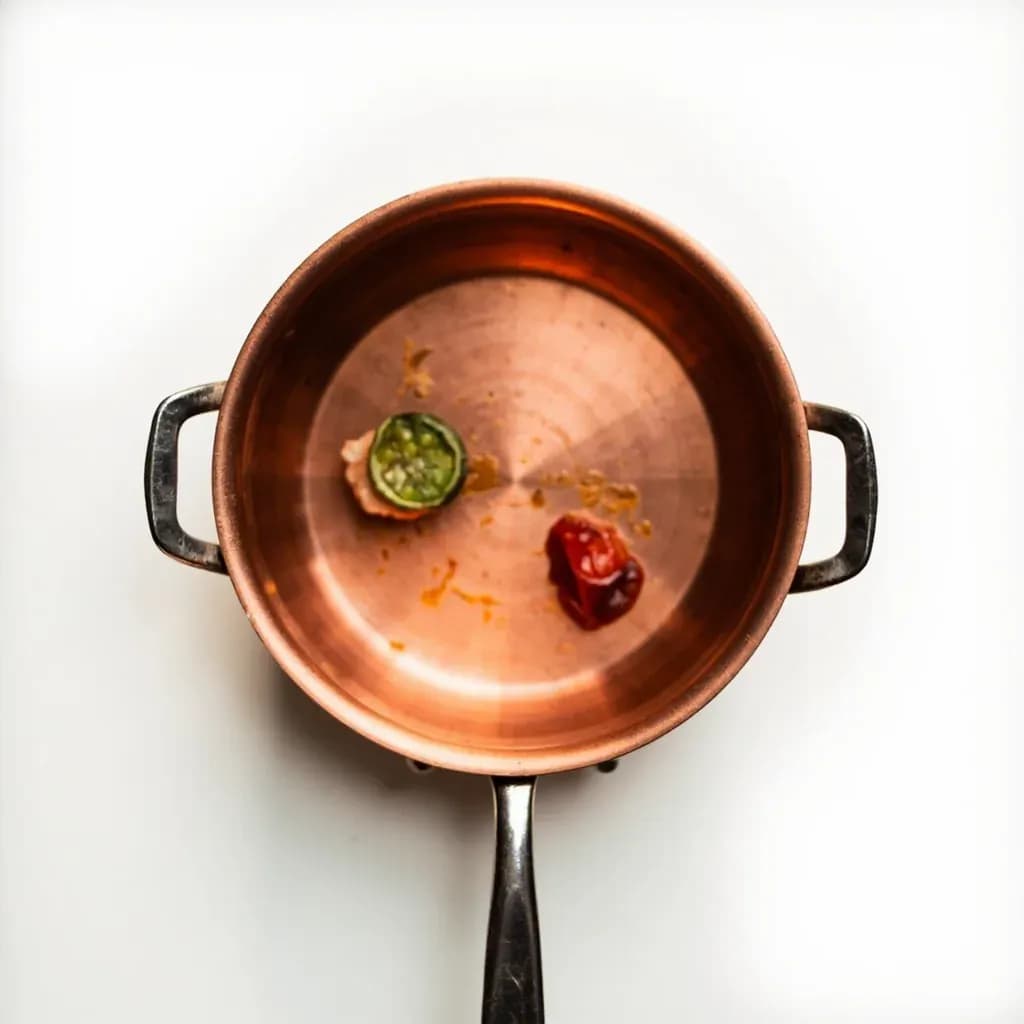
A copper saucepan is a pan made of highly conductive copper, usually lined with tin or stainless steel, that heats and cools almost instantly. Cooks value that responsiveness for delicate sauces, custards, caramel, and sugar work where temperature must be controlled precisely. The fast, even heat reduces hot spots and scorching.
A copper saucepan is a small, straight- or slightly sloped-sided pot built from solid copper, almost always lined on the cooking surface with either tin (the traditional French choice) or stainless steel. What sets it apart from every other common cookware metal is responsiveness: copper conducts heat roughly twice as fast as aluminum and around 25 times faster than stainless steel, so the pan's interior temperature tracks the flame almost one-to-one. Turn the burner down, and the pan cools within seconds; turn it up, and the surface is hot almost immediately. For a cook building a sauce, that lag-free feedback is the entire point of the pan.
This responsiveness is what has kept copper the default saucepan in classical French kitchens for nearly two centuries. Sauces that depend on a narrow thermal window — butter emulsions like hollandaise and beurre blanc, milk-based binders like béchamel, sugar syrups heading toward caramel — break or scorch with even a small overshoot of heat. A heavy cast-iron or thick-clad pan keeps cooking after the flame is off, racing past the target. Copper pulls off the heat and stops, which is exactly what you want when a sauce is a whisker from breaking. The cost is weight, price, and the small amount of upkeep a tin lining asks for.
Two cautions belong at the top of any copper entry. First, never cook in unlined copper: it reacts with acidic ingredients (wine, tomato, citrus) and certain fats, leaching copper ions that taste metallic and accumulate in the body. Second, "copper" cookware sold cheaply is usually copper-plated steel or aluminum — a thin layer of copper over a base that does not conduct well — and will not behave like solid copper. Real copper is heavy, thick (1.5–2.5 mm for most pans, 2.5–3 mm for professional models), and unmistakably orange.
Alternatives
Types & varieties
The classic French form; smooth silvery interior prized for delicacy and the way it releases fond. Needs retinning every several years under heavy use.
Modern hybrid; bonded 18/10 stainless interior over the copper body. Virtually maintenance-free, dishwasher-tolerant, and far more durable.
Traditional 'French' handle; heavy, gets hot on the stovetop, but stays handsome for decades. Always needs a towel or mitt.
Riveted stainless or bronze handle that stays cooler at the grip; more practical for a working home cook.
Decorative dimpled exterior. Purely aesthetic, though the work-hardening slightly stiffens the copper.
Stainless-steel exterior with a thick copper disc or layer in the base. Far less responsive than solid copper, but easier to maintain and induction-compatible.
Cheap imitations with a thin copper layer over steel or aluminum. Lacks the thermal mass of solid copper and is generally not worth the price.
Related copper shapes — the straight-sided saucepan, the sloping-sided saucier, the shallow sauté, and the wide rondeau — all share the same heat-response properties of solid copper.
Tin vs. stainless lining
The lining is the part of the pan that actually touches your food, and the choice between tin and stainless is the most consequential decision a copper buyer makes.
- Tin is the classical French interior and the choice of most pastry and sauce cooks. It is non-reactive, wonderfully smooth, and the most thermally 'transparent' of food-safe linings — heat passes through it with almost no resistance. A well-tinned pan releases fond cleanly and feels almost frictionless when whisking a sabayon or sliding a caramel.
- The trade-off with tin is softness: it melts around 232 °C, scratches under metal utensils, and slowly wears thin under heavy use. A pan in weekly service will likely need retinning every several years; a seldom-used display piece can go decades. Retinning is a real long-term cost to factor in.
- Stainless steel (usually 18/10) is bonded to the copper in modern pans. It is tougher than tin, tolerates metal utensils, and survives the dishwasher (though hand-washing is kinder).
- Stainless adds a hair of thermal lag and a rougher surface that grabs fond more aggressively — a small advantage for deglazing, a small disadvantage for delicate sugar work. For a home cook who wants copper's heat response with almost no maintenance, stainless-lined is the right answer.
Caring for a copper saucepan
A copper saucepan is not fragile, but it does ask for a few habits that other cookware does not.
- Hand-wash with warm soapy water and a soft sponge, then dry immediately. Tin in particular will spot and oxidize if left wet. The dishwasher is hard on tin and unhelpful to the lacquer or polish of the exterior.
- For the outside, a commercial copper cleaner (or a paste of coarse salt and white vinegar) restores the bright orange finish. Tarnish is greenish-brown and purely cosmetic — it has no effect on cooking, and a pan you use weekly may never visibly tarnish.
- Watch the tin lining. A dull grey patina is normal and polishes back to silver with use; black pits or visible copper showing through mean the lining has worn and the pan needs retinning. Never preheat an empty tin-lined pan on high — tin melts around 232 °C and will blister well before you notice the pan is hot.
- Deglaze with wine or stock only after the pan has cooled a moment; cold liquid on very hot tin can warp the lining or pop its bond to the copper. Do not store acidic sauces (a finished tomato ragù, a wine reduction) in the pan overnight — transfer them to glass or another vessel.
- For storage, hang the pan by its handle or set it on a felt liner in a dry cabinet. Copper does not rust, but prolonged contact with steel in a damp cupboard can leave grey marks that polish out.
Common uses
Tips & pitfalls
- Choose solid copper at least 1.5 mm thick; reject copper-plated pans and anything under 1 mm, which will warp and heat unevenly.
- Match lining to use: tin for purists and delicate egg-and-butter work; stainless if you want low-maintenance durability and don't mind a hair less responsiveness.
- Use wooden, silicone, or (only on stainless-lined pans) metal utensils. A metal spoon will gouge a tin lining in months.
- Never preheat an empty tin-lined pan on high — tin melts around 232 °C and will blister, often before you notice the pan is hot.
- Deglaze with wine or stock only after the pan has cooled for a moment; cold liquid on a very hot tin lining can warp the pan or pop the bond to the copper.
- Hand-wash and dry immediately. Tin will oxidize to a dull grey with use, which is normal; black pitting means it's time to retin.
- Don't store acidic foods (wine sauces, tomato) in the pan — transfer to another vessel once the dish is off the heat.
- Copper pays for itself most clearly in the 1–2 qt sizes; a small pan makes the biggest difference in a sauce repertoire.
- If budget matters, buy one great 2-quart tin-lined saucepan first. It's the pan you'll reach for every time you build a sauce, and it teaches more about heat in a year than a stack of clad pans in a lifetime.
Good to know
- Material
- Solid copper body with a food-safe interior lining of tin (traditional) or stainless steel (modern); never unlined
- Thermal conductivity
- Approximately 400 W/(m·K) — roughly twice that of aluminum and about 25× that of stainless steel, the most responsive practical cookware metal after silver
- Standard thickness
- 1.5–2.5 mm for most pans; 2.5–3 mm for heavier professional models. Anything substantially thinner warps and heats unevenly
- Typical sizes
- 1, 1.5, 2, 2.5, and 3 quarts (14–20 cm diameter); the 1.5–2 qt range is where copper pays for itself most clearly
- Weight (2 qt)
- Approximately 1.5–2.5 kg with a cast-iron handle — noticeably heavier than an equivalent aluminum saucepan
- Lining — tin
- Smooth, silvery, non-reactive, and the most thermally 'transparent' of the food-safe linings; soft (melts ~232 °C), scratches under metal, and needs retinning every several years of heavy use
- Lining — stainless steel
- Bonded 18/10 stainless interior; tougher, dishwasher-tolerant, far more durable, but slightly less responsive than tin
- Reactivity warning
- Unlined copper reacts with acidic ingredients (wine, tomato, citrus) and certain fats, leaching metallic-tasting, toxic copper ions — always cook in lined copper only
- Care & cost
- Hand-wash and dry; polish exterior with copper cleaner or salt-and-vinegar paste. A quality 2-quart tin-lined saucepan typically $150–$400; retinning is a recurring cost over the pan's life
Also called
Casserole en Cuivre · Copper Pot
Related

Steamer
Gentle moist heat that keeps vegetables, fish, and dumplings tender

Frying Pan
Shallow sloped pan for frying, sautéing, and quick sears

Saucepan
Tall, straight-sided pot for sauces, grains, and small batches

Sauté Pan
Wide straight-sided pan with room to brown and braise

Dutch Oven
Heavy lidded pot that turns tough cuts tender over hours

Stock Pot
Tall, roomy pot for stocks, pasta, and big-batch cooking

Wok
High-sided bowl pan built for blistering-hot stir-fries

Griddle
Flat, broad surface for pancakes, smash burgers, and breakfast