Baking & Pastry
Linen Couche
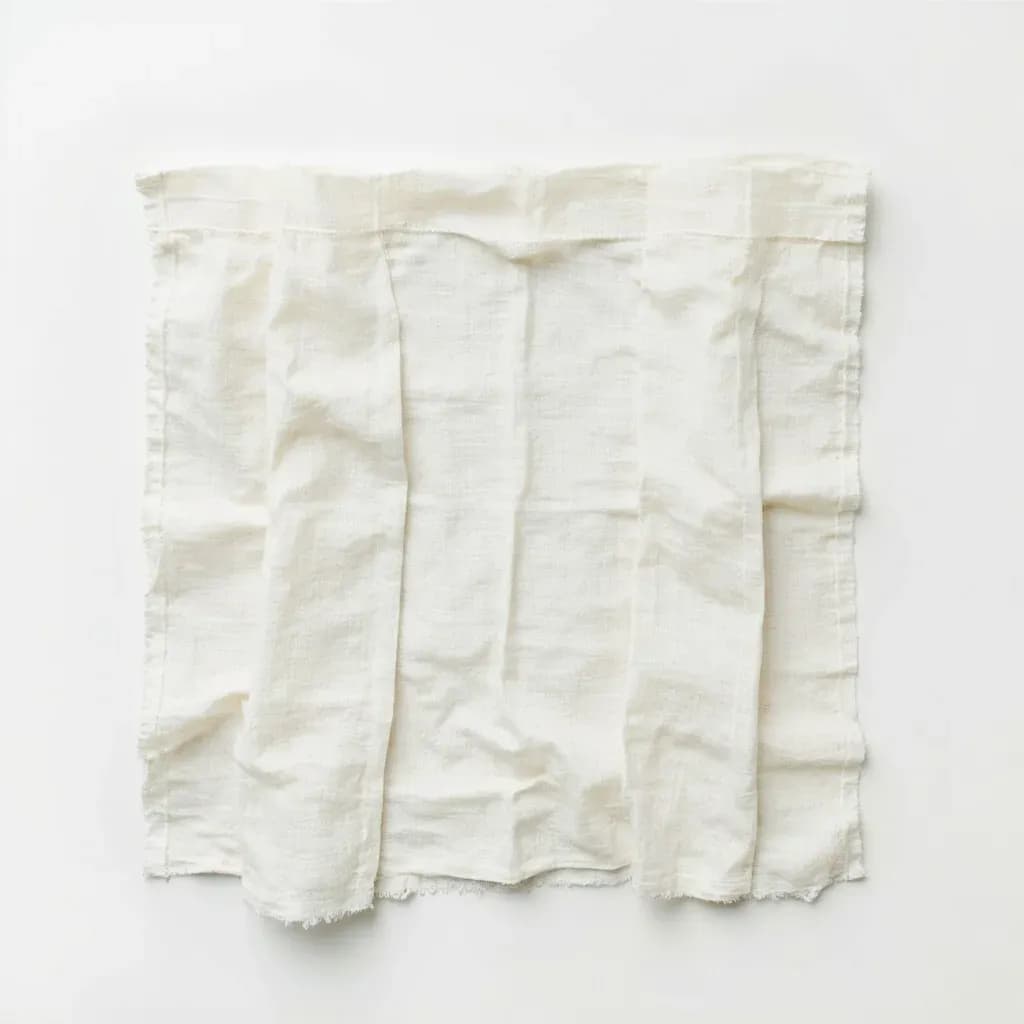
A heavy linen cloth that cradles shaped bread dough in folds while it proofs and holds its form.
A couche is a stiff, untreated linen cloth used to support shaped baguettes and other lean doughs during their final proof. The baker pleats the cloth into ridges that hold each loaf's shape and wick away surface moisture for a better crust. Its weave and a dusting of flour keep the sticky dough from clinging.
A couche is a length of heavy, untreated linen that French bakers fold into long parallel ridges and use as a bed for shaped bread dough during its final proof. The word means simply "layer" or "bed" in French (pronounced "koosh"), and the tool is so closely identified with baguette production that a row of pale, floured folds in a boulangerie is almost a synonym for the bread itself. Its purpose is deceptively simple: to hold a tall, narrow loaf upright while the gluten relaxes, so that the dough does not slump sideways during bench proof.
The couche earns its place in a serious baker's kit through two physical properties. First, the coarse, open weave of heavy linen grips a floured dough surface just enough to keep the loaf from sliding, without the slickness of a tea towel or the rigid containment of a banneton. Second, the natural fibers breathe, so residual gas can still escape and the dough does not sweat against a sealed surface. Used seam-up in a deep pleat, a shaped baguette keeps its height and a scored batard keeps its slashes.
A well-kept couche is one of the few bread tools where age genuinely improves performance. The cloth seasons with use, picking up a thin, even film of flour that makes release more reliable with every bake. It is also forgiving: a home cook who cannot source a dedicated baker's couche can fold a heavyweight linen tea towel into ridges and get most of the same benefits, provided the cloth is clean, dry, and thoroughly floured.
Alternatives
Types & varieties
The classic French style: thick, untreated linen with a coarse open weave that grips floured dough and releases it cleanly without linting.
A more affordable modern alternative; softer hand, but tends to stick more readily and usually needs heavier flouring.
Has sewn or pinned pleats that hold their shape, so the baker does not have to form deep folds by hand each time.
A plain heavyweight linen kitchen towel, or even a folded piece of table linen, used in home kitchens in place of a dedicated couche.
Long rectangular hemmed panels sold under names like "baker's couche" in baking-supply catalogs — the standard commercial form.
Working with a couche
A couche is not so much shaped as it is arranged. The baker lays the cloth flat on a sheet pan or proofing board, dusts it generously with flour, then pushes the flat fabric into a series of deep, parallel folds — usually 5 to 8 cm apart, depending on the length of loaf. Shaped dough is laid seam-up into each trough; the upward-facing seam gives the loaf a taut skin and the ridge of cloth on either side keeps it from leaning as the gluten relaxes. When the loaves are ready to bake, a baker's peel is slid under a single loaf, the fold is gently lifted away, and the dough is transferred to the oven with its shape intact.
- Dust the cloth, then rub flour deep into the troughs so dough never contacts bare fabric.
- Form the folds generously — narrow pleats crowd tall baguettes and leave marks on the crust.
- Lay dough seam-up so the taut underside faces up and slashes open cleanly in the oven.
- Lift the cloth away from the loaf rather than dragging the loaf off the cloth, which deflates the proofed dough.
- For round loaves that need more lateral support, switch to a banneton; the couche is for elongated shapes.
Care and seasoning
A couche is meant to be seasoned, not laundered. The thin, well-adhered film of flour that builds up over many bakes is exactly what gives an older couche its reliable release; aggressive washing strips that film and leaves the cloth hungry and sticky. Treat the couche the way you would treat a well-loved wooden board: brush it out, air it, and only wash it when something has actually gone wrong.
- After each bake, lift the couche outside and tap or brush off loose flour; let it air-dry before folding for storage.
- Wash only in cool water, without detergent or fabric softener, and only when the cloth smells off or has visible grease.
- After any wash, rub rice flour into the dry cloth to restore grip; rice flour is finer than bread flour and seasons the weave more evenly.
- Store fully dry in a breathable spot — never sealed in plastic while even slightly damp, or mildew will set in.
- Keep a dedicated couche; contact with oil, butter, or soap residue will repel flour and ruin the release.
Common uses
Tips & pitfalls
- Flour the couche thoroughly before each use and rub the flour deep into the folds — bare cloth sticking to dough is the most common failure.
- Place shaped dough seam-up in the troughs so surface tension keeps the loaf tall and the scored top opens cleanly in the oven.
- Space loaves so they do not touch; dough expands noticeably during proof and neighboring loaves will fuse together.
- If the couche sticks when you lift it, the cause is usually under-flouring, an over-proofed dough, or a cloth that has been washed too aggressively and lost its seasoning.
- Brush — never soak — to clean, and skip the washing machine unless the cloth is genuinely soiled; detergent strips the seasoned flour layer that gives an older couche its release.
- Air-dry the couche completely before folding and storing; trapped moisture causes mildew and sour odors that will transfer to the next bake.
- After any wash, rub in a little rice flour to restore grip; rice flour's fine particles seat into the weave more evenly than bread flour.
- Keep a dedicated couche and do not use it for drying dishes, lining a basket, or any task that could leave grease — oil repels flour and the cloth will stick permanently.
Good to know
- Material
- Heavy, untreated 100% linen traditionally; modern versions include cotton and linen-cotton blends
- Origin
- France — a long-standing tool of French boulangeries, associated with the rise of hand-shaped long breads in the 19th century
- Pronunciation
- "koosh" — French: couche, literally "a layer or bed"
- Primary function
- Cradles shaped loaves during the final (bench) proof so they hold their form rather than spreading sideways
- Typical dimensions
- Roughly 90 × 65 cm (about 35 × 26 in); longer panels, some near 1 m, accommodate several loaves side by side
- Pairing tool
- Banneton (brotform) — the rigid, wicker equivalent used for round and oval loaves that need more lateral support
- Bake transfer
- Designed to be used with a baker's peel and a deck, stone, or hearth oven for loading proofed loaves
- Care
- Brush off loose flour between bakes; wash rarely and without fabric softener; air-dry fully to prevent mildew
Also called
Baker's Couche · Proofing Linen · Couche Cloth
Related

Muffin Pan
Multi-cup pan for muffins, cupcakes, and egg bites

Bundt Pan
Fluted ring mold for showstopping cakes with a center hole

Springform Pan
Latch-release pan that frees delicate cakes without flipping

Pie Dish
Sloped round dish for crisp-bottomed pies and quiches

Tart Pan
Fluted pan with a pop-out base for clean-edged tarts

Rolling Pin
Rolls dough into even sheets for pastry and bread

Pastry Brush
Brushes on egg wash, glaze, butter, and marinades

Bench Scraper
Flat blade that divides dough and clears your work surface