Baking & Pastry
Dough Kneading Bowl
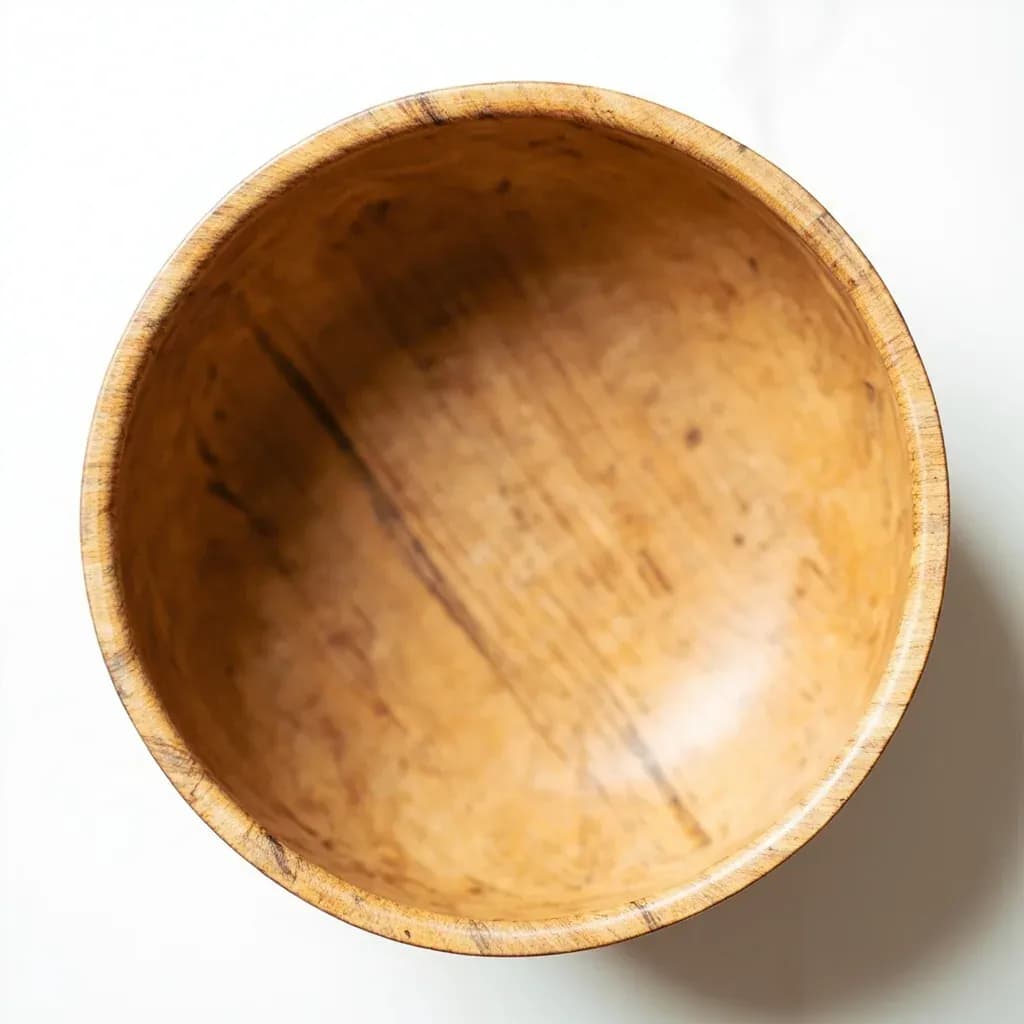
A large wooden, clay, or ceramic bowl used to mix, knead, and proof bread dough.
A dough bowl is a wide, deep vessel sized to hold and work a full batch of bread dough, like the Moroccan gsaa carved from wood or clay. Its broad base gives room to mix flour and water, knead, and let the dough rise without overflowing. Wood and unglazed clay hold gentle warmth that helps fermentation along, and the worn surface of a well-used bowl seasons over years of baking.
A dough kneading bowl is a wide, deep, heavy vessel — most often carved from a single block of hardwood or formed from thick ceramic — purpose-built to mix, knead, and bulk-proof bread dough by hand. What separates it from a standard mixing bowl is mass as much as size: walls of 1 to 2 inches of solid wood, or a half-inch or more of glazed stoneware, give the bowl a thermal buffer that ordinary stainless bowls lack. The sloped or curved interior is shaped so the heel of the hand can push, fold, and turn dough against tall, angled walls that catch and redirect it as you work — a geometry that turns a long hand-knead into a contained, rhythmic motion rather than a chase across the counter.
Material matters as much as shape. Wood breathes and slowly equalizes with room temperature, so a yeasted dough stays warm and active through a long bulk fermentation even in a cool kitchen. Glazed stoneware holds heat well through its sheer mass and resists the temperature swings that can stall a slow sourdough rise. Marble and granite run cool to the touch and draw heat out of the dough — they are the right choice when the goal is to keep butter and fat firm, as in puff pastry or pâte brisée, and the wrong choice for a warm bulk proof.
The wooden dough trough is one of the oldest specialized bread tools in the Western kitchen, carved from a single block and often the only dedicated baking implement a 17th- to 19th-century household owned. Modern ceramic and stoneware interpretations, plus marble bowls aimed at pastry, are 20th-century answers aimed at the home baker who wants that same all-in-one functionality without hunting down an antique.
Alternatives
Types & varieties
Oblong, single-well carving from one block of wood; the classic colonial and European form, with high sloping sides that guide the heel of the hand during kneading.
Modern round interpretation of the traditional trough; easier to source new, nests well in a kitchen, and works for the same techniques.
Dense, oily Mediterranean hardwood; resists moisture better than most domestic woods and shows distinctive marbled grain.
Naturally high in silica and oils; the most moisture-tolerant of the common woods, though hand-washing is still recommended.
Heavy ceramic that retains heat during a long bulk fermentation; non-porous surface so it does not absorb odors or moisture.
Porous clay that wicks surface moisture from wet doughs; requires pre-soaking and careful drying to avoid cracking.
Stays cool to the touch; favored for puff pastry, pie dough, and chocolate work, not for warm-proofed bread dough.
Very heavy, high thermal mass; behaves like marble but with a different surface feel.
Choosing the right material
Match the bowl to the dough, not the other way around.
- Wood for everyday bread and yeasted doughs in normal kitchens: it breathes, buffers temperature swings, and the sloped walls are built for hand kneading.
- Glazed stoneware for long, warm bulk ferments — sourdough, brioche, enriched doughs — when the kitchen is on the cool side and you want the dough to hold its heat.
- Marble or granite for laminated dough, pâte brisée, shortbread, and any cold work where keeping butter firm is the whole point. Skip stone for warm-proofed loaves; it will pull heat out of the dough and slow the rise.
- Unglazed terracotta for traditional recipes that call for a clay vessel — a cazuela-style bread or a focaccia-like flatbread — and only if you are willing to season and pre-soak the bowl.
Sizing the bowl
Dough roughly doubles in volume at peak rise, and a slack dough can spread further than you expect.
- Size the bowl to 2 to 3 times the volume of the dough at its peak rise.
- An 8-quart bowl comfortably holds a 1 kg (2.2 lb) loaf of bread with room to stretch and fold.
- For two loaves or a single large batch, step up to a 14- to 20-quart bowl; a trough-style bowl is the natural choice for higher volumes because its long footprint spreads the dough out.
Care and longevity
A well-tended wooden bowl will outlast its owner; a neglected one will crack, sour, or split within a few years.
- Wipe, don't wash. Use a warm damp cloth and a bench scraper for stuck dough; never soak, run through a dishwasher, or use harsh detergent on wood.
- Dry upright in open air after every use so moisture can escape from both sides.
- Refresh every few months with food-grade mineral oil, or a 4:1 mineral-oil-to-beeswax paste rubbed in with a soft cloth, then buffed dry.
- Never oil with olive, walnut, or other cooking oils — they oxidize and go rancid, and the off-flavor will end up in your next loaf.
- If the bowl develops a faint sour smell, scrub it with coarse salt and a halved lemon, let it sit 10 minutes, wipe clean, and re-oil.
- Keep wooden bowls out of the oven and the microwave; thermal shock will crack them.
Common uses
Tips & pitfalls
- Size the bowl to 2 to 3 times the volume of the dough at its peak rise — an 8-quart bowl handles a 1 kg loaf with room to spare.
- Never soak a wooden bowl or run it through the dishwasher; wipe with a warm damp cloth, scrape with a bench scraper, and dry upright in open air.
- Do not oil a wooden bowl with olive or other cooking oils; they go rancid and flavor the next dough. Use food-grade mineral oil, or a 4:1 mineral-oil-to-beeswax paste, refreshed every few months.
- Pick glazed stoneware for long, warm bulk ferments (sourdough, brioche) where you want the dough to hold its heat; pick marble or granite for laminated and pastry doughs where you want the fat to stay firm.
- Mist the interior of a wooden bowl with water before adding a high-hydration dough (75% hydration or more); the wood will pull less moisture from the dough surface and the dough will release more cleanly.
- Use a bench scraper, not a metal spoon or knife, to clean out the bowl — metal gouges the wood.
- If a wooden bowl picks up an off smell, scrub it with coarse salt and a halved lemon, let it sit 10 minutes, wipe clean, and re-oil.
- Rotate which end of a trough-style bowl you knead in so wear and patina build up evenly across the well.
Good to know
- Also called
- Kneading bowl, bread bowl, kneading trough, proving bowl
- Typical capacity
- 8–14 qt (7.5–13 L); oversized versions run to 20+ qt
- Common rim diameter
- 12–18 in (30–46 cm)
- Primary materials
- Solid hardwood (oak, maple, beech, cherry, teak, olivewood); glazed stoneware; marble; granite; unglazed terracotta
- Wall thickness (wood)
- Roughly 1–2 in (2.5–5 cm), giving the bowl its heft and thermal mass
- Thermal behavior
- Wood and stoneware buffer temperature swings during bulk fermentation; marble and granite run cool and are better suited to pastry than to warm-proofed bread dough
- Care
- Wooden bowls should never be soaked, dishwashed, or detergent-soaked; wipe with a damp cloth, dry upright, and refresh periodically with food-grade mineral oil or a beeswax/mineral-oil paste
- Compatibility
- Designed for hand-kneading, stretch-and-fold, autolyse, and bulk rise; not used with a stand mixer
Also called
Gsaa (Large Wooden/Clay Kneading Bowl) · Gsaa · Kneading Bowl · Proofing Bowl
Related

Muffin Pan
Multi-cup pan for muffins, cupcakes, and egg bites

Bundt Pan
Fluted ring mold for showstopping cakes with a center hole

Springform Pan
Latch-release pan that frees delicate cakes without flipping

Pie Dish
Sloped round dish for crisp-bottomed pies and quiches

Tart Pan
Fluted pan with a pop-out base for clean-edged tarts

Rolling Pin
Rolls dough into even sheets for pastry and bread

Pastry Brush
Brushes on egg wash, glaze, butter, and marinades

Bench Scraper
Flat blade that divides dough and clears your work surface