Baking & Pastry
Dough Divider
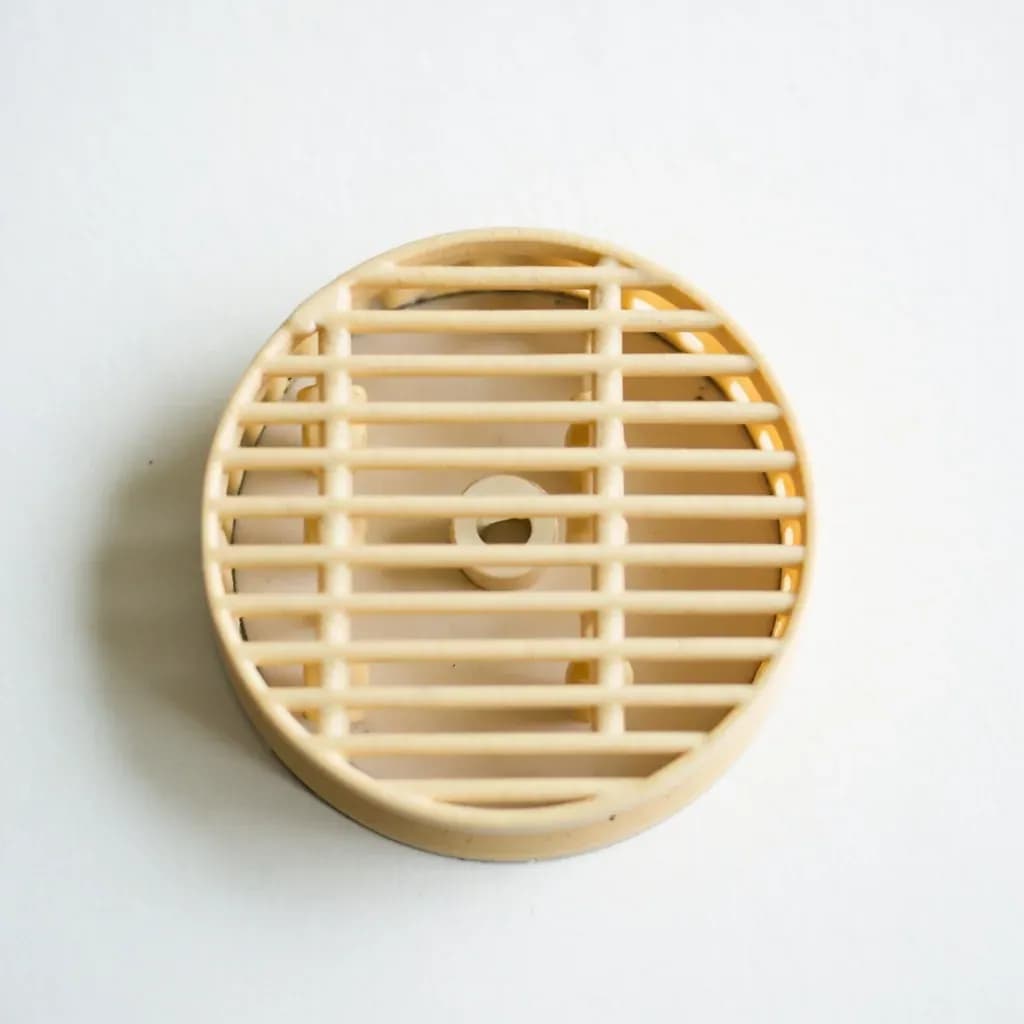
A pressing tool or machine that splits a dough mass into equal portions for uniform loaves and rolls.
A dough divider cuts a single batch of dough into many equal pieces, either with a hand-pressed gridded cutter or a hydraulic bakery machine. Bakers use it to portion rolls, buns, and loaf pieces consistently so they bake evenly and weigh the same. Equal portions matter for predictable proof and bake times, and a divider does in one press what hand-cutting and weighing would take far longer.
In any production bakery, the dough divider is the first station after mixing: a single mass of dough is broken into pieces of nearly identical size so that proofing, baking, and final weight all behave predictably. The dividing action is always somewhat stressful to dough — every cut compresses and shears the crumb network — and the craft of choosing and running a divider is really the craft of managing that stress.
There are two governing principles. Volumetric dividers, the workhorses of the trade, use a piston and chamber of fixed volume, so they are fast and mechanically simple but drift in piece weight as dough hydration and density change. Weight-based or gravimetric dividers weigh each portion individually and hold to roughly ±1 to 2 percent, the standard wherever pre-packed retail weight must be met by law. The most common configuration in the industry is the combined divider-rounder, which cuts the dough and immediately shapes the pieces into round balls ready for proofing.
Divider choice is dictated by dough character. Standard bread, pizza, bagel, and soft roll doughs in the 55 to 68 percent hydration range divide cleanly on almost any machine. Heavily enriched doughs, very high-hydration doughs, and any laminated dough are poor candidates for a standard piston divider and instead call for a gentle, stressless design or hand portioning on a bench scale.
Alternatives
Types & varieties
Hand-lever press that cuts a loaded dough block into 36 or more equal pieces; small footprint, common in artisan shops and pizzerias
Electric motor drives the cut; the operator loads dough by hand into the chamber each cycle
Hopper-fed with conveyor discharge; the operator only refills the hopper and removes trays
Cuts and immediately shapes pieces into round balls; the standard for buns, rolls, and pizza dough
Piston-and-chamber of fixed volume; fast, simple, with modest piece-to-piece weight variation
Scales each portion individually for the highest accuracy; used where legal-for-trade weight matters
Dough is forced by a piston through cutting grids; the dominant style in bun and roll production
Dough is extruded and cut by rotating blades; best for stiffer, lower-hydration doughs
Low-pressure, low-shear designs (notably Rheon) intended to preserve gluten and lamination in delicate doughs
Volumetric vs. weight-based
The volumetric divider is by far the more common machine. A chamber of known volume is filled with dough, a piston closes it, and the cut face is pushed through a grid of wires or blades. Speed is high — a mid-size automatic will turn out 2,000 pieces an hour — and there are very few moving parts to maintain. The trade-off is accuracy: the same chamber that holds 60 g of tight bagel dough will hold closer to 70 g of slack, well-fermented bread dough, so piece weight drifts with the dough's density. For most wholesale and in-store bakery work, this drift is acceptable. Where it is not — pre-packed retail loaves sold by declared weight, or buns sold by the half-dozen — a gravimetric system is fitted instead. The most common designs weigh the dough as it is fed into the cut and trigger the blade at the moment the measured portion matches the target, holding the entire run to about ±1 to 2 percent.
- Volumetric is the default: faster, cheaper, simpler.
- Weight-based measures each portion as it is cut and is required for legal-for-trade retail packs.
- Some plants run volumetric for throughput and a final check-weigher downstream to cull overruns.
What divides well — and what doesn't
A divider's job is to cut cleanly without tearing or compressing, and the dough's hydration, enrichment, and structure determine how well it can do that. Standard bread, pizza, bagel, and soft roll doughs in the 55 to 68 percent hydration range behave predictably. Heavily enriched doughs — high butter, high egg, high sugar — are plastic and tend to smear rather than cut, sticking to the chamber and the wires. Very high-hydration doughs (above about 75 percent) are sticky and deform on release. Any laminated dough will be destroyed by the compressive, shearing action of a standard piston: the layers of butter and dough will be welded back together. These doughs need either a stressless divider or, more commonly at smaller scale, hand portioning on a bench scale.
- Good candidates: standard bread, pizza, bagel, soft rolls, buns (55–68% hydration).
- Poor candidates: heavily enriched doughs, very high-hydration doughs (>75%), laminated doughs.
- For laminated or enriched work, use a stressless divider or portion by hand on a bench scale.
After the cut: recovery and rounding
Dividing always disturbs the gluten network to some degree, and the cut pieces need a moment to recover before they are proofed or shaped. Most bakers give divided dough 5 to 15 minutes relaxed on the bench, lightly covered, so the gluten can relax and the cut faces can begin to skin over. Rounding immediately after cutting — which is what a divider-rounder does in one pass — works only when the rounding is gentle; aggressive rounding on freshly cut, high-hydration dough will tear the surface and trap gas pockets that blow out during baking. The best divider-rounder settings match the rounding pressure to the dough: lower pressure for soft, slack doughs, higher pressure for tight, cold doughs that need help holding a ball shape.
- Rest divided pieces 5–15 minutes before further shaping when the divider is a cut-only unit.
- Match rounding pressure to dough character: gentle for slack doughs, firmer for tight, cold doughs.
- Cover lightly between cut and round to prevent skinning on the cut face.
Common uses
Tips & pitfalls
- Temper the dough before dividing: very cold dough resists the cut and tears; very warm dough sticks and deforms. Aim for dough that gives slightly when pressed, around 24–26°C (75–78°F) for most bread and roll work.
- Use oil on the chamber and piston for high-hydration doughs (above about 65 percent hydration); use flour for tighter, lower-hydration doughs. The choice of release agent affects crust color and sauce adhesion on pizza.
- Never run laminated dough — croissant, puff, Danish — through a standard piston divider. The pressure welds the layers back together. Use a stressless divider or portion by hand on a bench scale.
- For pizza dough, oil the cut surfaces rather than flour them. Flour on the cut face inhibits sauce adhesion and produces a pale, floury rim on the baked crust.
- Weigh the first ten pieces of every run on a scale. Drift in piece weight shows up on the scale long before it shows up in the finished product, and recalibrating early saves a full tray of rejects.
- Keep cutting wires and blades sharp. Dull blades drag through the dough rather than slicing it, deforming the cut face and slowing gluten recovery.
- Run a plain flour-water cleaning dough through the chamber at the end of every shift to purge residue, then strip the head and chamber for a full wash. Trapped dough ferments and molds quickly in the seams.
- Do not overfill the hopper on an automatic unit. Excess dough back-pressure compresses the cut pieces and robs the loaf of its final oven spring.
Good to know
- Function
- Portions a mass of dough into equal-weight pieces for uniform rolls, buns, and loaves
- Dividing principle
- Volumetric (piston/chamber) for speed; weight-based (gravimetric) for accuracy
- Weight accuracy
- Volumetric about ±3–5 percent; weight-based about ±1–2 percent piece to piece
- Capacity
- Roughly 500 to 6,000+ pieces per hour; mid-size automatics typically 1,500–2,400 pcs/hr
- Piece weight range
- Typically 30 g to about 1 kg per piece depending on chamber size and model
- Drive types
- Manual hand-lever, semi-automatic (motorized, hand-loaded), and fully automatic with hopper and conveyor
- Standard configuration
- Divider-rounder combines cutting and ball-forming in one pass — the industry default for buns, rolls, and pizza dough
- Cost band
- Manual bench models a few hundred dollars; semi-automatic several thousand; full industrial divider-rounders roughly $15,000 to over $100,000
Also called
Dough Cutter Divider · Bun Divider
Related

Muffin Pan
Multi-cup pan for muffins, cupcakes, and egg bites

Bundt Pan
Fluted ring mold for showstopping cakes with a center hole

Springform Pan
Latch-release pan that frees delicate cakes without flipping

Pie Dish
Sloped round dish for crisp-bottomed pies and quiches

Tart Pan
Fluted pan with a pop-out base for clean-edged tarts

Rolling Pin
Rolls dough into even sheets for pastry and bread

Pastry Brush
Brushes on egg wash, glaze, butter, and marinades

Bench Scraper
Flat blade that divides dough and clears your work surface