Baking & Pastry
Dough Docker
Spiked roller that pierces dough to stop it puffing unevenly while baking.
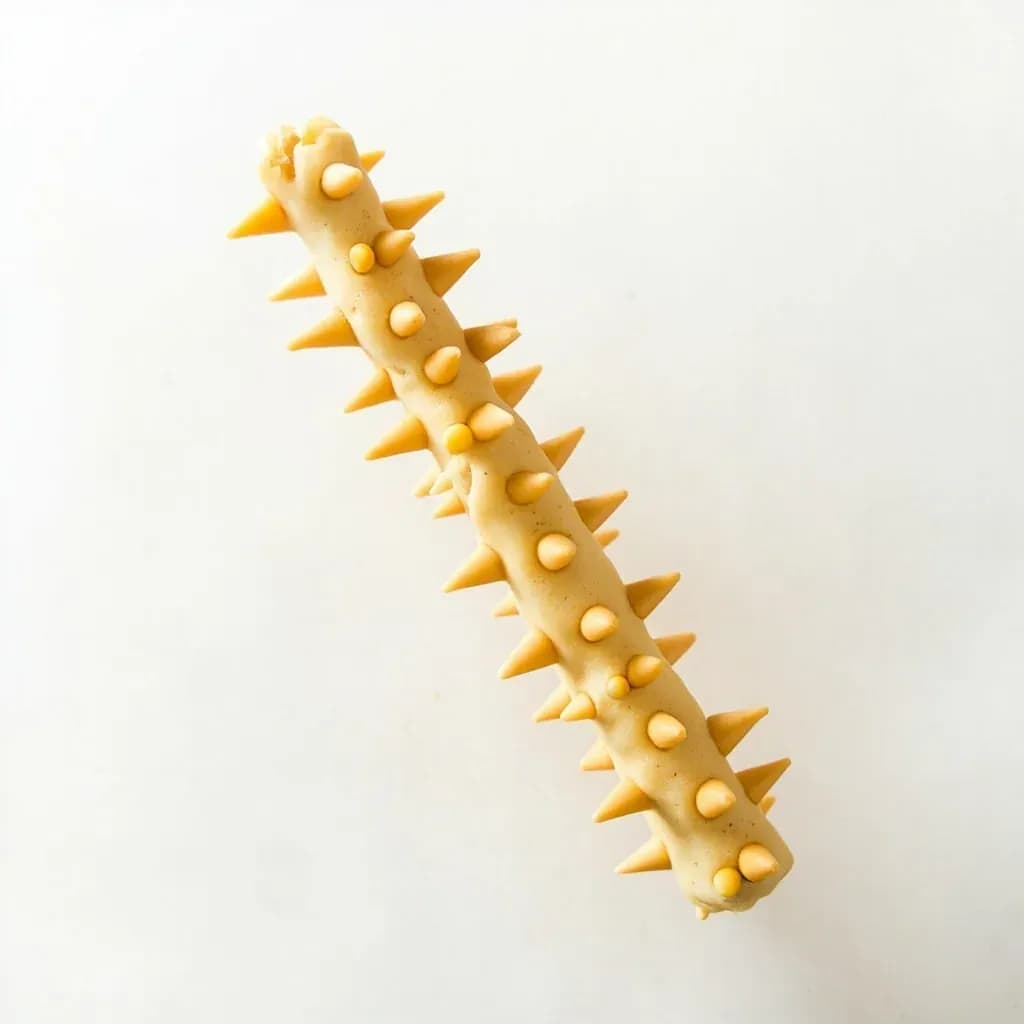
A dough docker is a handled roller covered in blunt spikes that punches small evenly spaced holes across rolled dough. Bakers run it over pizza bases, crackers, pie shells, and flatbreads so steam escapes and the dough bakes flat instead of bubbling up. The many holes do quickly what poking with a fork does slowly.
A dough docker is a small, spiked roller or hand tool used to puncture rows of shallow holes in rolled-out dough before baking. The act of puncturing — called *docking* — gives the steam trapped inside the dough a controlled escape route, so the crust relaxes flat against the pan instead of puffing into domes, bubbles, or warped shells. The tool itself is simple: a barrel, handle, or paddle studded with short metal pins that pierce the dough surface without going all the way through.
The real value of a dough docker shows up in two situations. The first is blind baking, when a pie or tart shell must set into a crisp, level base before any filling goes in; without venting, the trapped moisture lifts the center into a shallow bowl. The second is lean dough — pizza, flatbread, crackers, shortbread — where a tight crumb and rapid oven heat create the same steam-pressure problem. In both cases, a few seconds of rolling replaces guesswork with predictable, even results.
A docker is *not* a one-size-fits-all solution, though. Yeasted breads and laminated doughs often need their oven spring or layered rise, and aggressive docking will fight that lift. The art lies in knowing which doughs to vent, how densely to vent them, and at what stage of preparation. Used well, it is one of the quietest but most reliable tools in a pastry cook's kit.
Alternatives
Types & varieties
Cylindrical barrel studded with rows of short spikes, rolled across dough like a small rolling pin. The standard choice for sheet pans and large crusts.
Palm-sized head with one spiked face and a short handle. Ideal for small tartlets, individual pies, and spot-docking trouble spots.
Larger rolling-pin model with longer or denser spikes, sized for sheet-pan or large pizza dough.
Spiked wheel that runs along a track or handle, producing uniform, evenly spaced holes in a single pass.
Hybrid tool with a spiked wheel on one side and a cutter or blender on the other; a specialty item found mostly in pro supply shops.
How Docking Actually Works
Dough holds a surprising amount of water, and water turns to steam at oven temperature. In a sealed crust, that steam has nowhere to go except up, lifting the dough into domes or trapping it as soggy pockets against a wet filling. A row of small holes turns the crust's underside into a controlled vent: steam escapes through the punctures rather than tearing the dough apart, so the base bakes flat and even.
The depth of the holes matters more than their number. They need to break the surface tension of the dough without slicing all the way through to the pan — a full puncture lets fat escape and pool underneath, which can cause sticking. The classic 1/4-inch spike length is calibrated to that sweet spot.
When to Dock and When to Leave It Alone
Docking is a technique, not a default step. The right call depends on the dough's structure and what you want the finished product to do.
- Dock pie and tart shells before blind baking — the base needs to stay flat against the pan.
- Dock pizza, flatbread, cracker, and shortbread dough to prevent large bubbles and encourage an even crisp.
- Dock puff or rough-puff pastry *lightly* if you want a controlled, partially risen sheet rather than full oven spring.
- Skip the docker on enriched, yeasted breads where oven spring and an open crumb are the goal.
Choosing a Style for Your Kitchen
A rolling-pin docker is the workhorse of a professional pastry station because it covers a full sheet pan in one or two passes. For a home baker who mostly makes single pies and small tarts, a single-hand docker is faster to pick up and easier to control on smaller surfaces. If you make pizza weekly, a longer-spiked pizza docker is worth the extra reach.
Common uses
Tips & pitfalls
- Dock dough while it is still chilled — cold fat keeps the holes defined and stops the dough from sealing back shut.
- Apply even, moderate pressure; pressing too hard drives the pins through to the pan and can tear or stick the dough.
- Roll in two directions (north-south, then east-west) to guarantee full coverage with no missed pockets.
- If a spike clogs with dough, stop and wipe it — built-up dough drags across the surface and tears the next patch.
- For very thin or delicate dough such as tuiles and lace cookies, prefer a fine-pricked docker or a fork to avoid large, visible holes.
- Docking is not a substitute for pie weights on a full crust — dock first, then line with parchment and weights to prevent the sides from slumping.
- Re-dock any area that visibly puffed while the crust is still hot; the dough reseals as it cools and becomes harder to vent.
- Dry steel pins thoroughly after washing to prevent oxidation, especially in humid kitchens where rust can develop quickly.
Good to know
- Primary function
- Pierces raw dough with shallow holes to vent steam during baking, preventing uneven puffing or blistering.
- Typical spike length
- Roughly 1/4 inch (6 mm) — deep enough to vent steam, short enough to avoid puncturing the pan.
- Common spike count
- Most rolling-pin dockers carry 4–9 short pins arranged in patterned rows along the barrel.
- Body and pin materials
- Wood, plastic, or aluminium barrel paired with stainless-steel or brass pins.
- Also called
- Docking roller, pastry docker, pizza docker, docker roller.
- Origins
- The docking technique predates the dedicated tool and was originally performed with a dinner fork; the dedicated tool became standardized in 20th-century commercial bakeries.
- Skill level
- Beginner; no special training required.
- Approximate cost
- Roughly $8–$25 USD for a basic home model.
Also called
Docker · Docking Roller · Pastry Docker
Related

Muffin Pan
Multi-cup pan for muffins, cupcakes, and egg bites

Bundt Pan
Fluted ring mold for showstopping cakes with a center hole

Springform Pan
Latch-release pan that frees delicate cakes without flipping

Pie Dish
Sloped round dish for crisp-bottomed pies and quiches

Tart Pan
Fluted pan with a pop-out base for clean-edged tarts

Rolling Pin
Rolls dough into even sheets for pastry and bread

Pastry Brush
Brushes on egg wash, glaze, butter, and marinades

Bench Scraper
Flat blade that divides dough and clears your work surface