Baking & Pastry
Dough Proofing Box (Cassetta)
A lidded, stackable tub that holds shaped dough at a steady temperature while it rises.
A dough proofing box, or cassetta, is a food-grade lidded tub used to bulk-ferment and proof bread and pizza dough in a controlled, draft-free space. Bakers and pizzaiolos load shaped dough balls into stackable boxes to keep humidity in and let them rise evenly. The flat, stackable design saves bench space and protects the dough's skin from drying out.
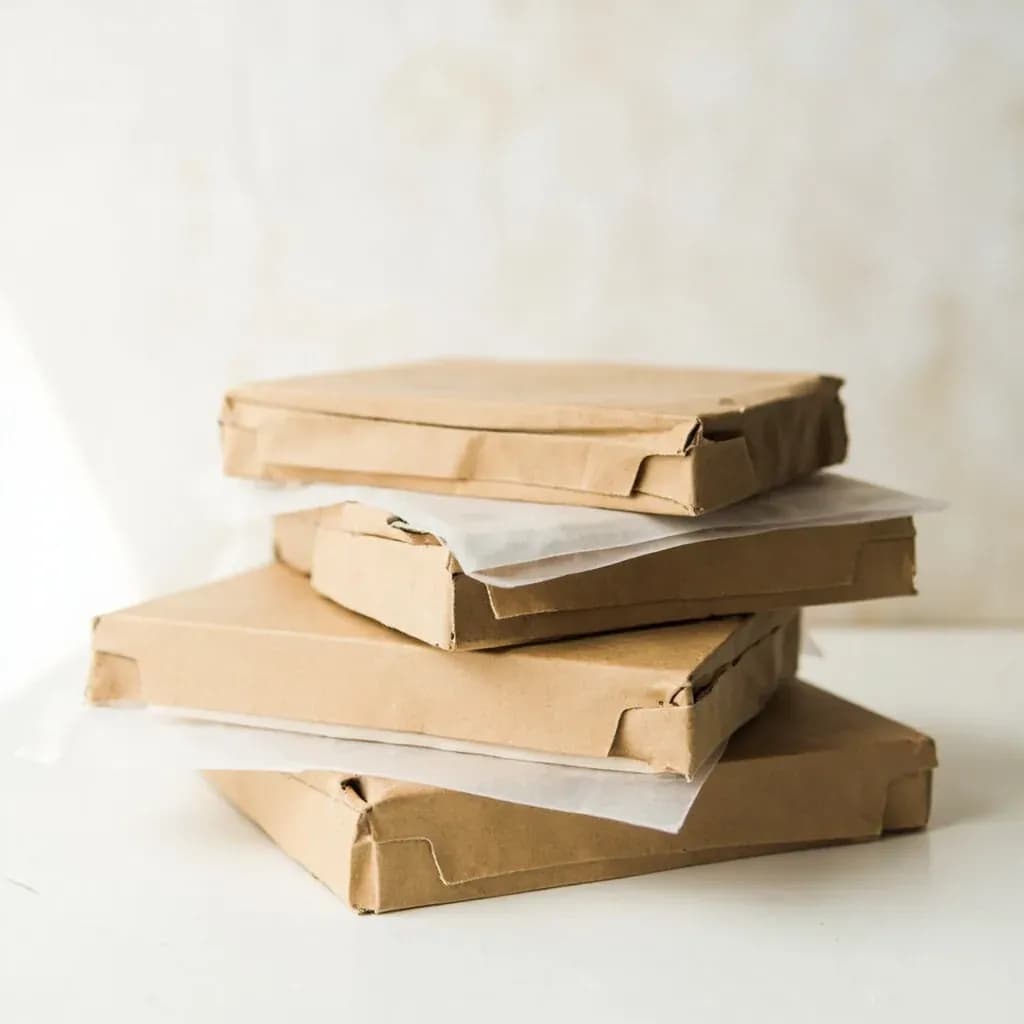
The dough proofing box is, in the broadest sense, any lidded container that holds shaped dough in a stable thermal and humid microenvironment while it rises. In Italian baking, the word cassetta almost always means the tall, square, single-use cardboard-and-parchment mold used to bake panettone, pandoro, and other lievitati — the same vessel that holds the dough through its final proof and then goes straight into the oven. In English-language and professional kitchens, "proofing box" more often refers to a stackable rigid plastic tub used only for the rise, after which the shaped dough is unmolded onto a sheet pan or into a baking pan. Both forms share a defining job: contain the dough's vertical rise, protect the surface from drafts and skin formation, and trap enough humidity to keep the dough supple through what is often a long, slow proof.
The cassetta matters most for enriched, buttery, or high-sugar doughs that would slump sideways under their own weight if left on a flat tray. The tall, straight walls force the dough to rise straight up rather than spread outward, which is what gives panettone its characteristic domed crown once the paper collar is peeled away after baking. The plastic proofing box, by contrast, is a workflow tool — it keeps a busy bakery's bench clean, allows dozens of loaves to be staged in tiers without touching, and doubles as a sealed environment for overnight cold retardation in a refrigerator. Choosing between them is mostly a matter of whether you want to bake in the same vessel or transfer the dough to a separate pan.
A proofing box is not a leavening chamber on its own. It does not generate heat or humidity; it merely conserves whatever environment the dough is placed into. A box pulled from a cold room will keep dough cold, a box set inside a proofer at 28 °C will keep dough warm, and a box left on a cool counter will let dough sit at ambient. The lid is the other half of the equation: closed tight, it holds humidity in; cracked or removed, it behaves like a banneton. Understanding that the box is a passive container, not an active conditioner, is what separates clean, predictable proofs from stuck, deflated, or sour ones.
Alternatives
Types & varieties
Tall, square, paper-and-cardboard mold with a flat lid; the defining vessel for panettone, pandoro, and other enriched lievitati. Sized to the finished loaf weight (e.g., 1 kg). Doubles as the baking mold.
Disposable parchment-paper mold with a top disc, sold in color-coded prints by size (red 500 g, green 750 g, blue 1 kg, brown 2 kg, black 5 kg).
Rigid, lidded polypropylene or polyethylene tub used in professional bakeries for bulk final proof and cold retardation. Squat rectangular shape, nestable when empty, usually dishwasher-safe.
A sealable plastic box placed inside a refrigerator; used for cold ferment, overnight retard, or storing preferments at controlled temperature.
A shallow tub or tray that slides into a heated, humidity-controlled leavening cell (Italian: cella di lievitazione); the tray itself is passive, the cabinet provides the temperature and moisture.
Sizing the cassetta
The Italian convention is to size the cassetta to the finished baked weight of the loaf, not the dough weight. The dough itself loses roughly 10–15% of its weight during baking, and the cassetta should be filled no more than about one-third of its height at the start of the final proof. Dough will roughly triple in volume during a long proof, so a small underestimate in size becomes a dramatic overflow.
- 500 g cassetta: about 300–350 g of shaped dough; ideal for individual panettone or small pandoro.
- 1 kg cassetta: about 600–700 g of dough; the workhorse size for a family panettone.
- 5 kg cassetta: about 3–3.5 kg of dough; used for large-format holiday loaves and professional batches.
- Undersized molds force blowouts at the base or top; oversized molds make the dough slump sideways and lose the straight-walled shape the cassetta is supposed to give.
Cassetta vs. banneton
The cassetta and the banneton are sometimes confused because both are proofing vessels, but they are designed for opposite ends of the bread-baking spectrum. The cassetta is straight-walled, often paper-based, and used for enriched doughs that need to climb rather than spread. The banneton is rounded, wicker or cane, and used for lean, high-hydration doughs that need to hold an open, ringed, floured crust through a long cold proof. Picking the wrong one either deflates the dough (cassetta for a wet sourdough will trap steam and pool condensate) or gives the wrong shape (banneton for a panettone will not contain the rise).
- Cassetta — enriched doughs: panettone, pandoro, brioche, babka, kugelhopf, pan di Spagna.
- Banneton — lean doughs: country sourdough, miche, rye, ciabatta with a long cold retard.
- Cassetta goes into the oven with the dough; banneton is removed before bake and the dough is tipped onto a stone or sheet.
- Cassetta traps humidity in; banneton is left uncovered or lightly wrapped to let the crust dry.
Common uses
Tips & pitfalls
- Mist the dough, not the box, when you need a humid surface — spraying a cardboard cassetta will soften it and cause blowouts at the base.
- For a panettone cassetta, line with a tall collar of parchment and dust with rice flour or a 50/50 rice-and-wheat blend so the dough releases cleanly without tearing the crust.
- Size the cassetta so the dough fills no more than about one-third of its height before the final proof; it will roughly triple.
- Keep plastic proofing boxes truly clean: a film of oil or starch becomes a breeding ground for rope spoilage. Hot water plus sanitizer, then air-dry upside down.
- For cold retard, leave the lid slightly ajar for the first 20 minutes so residual warmth can escape before sealing; otherwise condensation drips back onto the dough.
- Do not seal a warm, very wet dough (such as ciabatta) in a closed box — the condensate will pool and deflate the surface.
- Stack only with compatible lids; mismatched boxes will rack and tilt under proof pressure and crush the dough below.
- Pre-warm the cassetta in the proofing cabinet so the dough does not chill on contact and stall the rise.
- Mark the dough height on the box with a rubber band or a piece of tape to judge proof objectively rather than by feel.
Good to know
- Category
- Baking & Pastry equipment
- Primary function
- Holds shaped dough at a stable temperature and humidity during final proofing
- Cassetta materials
- Food-grade coated cardboard with a parchment-paper liner and a flat top disc
- Plastic box materials
- Rigid polypropylene or polyethylene, food-grade
- Standard cassetta sizes
- Named by finished loaf weight — 500 g, 750 g, 1 kg, 2 kg, 5 kg
- Color code (Italian convention)
- 500 g red, 750 g green, 1 kg blue, 2 kg brown, 5 kg black
- Plastic proofing box sizes
- Roughly 5 L to 20 L, rectangular, sized to fit standard sheet pans or rack shelves
- Stackable
- Yes — both cardboard and plastic forms are designed to stack without crushing the dough
- Reusability
- Plastic — hundreds of cycles; cardboard cassetta — single bake (it goes in the oven)
Also called
Dough Tub · Lidded Dough Tub · Cassetta · Proofing Box
Related

Muffin Pan
Multi-cup pan for muffins, cupcakes, and egg bites

Bundt Pan
Fluted ring mold for showstopping cakes with a center hole

Springform Pan
Latch-release pan that frees delicate cakes without flipping

Pie Dish
Sloped round dish for crisp-bottomed pies and quiches

Tart Pan
Fluted pan with a pop-out base for clean-edged tarts

Rolling Pin
Rolls dough into even sheets for pastry and bread

Pastry Brush
Brushes on egg wash, glaze, butter, and marinades

Bench Scraper
Flat blade that divides dough and clears your work surface