Cookware
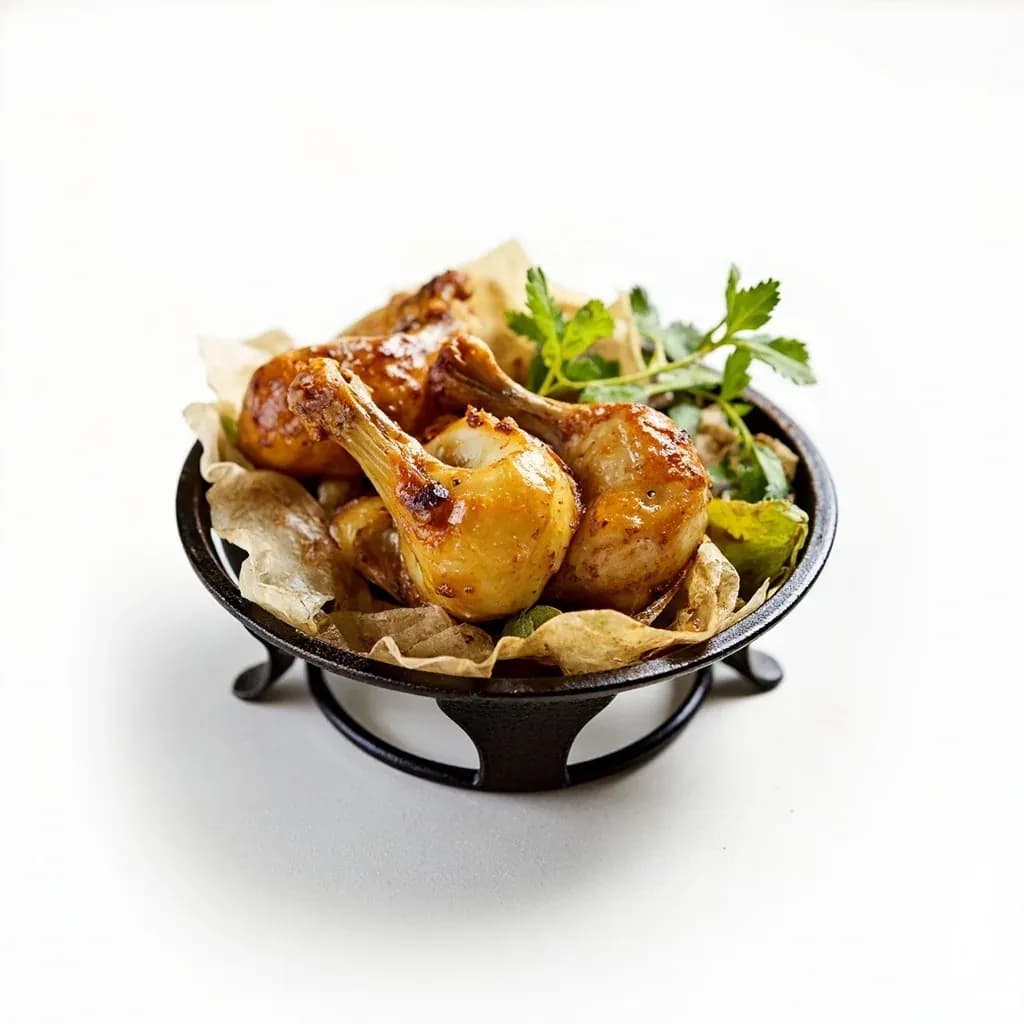
Cast-Iron Trivet / Riser
A small iron stand that lifts food off the pot bottom for steaming and even roasting.
A cast-iron trivet or riser is a low metal stand set inside a Dutch oven or pot to keep food off the hot bottom, allowing steam to circulate and preventing scorching. Cooks use it to steam, braise, or roast a joint above its own juices, and as a heat-safe rest for a hot pot on the counter. The raised platform also helps with pressure-steaming and pot-in-pot cooking.
A cast-iron trivet is a short, heavy iron stand that drops into a Dutch oven, pressure canner, or stockpot to lift food off the pot floor. The classic form is a flat round plate on three short legs, standing about an inch and a half tall — humble and almost industrial, but it solves a real problem. A whole chicken or a pan of vegetables set directly on a Dutch oven's bottom simmers in its own juices and steams instead of roasting. Lifted an inch or so on the trivet, the same food sits in circulating hot air, the skin browns and crisps, and drippings fall clear of the bird to glaze whatever vegetables wait beneath.
The trivet's weight and iron mass are what make it work. Preheated alongside the pot, it stores heat and radiates it back upward so the underside of the food browns rather than pale-steams. The legs create a true convection gap, and the plate above them keeps food from direct contact with the pot floor. Bare cast iron seasons like any other piece, and a well-maintained trivet stays rust-free for years of steady use.
Beyond roasting, the same piece is a workhorse for canning, steaming, and grilling. It elevates Mason jars off a pressure canner's base, holds dumplings above simmering water, and creates an indirect-heat zone inside a kettle grill. Most home cooks buy one for a single recipe — usually a Dutch-oven whole chicken — and find a dozen other uses within a year.
Alternatives
Types & varieties
The classic Lodge-style design; broad flat surface, stable enough to hold a whole chicken or a small roasting pan.
Slightly more stable on uneven surfaces; common in vintage cast iron.
Open stainless-steel frame; lighter, lower thermal mass, easier to grip with tongs — well suited to canning jars.
Hinged design that folds flat for storage; popular for RVs and camp cooking.
Coated version that won't scratch the interior of an enameled Dutch oven; lower heat retention than bare cast iron.
Lighter and faster to heat; many multi-purpose canning racks double as trivets.
Choosing the Right Size
The trivet should sit flat on the pot floor with roughly half an inch to an inch of clearance around the rim. A 10-inch trivet is the standard match for a 6- or 7-quart Dutch oven; an 8-inch version fits smaller 4-quart pots; a 6- or 7-inch riser is right for pressure canners and 8-quart stockpots. Too small and the trivet wobbles and loses surface contact; too large and it jams against the walls, choking off the convection that makes it useful. When in doubt, match the trivet diameter to the inside diameter of your pot rather than the advertised cookware size.
Why Preheat Matters
Dropping food onto a cold trivet that has just gone into a hot oven is the most common mistake with this tool. The thermal shock cools the contact surface, the skin or crust sticks, and juices release into the pot before browning can begin. Instead, place the empty trivet in the cold Dutch oven, set both in the oven, and let them preheat together for at least ten minutes — longer if the oven is loaded with cold cast iron. By the time the food goes in, the trivet is radiating heat upward and the food begins to brown the moment it lands.
Canning, Steaming, and the Grill
The trivet earns its keep well beyond roast chicken. In a pressure canner, it lifts Mason jars off the bottom so water circulates beneath them and the pot doesn't scorch. In a stockpot or wok, it becomes a steaming rack for dumplings, shellfish, or tamales. On a kettle grill, it sets food off direct flame for indirect cooking — particularly useful for skin-on chicken thighs or ribs that would otherwise flare. A wire-rod riser is the better choice for canning because you can lift hot jars with tongs without fishing; a solid cast-iron plate is the better choice for roasting because it holds more heat and browns more aggressively.
Common uses
Tips & pitfalls
- Preheat the trivet inside the Dutch oven for 5–10 minutes before adding food — a cold trivet dropped onto a hot bird tears the skin and causes sticking.
- Match the trivet diameter to the inside of the pot with ½–1 inch of clearance around the rim so convection can move freely around the food.
- For a whole chicken, set the bird breast-up on the trivet over a bed of sliced onions or root vegetables; the vegetables catch the drippings for instant gravy.
- Keep the trivet seasoned like any other cast iron — a thin coat of oil after cleaning prevents rust over time.
- Avoid stacking food higher than the Dutch oven's lid clearance; trapped steam will re-soften any skin you worked to crisp.
- Use a wire-rod riser rather than a solid plate when canning jars — you can grip and remove hot jars with tongs without fishing.
- Over a campfire, set the trivet directly on coals or use a campfire Dutch oven with legs to keep the base above the flames.
- Do not use a three-legged cast-iron trivet on a flat-glass induction cooktop — it wobbles on the smooth surface and the legs interrupt the magnetic contact zone.
Good to know
- Material
- Cast iron (most common); also available in stainless steel and aluminum
- Typical Height
- 1 to 1.5 inches (2.5–4 cm) — sits below a standard Dutch oven lid
- Typical Diameter
- 8–10 inches (20–25 cm) for a 6–7 qt Dutch oven; 6–7 inch versions fit stockpots and pressure canners
- Design
- Three short legs (classic Lodge style) or four feet supporting a flat top plate; some are open wire-rod frames
- Weight
- About 1.5–2.5 lb (0.7–1.1 kg) for cast-iron versions
- Heat Tolerance
- Safe to 500 °F / 260 °C and above — usable in oven, on stovetop, on grill, over campfire, and in pressure canners
- Seasoning
- Holds seasoning like other cast iron; a thin oil coat before storage prevents rust
- Reference Maker
- Lodge Cast Iron (USA) — their three-legged 10-inch trivet is the design most others imitate
Also called
pot trivet · Dutch oven riser · steaming trivet
Related

Steamer
Gentle moist heat that keeps vegetables, fish, and dumplings tender

Frying Pan
Shallow sloped pan for frying, sautéing, and quick sears

Saucepan
Tall, straight-sided pot for sauces, grains, and small batches

Sauté Pan
Wide straight-sided pan with room to brown and braise

Dutch Oven
Heavy lidded pot that turns tough cuts tender over hours

Stock Pot
Tall, roomy pot for stocks, pasta, and big-batch cooking

Wok
High-sided bowl pan built for blistering-hot stir-fries

Griddle
Flat, broad surface for pancakes, smash burgers, and breakfast