Cookware
Earthenware Cazuela (Cazuela de Barro)
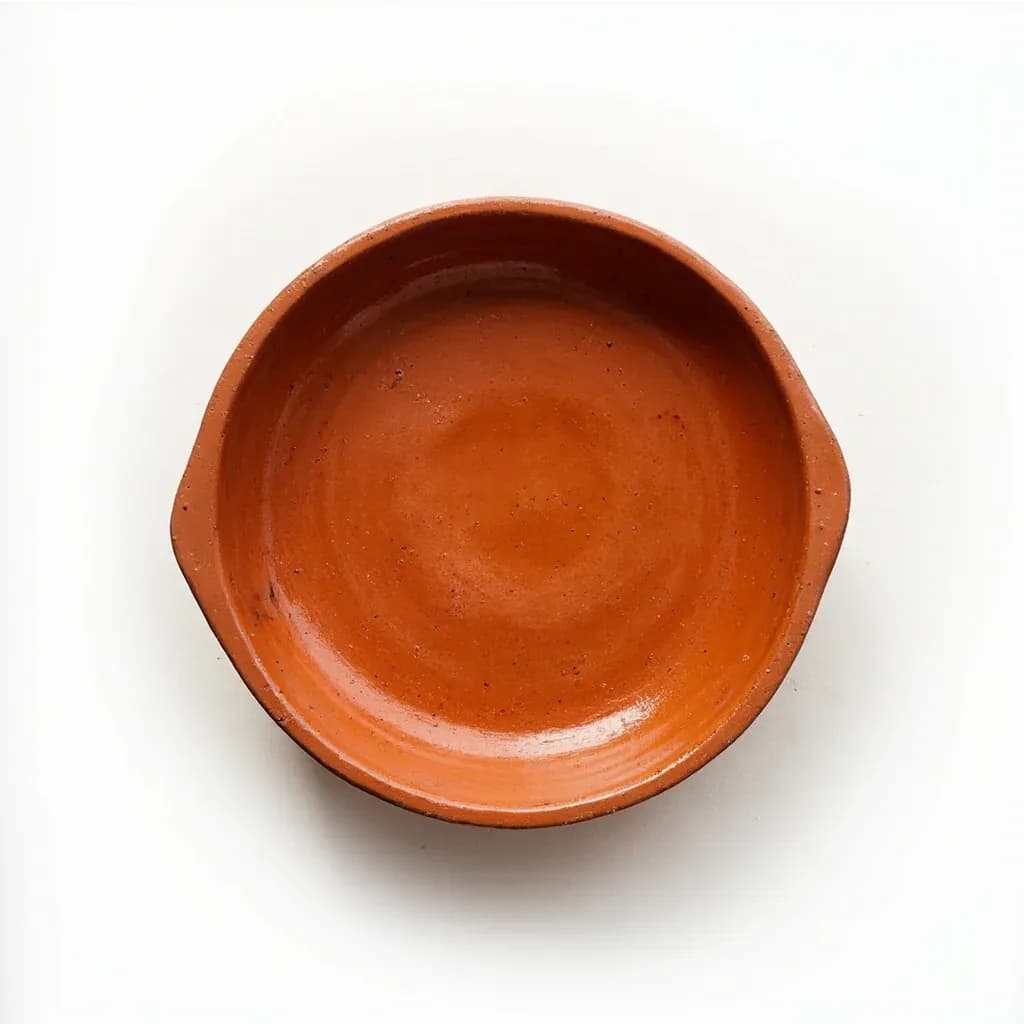
A shallow glazed terracotta dish that heats slowly and holds heat for Spanish tapas, stews, and baked dishes.
A cazuela is a wide, shallow glazed earthenware dish used across Spanish and Latin American kitchens for tapas, rice dishes, and slow stews. Its clay body heats gradually and retains warmth, serving food sizzling straight from oven or flame to table. New cazuelas are usually seasoned by soaking and slow first-heating to prevent cracking.
The cazuela de barro is the workhorse clay dish of Spanish home and tavern cooking: a shallow to medium-depth, hand-thrown terracotta vessel, glazed on the inside and rim, left unglazed and porous on the outside. Made from low-fired earthenware clay, it trades the searing power of metal or cast iron for something metal cannot do — it heats gently, evenly, and then holds that heat long after leaving the fire, so a plate of gambas al ajillo arrives at the table still audibly sizzling in its own oil. The word cazuela descends from the Latin caccabus, a cooking pot, and the form runs deep through Iberian and Mediterranean kitchens, from Andalusian tapas bars to the clay cazuelas of Oaxaca and the tagines of North Africa.
What makes the cazuela worth owning is this combination of thermal mass and porosity. The clay breathes slightly, which moderates the temperature of oil and butter in contact with the food, giving slow-cooked stews a mellowness that thin metal pans cannot match. It is, however, a fragile tool. The same porosity that gives the cazuela its character makes it vulnerable to thermal shock: a cold dish on a hot burner, or a hot dish on a wet counter, will crack it. A new piece must be cured before first use, and an old one must be dried thoroughly before it goes back on the shelf. Treated well, a cazuela outlasts generations and develops a glossy, soot-blackened patina that Spanish cooks regard as a mark of authenticity, not neglect.
Alternatives
Types & varieties
Shallow, low-sided — the classic tapas dish, the default for gambas al ajillo, setas, pisto, and chorizo al vino.
Deeper-walled pot for cocidos, lentejas, garbanzos, and slow-braised meats; sits between a cazuela and a true olla.
Thick, heavy-walled version built for direct flame and open wood-fire cooking; survives the hearth better than a standard cazuela.
Refractory-clay body that tolerates higher oven temperatures and resists thermal shock better than ordinary earthenware.
From Extremadura, often dark and sometimes unglazed on the outside; traditional over open fire for migas and caldereta.
Castilla-La Mancha version, the everyday dish for asados, gachas, and pisto manchego.
Single-serving 10–14 cm cazuela, the bar-and-tapas workhorse; designed to go from oven straight to the table.
Polished black-burnished ware from Pereruela (Zamora) and La Gomera — decorative, low-fired, classically used for cooking as well as display.
Closely related aromatic clay vessel from the Iberian tradition; more often prized for scent and ornament than for active cooking.
Curing a new cazuela
A new, unglazed cazuela is full of tiny air pockets. Until those pockets are filled, the dish will absorb cooking oil, stain, and may even crack on first use. A proper cure is two stages: water first, then oil.
- Submerge the new cazuela in cold water for 4–8 hours (overnight is fine). The clay drinks and swells slightly, partially closing the pores.
- Drain, wipe, and place in a cold oven. Set the oven to 120 °C / 250 °F and let it run for about an hour, then let the dish cool inside the oven.
- Rub the interior, glazed and unglazed, with a thin film of olive oil using a paper towel. Return to a 150 °C / 300 °F oven for 30 minutes, then cool.
- Repeat the oiling once or twice more before the first wet cook. The clay darkens and tightens; food will release more cleanly thereafter.
- If the dish still darkens a piece of paper towel with oil after cooking, cure it again — it was not fully sealed.
Lead-glaze safety in older or imported pieces
Traditional Spanish and Latin American cazuelas were routinely finished with lead glazes, and some still are, especially in informal market production. Lead leaches most aggressively from acidic foods (tomato, wine, vinegar, lemon) and from prolonged contact with wet or oily food. For any piece whose origin and certification you cannot verify, treat it as decorative unless tested.
- Buy from named Spanish makers (García de la Cruz is a well-known one) or workshops that publish a lead-free certification.
- If you inherit or buy a vintage or imported piece, line it with baking parchment for food use, or reserve it for dry display.
- Replace any cazuela that has a hairline crack on a food-contact surface: bacteria colonise the fissure and the glaze can leach at the break.
Common uses
Tips & pitfalls
- Cure a new piece before first use: soak in cold water for several hours, dry-bake empty at ~120 °C / 250 °F for an hour, then rub the interior with a thin coat of olive oil and bake again. Skipping this is the single most common reason new cazuelas crack or stain.
- Never subject a cazuela to thermal shock: do not place a cold dish on a hot burner, do not add cold liquid to a hot cazuela, and never set a hot cazuela on a cold or wet surface. The temperature gradient cracks the clay.
- Heat gradually. Start on a low flame, or slide the cazuela into a cold oven and let them warm together. Putting cold clay into a hot oven is a guaranteed way to ruin it.
- Use wooden or silicone utensils. Metal edges can chip the interior glaze, and once the glaze is breached the underlying clay is exposed to grease and water.
- Hand wash with hot water and a soft brush. Skip detergent on the unglazed exterior so the seasoned patina is preserved, and never put a cazuela in a dishwasher or leave it soaking in the sink — both will destroy it.
- The blackened, soot-stained exterior is patina, not dirt. A well-used cazuela is considered more valuable, not less; do not scrub the outside with abrasives to 'clean' it.
- Do not use on induction. On radiant electric or glass-ceramic cooktops, use a diffuser and keep the heat at low to medium — direct high radiant output can scorch the base or fracture the clay.
- Reheat leftovers gently with a splash of liquid. The clay holds 'ghost heat' long after the flame is off, so a cazuela returned to a roaring burner will scorch the bottom in seconds.
Good to know
- Material
- Low-fired terracotta (earthenware) clay, traditionally hand-thrown, glazed on the interior and rim, unglazed on the exterior
- Origin
- Iberian Peninsula, with deep Andalusian and Moorish roots; 'cazuela' derives from the Latin caccabus (cooking pot)
- Heat sources
- Oven, gas flame (heavy 'de fuego' versions only), charcoal and wood fire; not suitable for induction
- Heat behavior
- Heats slowly and evenly; retains heat for several minutes after leaving the fire, ideal for sizzling table service
- Typical sizes
- Individual cazuelitas 10–14 cm (4–5.5 in); family cazuelas 35–45 cm (14–18 in); capacity roughly 200 ml to 3–4 L
- Glazing
- Modern Spanish makers use food-safe, lead-free glazes; antique and some imported pieces (Latin American, North African, unmarked market ware) may still carry lead glazes — a real food-safety concern
- Seasoning required
- Yes — new pieces should be water-soaked, dry-baked, and lightly oiled to seal the unglazed porosity before first use
- Oven ceiling
- Standard cazuela ~250 °C / 480 °F; refractory-clay 'de horno' versions tolerate ~300 °C / 575 °F
- Care
- Hand wash only; avoid prolonged soaking and harsh detergents (which damage unglazed terracotta); never run through a dishwasher; store fully dry in a ventilated spot
Also called
Terracotta Tapas Dish · Terracotta Frying Dish · Cazuela de Barro · Clay Cazuela
Related

Steamer
Gentle moist heat that keeps vegetables, fish, and dumplings tender

Frying Pan
Shallow sloped pan for frying, sautéing, and quick sears

Saucepan
Tall, straight-sided pot for sauces, grains, and small batches

Sauté Pan
Wide straight-sided pan with room to brown and braise

Dutch Oven
Heavy lidded pot that turns tough cuts tender over hours

Stock Pot
Tall, roomy pot for stocks, pasta, and big-batch cooking

Wok
High-sided bowl pan built for blistering-hot stir-fries

Griddle
Flat, broad surface for pancakes, smash burgers, and breakfast