Baking & Pastry
Egg Tart Tin Mold
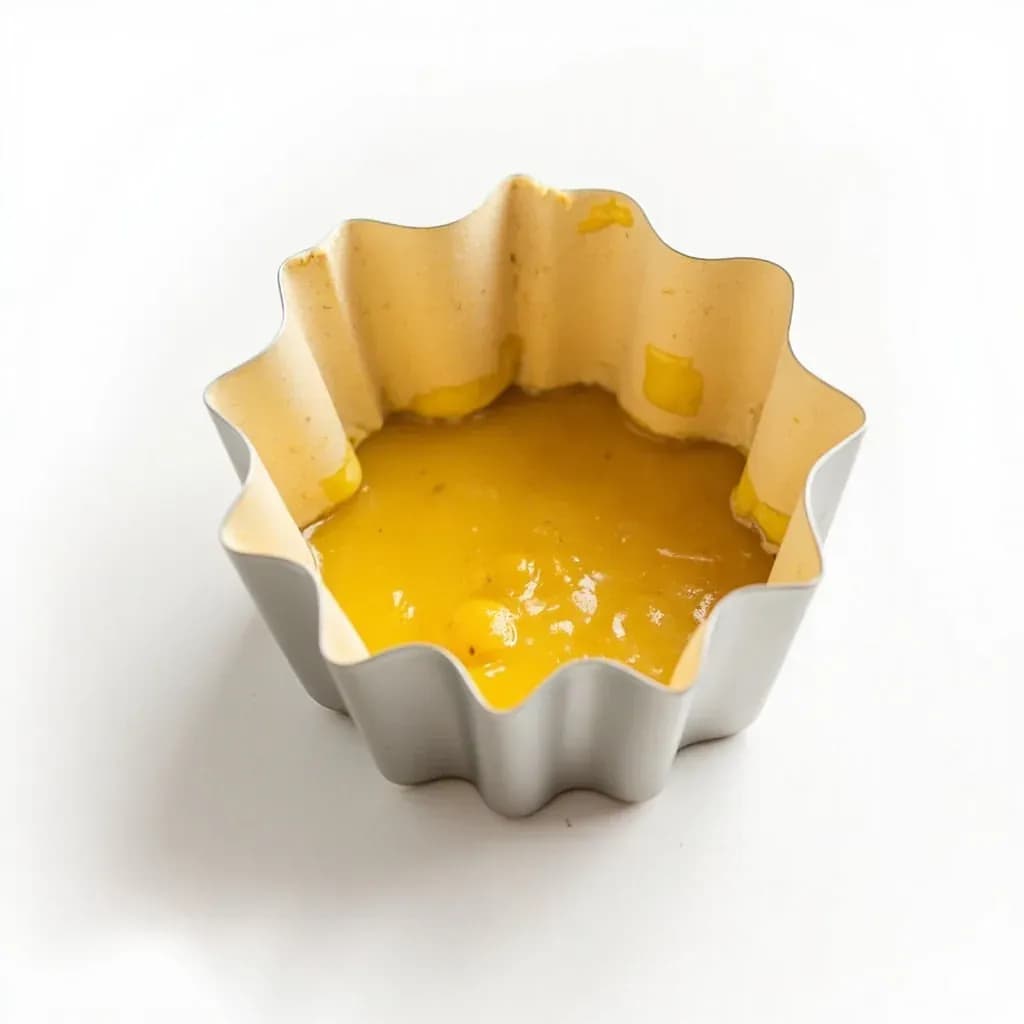
A reusable mould for forming and baking the shells of small egg custard tarts.
An egg tart mold is a small, often fluted baking cup used to shape and bake egg custard tarts. Dough is pressed inside the mould to create the shell, then filled with custard and baked until set. Reusable metal versions conduct heat well for a crisp base, and a set of them lets a baker turn out a tray of uniform tarts at once.
An egg tart mold is the small, fluted cup that gives custard tarts their recognizable shape and, just as importantly, the crisp edges that contrast with the soft filling. In its classic form it is a shallow, open-topped tin roughly 7–8 cm across and 2–3 cm deep, made from tin-plated steel so the metal can take the high, sustained heat of traditional custard-tart baking (typically 240–250 °C) without warping. The same shape, scaled down or simplified, doubles for mini quiches, fruit tartlets, and individual cheesecakes.
What separates a true egg-tart tin from a generic tartlet pan is the fluting and, in the traditional Portuguese style, the absence of a non-stick coating. A bare metal surface is what creates the signature scorched, caramelized patches on a pastéis de nata: the thin smear of egg custard that clings to the tin chars against the hot steel, and that slightly bitter char is the whole point of the pastry. In Hong Kong and Macanese bakeries, a slightly shallower tin with a more upright fluted wall cradles a thinner shortcrust or puff shell and a milder, smoother custard.
Most egg tart molds are inexpensive, sold singly or in sets of 6 or 12, and last for years with simple care. Because they stack neatly and the two styles are close cousins but produce noticeably different results, serious home bakers tend to keep one Portuguese-style tin and one Hong Kong–style tin on hand and reach for whichever one matches the recipe being made.
Alternatives
Types & varieties
Fluted sides with a distinctively wavy or crimped rim; traditionally plain tin so the custard that clings to the metal chars in the oven, producing the signature scorched top.
Shallower than the Portuguese version, with straighter fluted sides and a slightly crimped top edge; designed for a shortcrust or puff shell filled with a lighter, smoother custard.
Cylindrical with no fluting; used when a clean, modern presentation is wanted, or for non-fluted pastries such as mini quiches.
Smaller diameter (around 4–5 cm) for bite-size tarts, canapés, and dim sum service; same fluted profile as the standard tin.
A standard tin base with a non-stick layer; releases custard tarts cleanly but gives a paler, less caramelized finish and a shorter working life.
Sheet-pan format with 6 to 24 integrated cups; efficient for batch baking, though harder to produce the charred edges of a single-tin bake.
Portuguese vs. Hong Kong–style: how to tell them apart
The two tins are often sold interchangeably, but they are not the same. The differences are small in dimension and large in effect.
- Depth: Portuguese tins are 2–3 cm deep, giving the custard room to puff and char; Hong Kong–style tins are 1.5–2 cm, producing a thinner, gentler filling.
- Wall angle: Portuguese tins have slightly tapered (conical) sides that widen toward the rim; Hong Kong–style tins are more upright and cylindrical.
- Rim: Portuguese tins usually have a pronounced wavy or crimped edge; Hong Kong–style rims are usually a simpler fine flute.
- Pastry: Portuguese pastry is rolled thinner and laminated; Hong Kong–style shells are often puff pastry or a thicker shortcrust.
Why the metal matters
The traditional plain-tin surface is not a cost-cutting choice; it is the engine of the dish. A non-stick coating insulates the custard from the metal and prevents the localized burning that defines a pastéis de nata. Switch to a coated tin and the tart comes out pale, sweet, and slightly dull. Keep an old-fashioned bare tin and the same recipe becomes caramelized, slightly bitter at the edges, and complex — the way it has been made in Lisbon since the 19th century.
- Plain tin conducts heat fast and tolerates the brief blast of 250 °C heat needed to spot the top.
- Non-stick coatings typically cap out around 220–230 °C; pushing them hotter degrades the coating.
- Aluminum heats even faster than tin-plated steel and browns the pastry more aggressively — useful, but watch for over-browning on the base.
- Tin plating wears off with use; once bare spots appear, switch the tin to savory work rather than risk metallic off-flavors in delicate custards.
Common uses
Tips & pitfalls
- For authentic pastéis de nata, use an uncoated tin: the thin layer of custard that sticks to the metal is what chars into the signature scorched top.
- Grease the tin lightly with butter or oil even when using a non-stick version; pastry shrinks during blind baking and a little fat helps the shell release cleanly.
- Roll puff or shortcrust pastry about 3 mm thick — thicker overwhelms the custard, thinner collapses under the weight of the filling.
- Press the dough firmly into the flutes with your thumb so the ridges read clearly, then trim flush with the rim for a neat finish.
- Bake at a very high initial temperature (around 240–250 °C / 465–480 °F) for the first 8–10 minutes, then lower the oven to finish setting the custard; the blast of heat creates the leopard-spotted caramelization.
- Do not fill the shells more than about two-thirds full — egg custard puffs as it sets and will overflow an over-filled shell.
- Cool tarts in the tin for 2–3 minutes before unmolding; moving them too soon cracks the custard, leaving them too long softens the pastry.
- Hand-wash tin-plated molds and dry them immediately in a warm oven — prolonged soaking causes rust spots that will mark future bakes.
- Avoid metal utensils in non-stick versions; silicone or wooden tools will extend the coating's working life.
- If a tart sticks, set the warm tin on a damp tea towel for a minute; the steam slips under the pastry and the shell releases without breaking.
Good to know
- Also called
- Tartlet tin, pastéis de nata mold, maffle tin, or flan ring
- Common materials
- Tin-plated steel (traditional), aluminum, non-stick coated steel
- Typical rim diameter
- 7–8 cm for standard; 4–5 cm for mini / bite-size versions
- Typical depth
- 2–3 cm for Portuguese-style; 1.5–2 cm for Hong Kong–style
- Edge style
- Fluted or scalloped is traditional; smooth-walled versions exist for a modern look
- Oven-safe temperature
- Plain tin and aluminum up to about 230–250 °C (450–480 °F); non-stick coatings often have a lower limit
- Set sizes
- Sold singly, in 6- or 12-piece sets, or as multi-cavity sheet pans holding 6–24 cups
- Care
- Plain tin and aluminum are dishwasher-safe but should be dried immediately; non-stick versions should be hand-washed
Also called
egg tart mould · custard tart mold
Related

Muffin Pan
Multi-cup pan for muffins, cupcakes, and egg bites

Bundt Pan
Fluted ring mold for showstopping cakes with a center hole

Springform Pan
Latch-release pan that frees delicate cakes without flipping

Pie Dish
Sloped round dish for crisp-bottomed pies and quiches

Tart Pan
Fluted pan with a pop-out base for clean-edged tarts

Rolling Pin
Rolls dough into even sheets for pastry and bread

Pastry Brush
Brushes on egg wash, glaze, butter, and marinades

Bench Scraper
Flat blade that divides dough and clears your work surface