Baking & Pastry
Egg Tart Tin
A small fluted tin that shapes the flaky shell of Cantonese or Portuguese egg tarts.
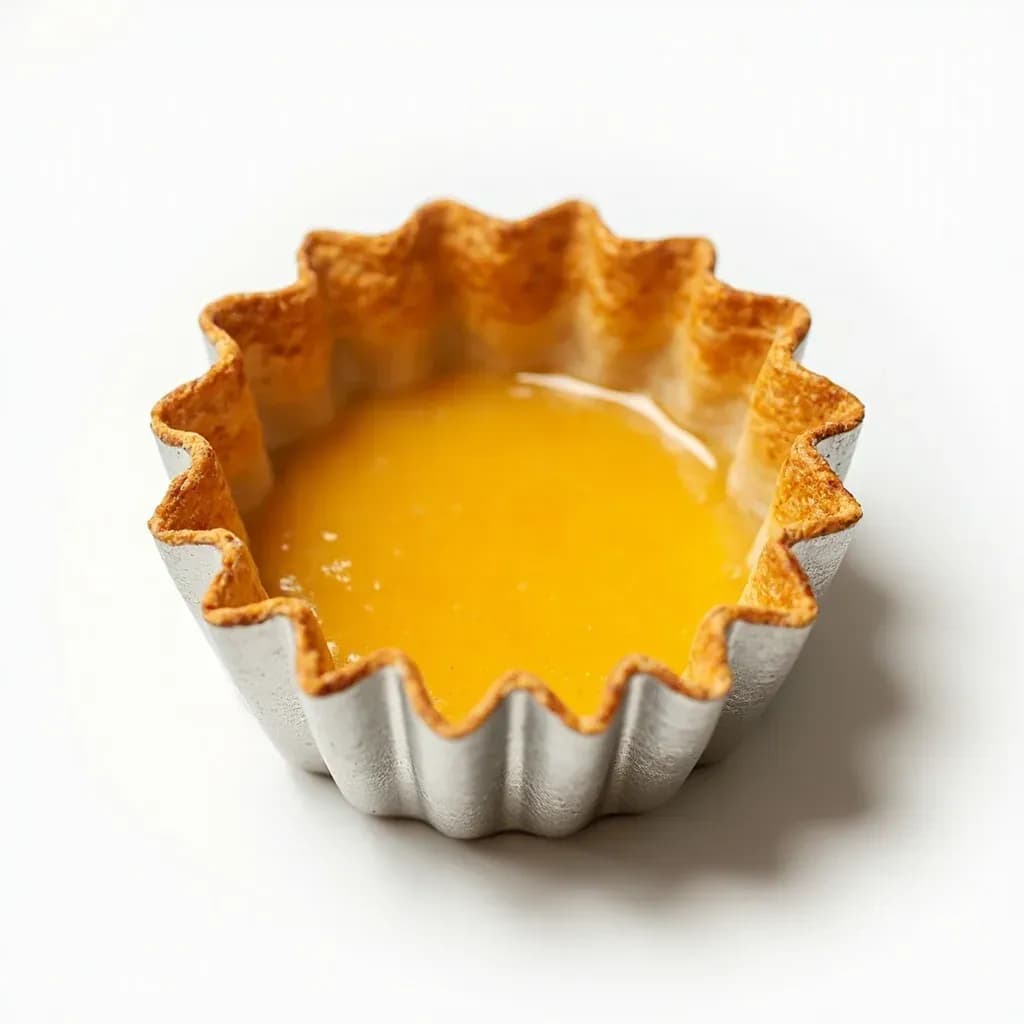
An egg tart tin is a small, fluted metal mould used to bake individual custard tarts such as Cantonese dan tat or Portuguese pastel de nata. The pastry is pressed into the tin to form a crisp cup that holds the egg custard while it bakes. The fluted sides give the classic ridged edge and help the shell release once cooled.
An egg tart tin is a small, open-top fluted cup designed to shape the shells of Cantonese egg tarts (蛋撻) and Portuguese pastéis de nata. Standard sizes run 7–8 cm across the rim and 2–3 cm deep, with straight or slightly tapered walls ringed by vertical ridges. The flutes are not just decoration: they expand the surface area of the pastry so it browns evenly, give the rim its characteristic rippled silhouette, and shape a crisp, textured edge where the set custard meets the shell.
Traditional tins are made from thin tin-plated mild steel, a material prized for the way it heats fast and conducts evenly into a thin pastry shell. That quick response matters because egg tart shells are deliberately shallow — a deeper cup would force a lower oven temperature and yield a soft, under-baked base rather than the crisp, golden crust the shape is meant to produce. Modern alternatives in non-stick steel and silicone trade some of that browning power for easier unmolding and cleanup, which is a meaningful trade-off depending on whether you want a deeply caramelized shell or a convenience bake.
In practice, the tin works as both mold and miniature baking dish: a thin disc of shortcrust or puff pastry is pressed into the flutes, trimmed flush with the rim, then filled with a sweetened egg custard that sets in the oven's heat. Because the cups are small and the walls are thin, the tin absorbs heat almost as soon as it goes in — typically around 220 °C / 425 °F — which is part of why these tarts bake through in well under half an hour even in a home kitchen.
Alternatives
Types & varieties
Shallow fluted tin-plated steel cup; the classic mold for 蛋撻, producing the signature shortcrust shell with visible ridges.
Similar fluted cup but a touch deeper and slightly wider; sometimes heavy-gauge aluminum for the hotter initial blast used at Pastéis de Belém.
Used in Macau's hybrid Portuguese-Chinese egg tart; size overlaps the Hong Kong tin.
Modern convenience version; releases pastry easily but yields a paler shell, often needing higher oven temperature or longer bake for proper browning.
Flexible and easy to unmold; drawback is poor crust browning and a softer, less crisp base.
Same fluted form factor, used for savory mini quiches, tartlets, and small filled cookies.
Material matters more than shape
Egg tart tins are often shelved as generic 'tartlet pans,' but the material of the cup changes the result more than its size or flute count does. Tin-plated steel is the traditional choice because it heats quickly, conducts evenly into a thin pastry shell, and browns the crust deeply without burning the rim. Non-stick coated steel releases the tart more cleanly, which is helpful for fragile shortcrust, but the coating insulates the dough slightly and produces a paler, less caramelized shell — bakers often compensate by raising oven temperature by 10–15 °F (5–8 °C) or extending bake time by a few minutes. Silicone is the easiest to unmold but the worst for crust color; the flexible cup insulates the base, and tarts baked in silicone frequently emerge soft and damp on the bottom unless set on a preheated stone or steel.
- Tin-plated steel: best browning, fast heat-up; needs hand-washing and drying to prevent rust.
- Non-stick steel: easiest release; paler crust and slight loss of crispness.
- Silicone: convenient unmolding; soft, under-browned base without a preheated baking surface.
- Copper (rare, professional): excellent conduction and color at premium price.
Lining and shaping the shell
How the dough meets the tin decides the texture of the finished shell. Press a rolled disc of pastry into each cup firmly with your thumb or a small tart tamper, working from the center outward so the dough hugs every flute — trapped air expands in the oven and cracks the side. Trim flush with the rim rather than below it; the rim acts as a small dam that keeps the custard from slumping over the edge as it sets. For puff pastry shells (Portuguese-style), dock the base lightly with a fork and bake blind for 5–7 minutes before adding custard so the bottom dries rather than steams.
- Press dough from center outward to expel air pockets in the flutes.
- Trim flush with the rim; the rim supports the filling as it expands.
- Dock and blind-bake puff pastry for pastéis de nata.
- Chill the lined tin thoroughly before baking so the fat re-solidifies and the shell holds its flute pattern.
- Bake on a preheated heavy sheet pan or baking steel to drive heat into the base quickly.
Common uses
Tips & pitfalls
- Chill the lined tin thoroughly before baking — cold fat plus a cold mold helps the shell hold its shape and stay flaky.
- Press pastry into the flutes firmly with a thumb or small tart tamper; air pockets between dough and tin cause uneven baking and cracked shells.
- Trim dough flush with the rim, not below it, so the rim supports the filling as it sets.
- Avoid over-greasing traditional tin-plated molds; a light butter brush is enough, and excess fat pools in the flutes.
- Choose bare tin-plated steel over non-stick when you want a darker, crispier crust — non-stick surfaces brown less evenly.
- Bake on a preheated heavy sheet pan or baking steel to drive heat into the base quickly and prevent soggy bottoms.
- Do not fill more than roughly three-quarters full; the egg custard expands as it sets and will slop over if overfilled.
- Hand-wash tin-plated tins and dry them immediately — dishwashers strip the tin plating and cause rust.
Good to know
- Also called
- Egg tart mold, flan tin, tartlet cup, pastel de nata mold
- Origin
- Tin form evolved with Cantonese 蛋撻 in 1940s Hong Kong and Portuguese pastéis de nata (early 19th-century Lisbon); the two lineages converge in the modern fluted cup
- Typical dimensions
- 7–8 cm top diameter, 2–3 cm deep; Portuguese tins often slightly larger (up to 8.5 cm) and 3–3.5 cm deep
- Wall profile
- Fluted/scalloped vertical ridges with straight or slightly tapered sides; flat base, sometimes with a small central dimple
- Standard material
- Tin-plated mild steel at 0.4–0.6 mm gauge; also bare aluminum and non-stick coated steel
- Heat tolerance
- Up to 230–250 °C / 450–480 °F for traditional metal; silicone is lower and bakes unevenly
- Set count
- Sold singly or as baking panels of 6 or 12 cups that sit flat on a sheet pan
Also called
dan tat tin · custard tart mould · pastel de nata tin
Related

Muffin Pan
Multi-cup pan for muffins, cupcakes, and egg bites

Bundt Pan
Fluted ring mold for showstopping cakes with a center hole

Springform Pan
Latch-release pan that frees delicate cakes without flipping

Pie Dish
Sloped round dish for crisp-bottomed pies and quiches

Tart Pan
Fluted pan with a pop-out base for clean-edged tarts

Rolling Pin
Rolls dough into even sheets for pastry and bread

Pastry Brush
Brushes on egg wash, glaze, butter, and marinades

Bench Scraper
Flat blade that divides dough and clears your work surface