Cookware
Enamel Pot
Metal pot coated in glassy enamel for non-reactive, easy-clean cooking and storage.
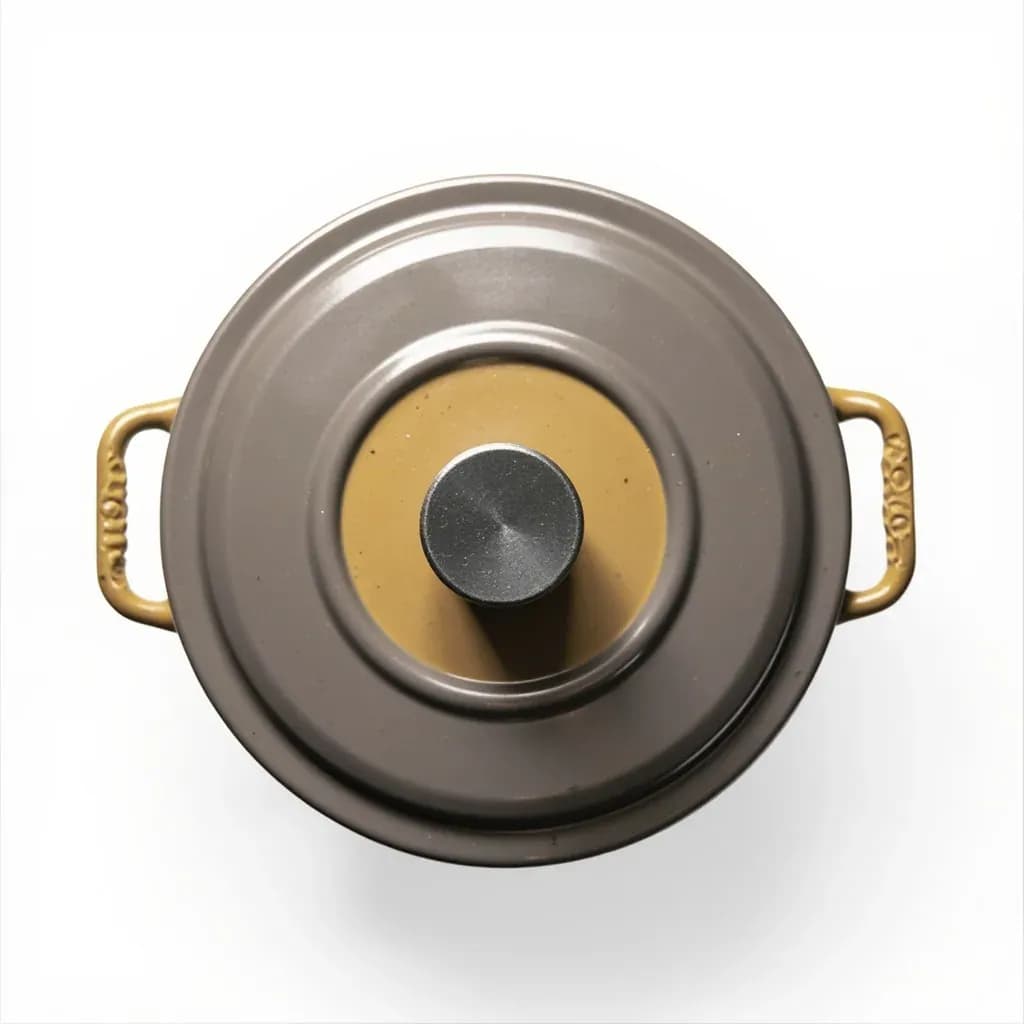
An enamel pot is a steel or cast-iron pot fused with a smooth, glassy enamel coating that is non-reactive and easy to clean. The coating lets it cook acidic foods like tomato sauce and braises without metallic flavor and needs no seasoning. Enameled cast iron retains heat well for slow cooking, while lighter enameled steel boils and simmers quickly.
An enamel pot is a metal cooking vessel — most commonly cast iron, steel, or aluminum — coated with a layer of vitreous (glass) enamel fused to the surface at roughly 750–850 °C. The result is a smooth, glossy interior that behaves very differently from bare metal: it does not react with acidic ingredients, it wipes clean more readily than seasoned cast iron, and it accepts bold colors that move it gracefully from stovetop to table. In practical terms, an enamel pot sits between stainless steel and raw cast iron in the cook's hierarchy — easier to clean and more inert than bare cast iron, but heavier and better at retaining heat than stainless.
Enameled cast iron is the form most cooks mean when they say "enamel pot": a thick-walled Dutch oven or braiser that holds heat the way a brick oven does and simmers steadily for hours. Enameled steel and aluminum are lighter, faster-heating cousins — speckled "graniteware" stockpots and Scandinavian saucier shapes that are far cheaper but dent, warp, and scorch more readily. Across all of them, the cooking surface is glass: it is not inherently non-stick, it can chip if struck, and it dislikes thermal shock, but with reasonable care it lasts decades.
The pot's signature advantage is what it does not do. Because the food never touches metal, you can reduce tomato sauce, deglaze with wine, simmer a vinegar-based pickle brine, or stew rhubarb without metallic taint, and you can refrigerate leftovers in the same pot without off-flavors. That combination of non-reactivity, heat retention, and presentable color is why the enameled Dutch oven has become the workhorse of modern home cooking.
Alternatives
Types & varieties
Heavy, thick-walled Dutch ovens, braisers, and cocottes from Le Creuset, Staub, Lodge, Cuisinart, Tramontina, and others. Best heat retention and most expensive; Le Creuset uses a pale matte interior, Staub a black interior with self-basting spiked lid.
Thin, light, quick to heat — the classic speckled 'graniteware' pots, milk pans, and stockpots. Low cost, prone to denting and warping, traditionally white with cobalt, red, or black speckles.
Mid-weight pots and sauté pans (Riess, older Falconware, some Scandinavian lines). Lighter than cast iron but with a more reactive base metal, so the interior is usually fully enameled.
A 20th-century kitchen and diner staple, speckled over a cream or white ground. Mostly nostalgic today but still produced for baking, roasting, and outdoor cooking.
Pre-1950s European and American pieces with rolled rims, wooden or wire bails, and a characteristic pale ground. Collectible and usable, but chips may expose rust-prone steel.
Tall New England–style bean pots, oval roasters, and other slow-cooking forms designed for long, moist, vertical cooking.
Enameled cast iron vs. enameled steel
The label "enamel pot" covers two genuinely different tools, and choosing between them is the first decision a cook makes.
Enameled cast iron is a thick, heavy vessel that heats slowly and holds temperature with remarkable steadiness. It is the right pot for a three-hour braise, a deep-fry thermometer that barely budges, a no-knead bread boule baked under a screaming-hot lid, or a stew that must not scorch on the bottom of the pot when the burner is on high. The trade-off is weight — a 5½-quart cocotte is around 5 kg / 11 lb — and price, with premium brands running into the hundreds of dollars.
Enameled steel is a thin, light vessel that heats in a flash and responds instantly when the burner is turned down. It is well suited to stocks, blanching, and everyday sauce work where speed and visibility matter more than inertia. The downsides are real: thin steel warps over a too-hot burner, the rim dents if the pot is dropped, and the speckled enamel is decorative rather than premium. Treat a steel-enamel pot as a utility player; treat a cast-iron one as an heirloom.
Reading chip damage
A chip in the enamel is the most common long-term issue, and its seriousness depends on what is underneath. Enameled cast iron with a small chip on the rim or exterior is usually safe to keep cooking with — the exposed iron will darken, may flash-rust if stored damp, and benefits from a thin wiped film of oil after washing. The interior is more important: a chipped cooking surface is fine for stews and braises but uncomfortable for slow-simmered pale sauces, where stray iron can darken the liquid.
Enameled steel is thinner and more vulnerable. Once the steel core is exposed, it rusts quickly and can pit, so most cooks retire a chipped steel pot to display or workshop use. Enameled aluminum with a breach in the coating is the most concerning, because the base metal is more reactive and can leach into acidic foods; retire these for serving duty only.
- Rim chips on cast iron: usually safe; oil lightly to prevent rust.
- Interior chips on cast iron: usable for stews, less ideal for pale sauces.
- Chipped enameled steel: rusts fast, best retired.
- Chipped enameled aluminum: retire from cooking acidic foods.
Common uses
Tips & pitfalls
- Always put liquid, oil, or food in the pot before turning on the heat — preheating an empty enamel pot on high is the fastest way to craze or chip the enamel.
- Cook on low to medium heat; enameled cast iron in particular retains so well that a high flame scorches sauces and wastes energy.
- Use wooden spoons, silicone spatulas, or nylon whisks; metal whisks and sharp-edged spatulas will scratch the glassy surface over time.
- Avoid thermal shock: never set a hot pot on a cold stone counter or run cold water into a hot pot — let it cool gradually or rinse with warm water.
- Hand wash with warm soapy water and a soft sponge; for stuck-on food, simmer a little water with a spoonful of baking soda, then loosen with a wooden spoon.
- Remove tea, tomato, or turmeric stains by simmering a baking-soda paste or a brief dilute-bleach soak; the discoloration is cosmetic and rarely affects cooking.
- Dry the pot thoroughly and rub a thin film of oil on any exposed cast iron (chipped rim, edge of lid) to prevent flash rust in storage.
- Check the knob before the oven — most phenolic and plastic caps are rated to only 180–200 °C / 350–400 °F, while the pot body is good to about 260 °C / 500 °F; swap in a stainless replacement knob for high-heat baking.
- Match the pot to the burner: an 8-quart Dutch oven on a small gas ring scorches in the center; use a flame diffuser or shift to a smaller pot.
- When stacking in a cabinet, slip a paper towel, cloth, or felt liner between pieces — the enamel will chip where two pots kiss.
Good to know
- Also called
- Porcelain enamel, vitreous enamel, enamelware, graniteware, speckledware
- Construction
- Powdered glass fused to a metal substrate (cast iron, steel, or aluminum) at roughly 750–850 °C / 1,380–1,560 °F
- Modern pioneer
- Le Creuset began producing enameled cast iron in 1925 in Fresnoy-le-Grand, France
- Reactivity
- Non-reactive — safe for acidic foods such as tomatoes, wine, citrus, and vinegar
- Heat tolerance
- Typically rated to about 260 °C / 500 °F; lower for thin enameled steel
- Induction
- Compatible only when the base metal is ferromagnetic (cast iron, magnetic steel); plain aluminum versions are not
- Surface character
- Smooth and glassy, but not inherently non-stick; requires oil or butter like stainless steel
- Care
- Hand wash recommended; dishwashers gradually dull enamel and degrade rim gaskets
Also called
enamel-pot · Enameled Pot · Enamelware Pot
Related

Steamer
Gentle moist heat that keeps vegetables, fish, and dumplings tender

Frying Pan
Shallow sloped pan for frying, sautéing, and quick sears

Saucepan
Tall, straight-sided pot for sauces, grains, and small batches

Sauté Pan
Wide straight-sided pan with room to brown and braise

Dutch Oven
Heavy lidded pot that turns tough cuts tender over hours

Stock Pot
Tall, roomy pot for stocks, pasta, and big-batch cooking

Wok
High-sided bowl pan built for blistering-hot stir-fries

Griddle
Flat, broad surface for pancakes, smash burgers, and breakfast