Cookware
Sizzling Fajita Skillet
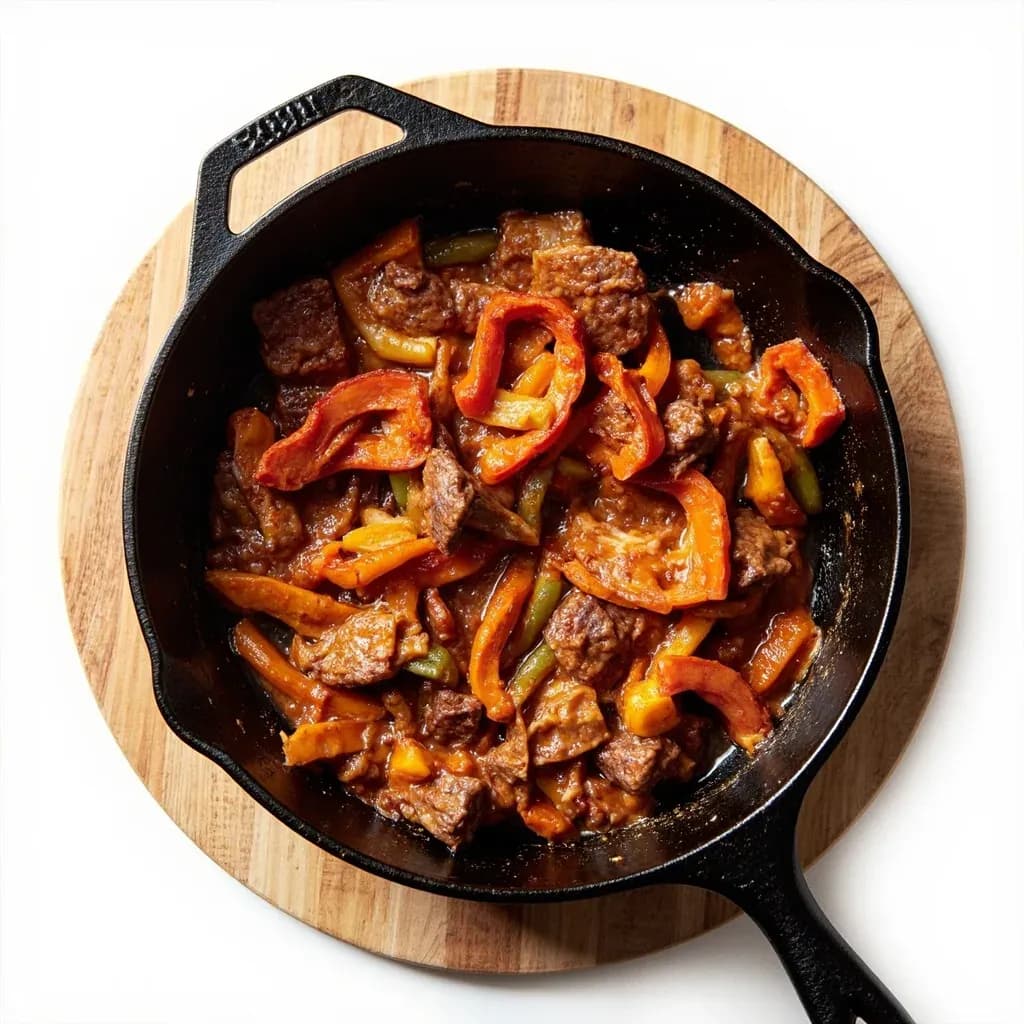
Cast-iron skillet served screaming-hot at the table so fajitas arrive sizzling and steaming.
A heavy cast-iron pan, usually paired with a wooden underliner, used to bring fajitas to the table still sizzling. The pan is preheated until very hot so the meat, peppers, and onions hiss and steam dramatically as they're served. Its high heat retention is what creates the signature theatrical presentation and keeps the food hot through the meal.
The sizzling fajita skillet is a heavy cast-iron (or carbon-steel) pan, usually oval or rectangular, brought to the table blistering-hot on a wooden underliner so the meat and peppers land with a loud, sustained sizzle. Originally a Tex-Mex restaurant flourish, it has become a home-cook favorite because the retained heat of thick cast iron keeps proteins browned and tortillas pliable long after plating. The dramatic sound and aroma signal freshness and high heat — the whole point of the dish — and a proper skillet delivers that theater without losing temperature between stove and table.
Beyond fajitas, the same pan works as a general-purpose sizzle platter: seared steak strips, shrimp, chorizo, or vegetable medleys all benefit from the radiant heat. Choosing a skillet with a recessed wood or cork trivet is essential; bare cast iron will scorch any table surface, and a cold metal trivet steals heat the moment the pan touches it.
Alternatives
Types & varieties
The classic restaurant form; the oval mimics the shape of a whole flank steak and cradles a stack of tortillas.
More surface area for family-style service; doubles as a griddle for warming tortillas.
Lighter than cast iron, heats faster, equally hot; preferred by some line cooks for quick turn-around.
Single-portion oval (~7 in); popular for tableside service and home dinners.
One-piece design that cannot be separated — safer for restaurants, less flexible at home.
Common uses
Tips & pitfalls
- Preheat the empty skillet over high heat until it just begins to smoke — 5–8 minutes — then carry it on its wood base, never a cold trivet, which drops surface temperature instantly.
- Oil the protein and vegetables, not the pan; a film of oil in a screaming-hot skillet flashes to smoke and bitter taste.
- Pat meat dry before searing so it browns rather than steams; crowded filligs kill the sizzle on contact.
- Use long-handled tongs and a folded kitchen towel to move the skillet; the handle and body retain heat for many minutes.
- Season cast iron after every wash with a thin coat of oil heated on the burner to maintain the non-stick patina essential for clean release.
- Avoid soap soaks and the dishwasher; prolonged moisture causes rust and stripping that ruin the sizzle performance.
- For gas ranges, finish preheating over the burner you'll serve from — induction users should preheat on a compatible burner and transfer quickly since the glass top will continue heating the pan en route.
- If the table surface is heat-sensitive, slide a sheet of cork or a thick wooden cutting board under the wood base for extra insurance.
Good to know
- Primary material
- Cast iron (carbon-steel variants exist)
- Common shapes
- Oval or rectangular; some round
- Typical diameter
- 10–14 in (25–36 cm)
- Wall height
- 1–1.5 in (2.5–4 cm) with flared or sloped sides
- Required trivet
- Wood, cork, or heat-resistant composite base
- Preheat temperature
- ≈500 °F / 260 °C (smoking hot)
- Heat retention
- High — stays above serving temp for 5–8 min after leaving burner
- Compatible heat sources
- Gas, electric, induction, oven, grill, campfire
- Care
- Hand-wash, dry on burner, thin oil coat; never soak
- Country of origin (concept)
- United States (Tex-Mex, 1980s)
Also called
Fajita Pan · Sizzle Plate
Related

Steamer
Gentle moist heat that keeps vegetables, fish, and dumplings tender

Frying Pan
Shallow sloped pan for frying, sautéing, and quick sears

Saucepan
Tall, straight-sided pot for sauces, grains, and small batches

Sauté Pan
Wide straight-sided pan with room to brown and braise

Dutch Oven
Heavy lidded pot that turns tough cuts tender over hours

Stock Pot
Tall, roomy pot for stocks, pasta, and big-batch cooking

Wok
High-sided bowl pan built for blistering-hot stir-fries

Griddle
Flat, broad surface for pancakes, smash burgers, and breakfast