Knives & Cutting
Flexible Fillet Knife
A thin, flexible-bladed knife for filleting fish and gliding along bones.
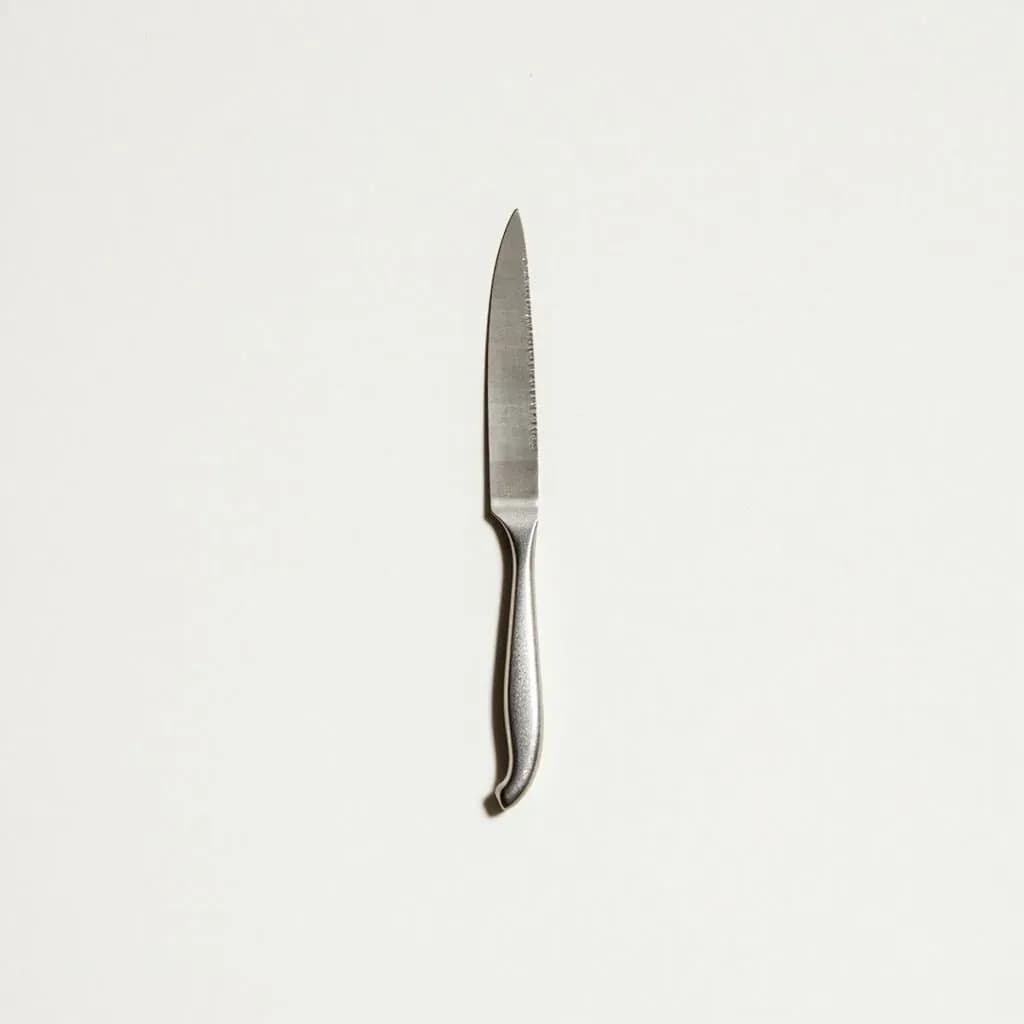
A fillet knife has a long, thin, flexible blade that bends to follow the curves and ribs of a fish, separating clean fillets from the bone. The flex and fine point let the cook glide just above the skeleton, minimizing waste and removing skin in a single stroke. It is the standard tool for breaking down fish and works for delicate boning of poultry too.
A flexible fillet knife is built around a long, thin blade that tapers from a modest spine to a fine point. The defining trait is flex: a thin, hardened blade bends under hand pressure, letting the edge ride the curve of a fish's spine, the arc of a ribcage, or the underside of a skin without the cook having to muscle the cut. Most home and prosumer models run 15–23 cm (6–9 in) at the blade, with bait knives considerably shorter and long semi-flex models for big fish pushing 28–30 cm (11–12 in).
Flexibility matters because flesh separates cleanly when the blade is shaped by the bone rather than forced across it. A stiff knife dives into the meat, leaving flesh on the carcass and ragged edges on the fillet; a flexible knife glides along the skeleton, lifting the fillet away in a single intact piece. The same trait makes it the natural choice for skinning, for pin-boning salmon, and for any task where the blade is asked to do the contour-following.
In practice the knife behaves less like a wedge than like an extension of the hand. Long single strokes from tail to head, with the blade kept flat against the bone, produce clean, intact fillets with the least effort: the mid-blade and heel handle the long sweep along the spine, while the fine tip does the detail work around the head and collar. A well-tuned fillet knife is also useful well beyond the fish counter, trimming silver skin, peeling tomatoes, and portioning smoked salmon with a precision no chef's knife can match.
Alternatives
Types & varieties
The classic pattern: long, thin, tapering to a flexible tip that bends enough to follow the spine of a fish.
Stiffer mid-blade with flex only at the tip; preferred for larger, meatier fish such as salmon, tuna, and halibut.
Borders on a boning knife; used for very large fish, for breaking down loins, and for working through cartilage.
Short (10–15 cm / 4–6 in), very flexible, often with a polymer handle and a coated or stainless blade; built for cleaning panfish, trout, and walleye in the field.
Thin single-bevel or fine double-bevel blade, generally 15–20 cm (6–8 in), used for filleting and light deboning with traditional Japanese technique.
Hand-held reciprocating motor with a removable thin flexible blade; standard in commercial processing plants and on charter boats for high-volume work.
Handle sits below the level of the blade so the user's knuckles clear the cutting board; favored by commercial filleters doing long runs of fish.
Reading flex: choosing the right blade
Flexibility is the defining variable in a fillet knife, and matching it to the fish — or to the off-label job — is the difference between clean fillets and torn flesh.
- Highly flexible bait knives (10–15 cm / 4–6 in) suit panfish, trout, and small whole fish where the blade must curl around a tiny skeleton.
- A general-purpose flexible fillet (15–23 cm / 6–9 in) is the everyday home choice for salmon, sea bass, snapper, and similar mid-sized fish.
- Semi-flex models give up a little bend for added control on meatier fish like tuna, halibut, and large salmon, where a limber blade can fold against a heavy backbone.
- Stiff fillet knives approach boning-knife territory; they handle breaking down loins, working through cartilage, and portioning thick cuts where push matters more than curve.
- Japanese hankotsu and similar thin-bevel flex knives are the most limber, designed to follow the spine with almost no pressure and leave a clean, glassy surface on the flesh.
Common uses
Tips & pitfalls
- Hone the edge on a fine rod before every filleting session; a keen edge does the cutting instead of your hand pressure, which prevents tearing and slipping.
- Keep the blade flat against the backbone, not angled down — let the flex do the contour-following rather than muscling the cut.
- Work with long, single sweeping strokes from tail toward head on whole fish; short sawing strokes shred the flake and waste flesh.
- Wet the blade with cold water as you work — it cuts drag and helps the flesh release cleanly from the steel.
- Grip slippery skin with a paper towel or fish-skin pliers; never bring bare fingers in front of the edge.
- Don't pry or twist the blade sideways — flexible spines are thin and can snap under torque, especially on shorter bait-knife sizes.
- Never cut through bone, scales, or frozen fish; the thin edge chips or rolls almost immediately.
- Sharpen on a 1000/3000 or 1000/6000 whetstone and finish on a leather or newsprint strop to remove the burr and align the micro-edge; pull-through sharpeners leave a coarser, less durable edge on thin blades.
- Hand wash, towel dry, and oil carbon-steel blades with food-grade mineral oil before storage to prevent oxidation.
- Store in a sheath, knife roll, or magnetic strip with the blade guarded; rolling a flexible blade inside a sheath actually helps maintain its straight set.
Good to know
- Primary use
- Separating flesh from bones and skin, principally on fish
- Typical blade length
- 15–23 cm (6–9 in); bait knives 10–15 cm (4–6 in); long prosumer models up to 28–30 cm (11–12 in)
- Blade thickness
- Roughly 1.5–2.5 mm at the spine, tapering to a fine point
- Common blade steel
- High-carbon stainless (X50CrMoV15, 440A/B, VG-10, AUS-8/10); some traditional carbon-steel models
- Typical Rockwell hardness
- 55–60 HRC for stainless versions; 60–62 HRC for premium Japanese tooling steels
- Edge angle
- 12–17° per side for Western patterns; 10–15° per side for Japanese-style flex knives
- Grind
- High, flat or slightly hollow grind to keep the blade thin behind the edge
- Flex rating
- Flexible, semi-flexible, or stiff — flex generally runs from mid-blade to tip
- Tang construction
- Full tang preferred for larger fish under load; partial tang common on lighter bait knives
- Handle materials
- Molded polypropylene, Santoprene/TPE over plastic, riveted wood (traditional), G10, or compressed canvas (vintage)
- Cleaning
- Hand wash and towel dry immediately; not dishwasher-safe despite corrosion-resistant claims
- Storage
- Edge-protecting sheath, knife roll, magnetic strip, or in-drawer blade guard; never loose in a drawer
- Price range
- Roughly $15–$60 for entry-level and bait knives; $80–$250 for premium Western and Japanese; $300+ for custom or forged high-end
- Notable makers
- Victorinox (Fibrox), Dexter-Russell, Mercer, Wüsthof, Henckels, Global, MAC, Tojiro, Misono, Rapala, Bubba Blade, Buck
Also called
Flexible Boning Knife · Fish Fillet Knife
Related

Knife
The fundamental cutting tool every kitchen is built around

Chef's Knife
The do-everything blade for chopping, slicing, and mincing

Paring Knife
Small, nimble blade for peeling and detailed in-hand work

Serrated Knife
Saw-toothed blade that slices crusty bread without crushing

Cleaver
Heavy broad blade for chopping through bone and bulk prep

Cutting Board
The stable surface every cut starts on

Mandoline
Adjustable blade for paper-thin, perfectly even slices

Kitchen Shears
Heavy-duty scissors for poultry, herbs, and packaging