Baking & Pastry
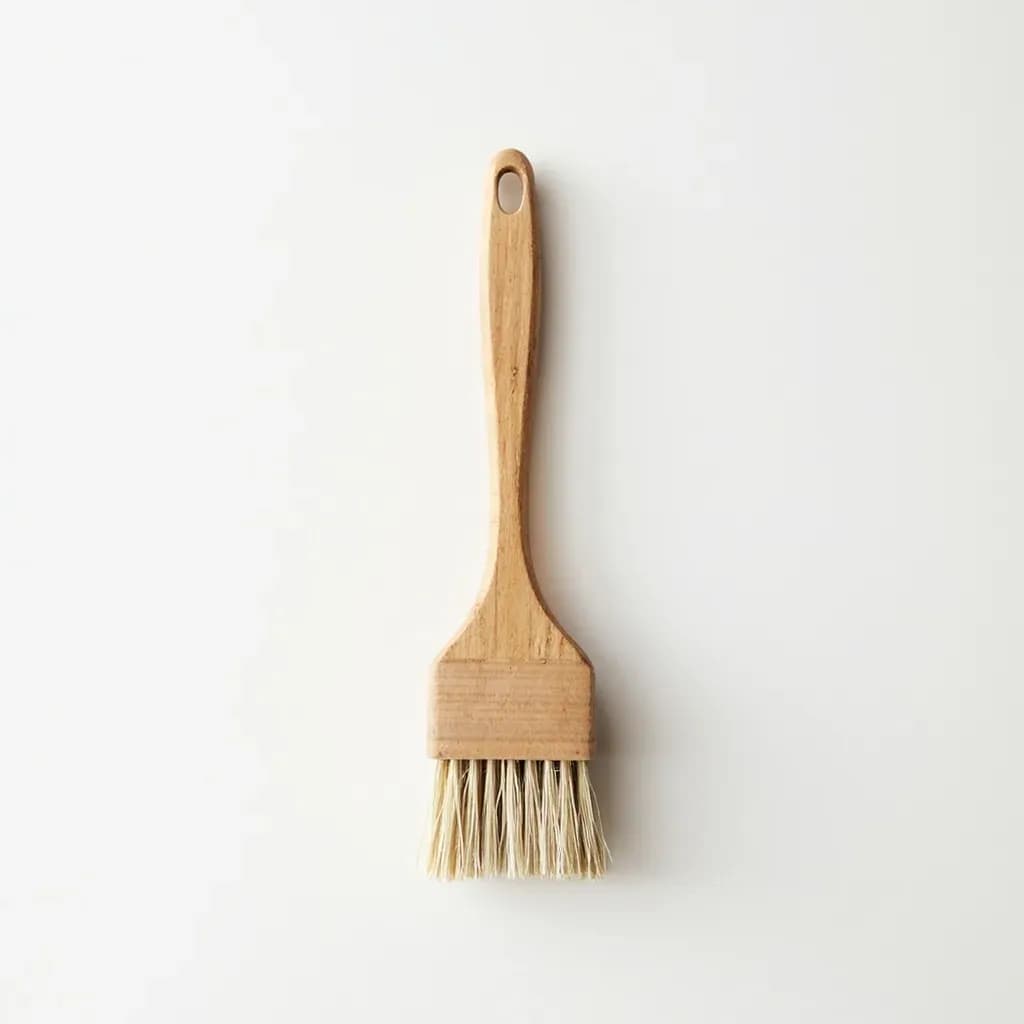
Bench Flour Brush
A soft-bristled brush for dusting excess flour off dough, work surfaces, and finished pastries.
A bench flour brush has soft natural or nylon bristles used to sweep away surplus flour from a kneading surface, rolled dough, or a baked loaf before scoring or finishing. Bakers reach for it constantly when shaping bread and laminating pastry to keep dough from drying out under a heavy flour coat. The gentle bristles clear flour without tearing delicate dough.
The bench flour brush is a wide, soft-bristled brush built specifically for dry work on the baker's bench. Unlike a standard pastry brush — which is designed to spread liquids like egg wash or melted butter — the flour brush carries longer, softer bristles set in a broader paddle head, optimized for sweeping loose flour from dough, bannetons, and work surfaces without disturbing what lies beneath. The name is a small reminder of its purpose: "bench" refers to the baker's worktable, not a piece of furniture, and the tool evolved alongside professional bread and viennoiserie work over the 19th and 20th centuries.
What separates a good flour brush from a poor one is the bristle. Quality versions use hand-tied natural hair — boar at the top, followed by horsehair and goat hair — chosen because the fibers flex around the contours of a shaped loaf rather than dragging across it. The handle is almost always turned hardwood (beech, maple, or olive), with the bristles anchored by a wire staple rather than glue, which is why a well-kept brush can last years of daily service if kept dry. Because the tool lives in dry territory, it requires an opposite care routine from a pastry brush: keep it dry, never soak it, and treat any contact with water as a ruinous event.
In practice, the bench flour brush handles the moments between shaping and baking — clearing excess flour before scoring, emptying a banneton between loaves, and resetting the marble or wood surface between batches. It is the unsung partner to the lame, the couche, and the proofing basket, doing the quiet housekeeping that keeps a production line moving and finished crusts looking clean.
Alternatives
Types & varieties
The benchmark in professional pastry kitchens; soft yet springy, picks up loose flour without disturbing dough. Considered the gold standard.
Slightly stiffer and more resilient than boar; long-wearing, holds its shape, often used in wider bench brushes.
Very soft and fine; good for delicate finishes on pastries and viennoiserie where brush marks must be invisible.
Old-world form, essentially a large soft feather; gentle but short-lived and largely replaced by hair brushes.
Vegan, dishwasher-safe, and inexpensive; less absorbent of fine flour and can feel scratchier on soft dough.
Large rectangular head for sweeping marble or wood benches quickly between batches.
Smaller round ferrule; used inside bannetons, loaf pans, and tight corners.
Flour brush vs. pastry brush
The two brushes look similar at a glance but are built for opposite jobs. A pastry brush has shorter, stiffer bristles packed tightly into a smaller head, sized to load and spread a thin, even film of liquid. A bench flour brush has longer, looser bristles in a wider paddle, designed to flex around a curved loaf and release trapped flour without smearing. The handles are often interchangeable in length, but the heads are not. Using a pastry brush for flour work wastes its precision and leaves streaks; using a flour brush for egg wash soaks the bristles, clumps them with starch, and shortens the tool's life dramatically. The simplest rule: any brush that touches liquid lives in a drawer with the egg-wash brushes, and any brush that only touches flour lives in a dry crock on the bench.
Choosing a flour brush
For a working bakery or serious home setup, a single medium-width (3–4 inch) boar-hair paddle is the most versatile choice. Add a narrow round brush if you bake regularly in bannetons or loaf pans. Goat hair earns its place in a viennoiserie station, where finished croissants and brioche need a whisper-soft pass before display. Synthetic brushes are sensible in high-volume or shared kitchens where brushes get lost or washed by mistake — accept the slightly scratchier feel in exchange for dishwasher-safe convenience. Avoid brushes with glued heads: the bond fails as soon as moisture sneaks in, and the bristles begin shedding into the dough.
Common uses
Tips & pitfalls
- Keep the brush dry at all costs — water clumps flour into a paste that ruins natural bristles and can contaminate dough.
- Never use the same brush for flour and for egg wash or butter; dedicate one tool to dry work only.
- Brush in long, single-direction strokes; back-and-forth motions smear flour into the dough rather than lifting it.
- Tap the brush against the bench edge to release flour rather than blowing into it, which wets the bristles and shortens their life.
- For bannetons and tight spots, reach for a smaller round brush instead of forcing a wide paddle into the space.
- When brushing finished crusts, use a very soft goat-hair or fine synthetic brush to avoid scuffing the surface.
- Store hanging or bristle-up so the head dries and keeps its shape; never lay a damp brush down on its bristles.
- Replace when bristles shed, splay, or harden — a worn brush leaves streaks and can pull soft dough.
Good to know
- Also called
- Flour brush, dusting brush, French flour brush (pinceau à farine)
- Typical head width
- 3–5 inches (7.5–13 cm); wider than a standard pastry brush
- Bristle length
- Roughly 1–1.5 inches (2.5–4 cm)
- Bristle materials
- Boar hair, horsehair, goat hair, goose feather, or synthetic fiber
- Handle
- Usually turned hardwood (beech, maple, or olive); occasionally plastic
- Construction
- Bristles hand-tied with a wire staple or peg, not glued
- Care
- Keep dry; tap out flour; never soak
- Price range
- Modest; premium hand-tied natural-hair versions cost more
Also called
dough brush · bench brush
Related

Muffin Pan
Multi-cup pan for muffins, cupcakes, and egg bites

Bundt Pan
Fluted ring mold for showstopping cakes with a center hole

Springform Pan
Latch-release pan that frees delicate cakes without flipping

Pie Dish
Sloped round dish for crisp-bottomed pies and quiches

Tart Pan
Fluted pan with a pop-out base for clean-edged tarts

Rolling Pin
Rolls dough into even sheets for pastry and bread

Pastry Brush
Brushes on egg wash, glaze, butter, and marinades

Bench Scraper
Flat blade that divides dough and clears your work surface