Baking & Pastry
Flour Dredger / Shaker
A perforated-lid canister for evenly dusting flour, sugar, or spices over food.
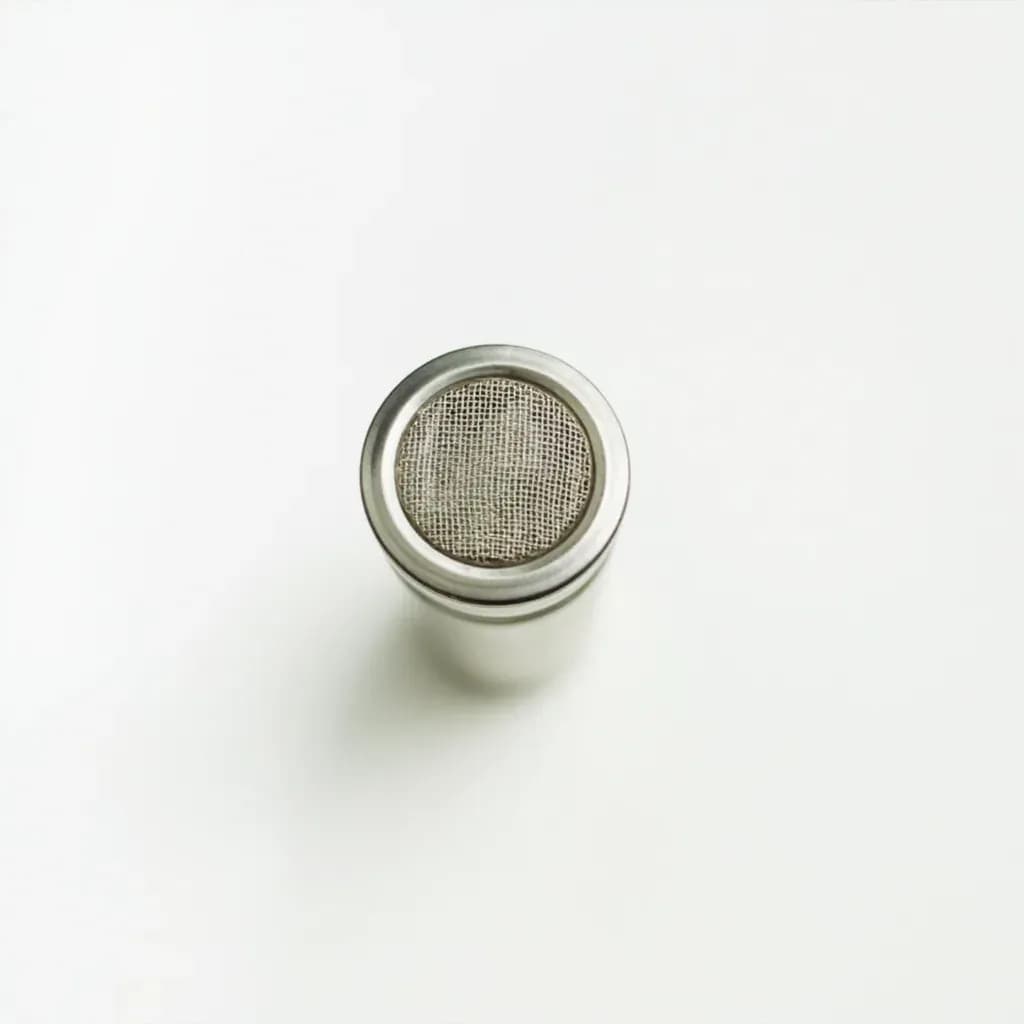
A flour dredger is a metal canister topped with a perforated or mesh lid that sprinkles a fine, even layer of flour, powdered sugar, or cocoa. Bakers use it to dust work surfaces and dough, coat pans, and finish pastries without clumps. The controlled flow gives a light, uniform dusting that a spoon or hand cannot match.
A flour dredger — also called a dredging box, flour duster, or sugar shaker — is a small canister fitted with a perforated, mesh, or rotating lid designed to release a thin, even curtain of dry powder. Where a sieve sifts in bulk and a shaker bottle sprinkles, the dredger sits in between: a controlled tap on the side releases a fine, on-demand dusting of flour, confectioners' sugar, cocoa, cornstarch, or ground spices, which is exactly the kind of light, uniform coating that pastry and bread work demands. The tool matters because most dusting jobs fail for the same reason — too much powder dumped in one spot, or powder applied at the wrong distance — and the dredger's geometry (small holes, mesh, or rotating cap combined with a contained reservoir) solves that problem by design.
Beyond flour, the dredger is the pastry cook's quiet workhorse for finishing work: a snowfall of powdered sugar over a tart, a velvety veil of cocoa on tiramisu, a precise coating of rice flour inside a banneton, or a quick dust of flour on a bench before rolling dough. Modern pastry chefs tend to keep two — a perforated-lid version for flour and a mesh-screen version for sugar and cocoa — because mixing the two contents causes clumping and flavor crossover, and because the two lid styles handle different powder densities differently. Antique tin and silver dredgers from makers like Androck, Foley, EKCO, and Mappin & Webb are still prized for their heft and the fine, even flow their pierced lids produce.
Alternatives
Types & varieties
The classic form: a canister with a snap-on lid punched with small holes. Best for coarser powders like flour or cornmeal.
Uses a fine wire mesh rather than punched holes; excellent for confectioners' sugar and cocoa where a true 'snowfall' is desired.
Top twists between open and closed positions to control flow; common on antique British and American kitchen tools.
A spring-loaded plunger or lever taps the side of the canister to shake out contents one pinch at a time.
Traditional 19th- and early-20th-century style, often decorative; prone to rust at the seams if not dried thoroughly.
Modern professional standard; durable, non-reactive, and usually dishwasher safe.
Oversized (1–2 quart) version used in commercial bakeries for dusting work tables, sheet pans, and proofed loaves.
Dredger vs. sieve vs. shaker: which to reach for
These three tools overlap but solve different problems. A fine-mesh sieve is for breaking up clumps and aerating a large quantity in one pass; a dredger is for tapping out a controlled, repeated dusting. A spice shaker is for pinches; a dredger is for an even coating. Reach for the dredger when the task is finishing — the last step before serving or baking — and for applying a coating that must look uniform (sugar over a cake, cocoa over a stencil, flour inside a loaf pan).
Maintaining flow and preventing clumping
Powdered sugar and cocoa are the worst offenders because their fine particles absorb ambient moisture and cake together. A few simple habits keep the dredger working as designed. Store the canister fully dry with the lid slightly ajar in humid seasons, and toss in a few grains of rice or a small piece of dried bread to absorb residual moisture between uses.
Common uses
Tips & pitfalls
- Fill no more than two-thirds full — overfilling causes clumping at the base and uneven dusting.
- Hold the dredger 6–10 inches above the target and tap the side gently; shaking it upside-down dumps a clump rather than a dust.
- Drop a few grains of uncooked rice or a small piece of dried bread into the canister to absorb residual moisture and keep powdered sugar free-flowing.
- For cocoa and confectioners' sugar, sift once before loading the dredger — the lid perforations do not break up lumps well and will clog almost immediately.
- Unclog caked perforations with a stiff brush, a toothpick, or a quick soak in warm water; never use a knife blade, which will distort the holes and ruin the even flow.
- Keep a dedicated dredger for flour and a separate one for sugar or cocoa; flavors and colors transfer and will muddy delicate work.
- Dry tin-plated dredgers thoroughly by hand after washing; trapped moisture at the rolled seam will rust within a day.
- For sharp stencilled patterns, hold the stencil flat against the dessert and tap the dredger from directly overhead — angled tapping leaves soft, feathered edges.
Good to know
- Also called
- Dredging box, flour duster, flour shaker, sugar shaker, sugar duster, dredger
- Primary function
- Dispenses a fine, even layer of dry powder (flour, powdered sugar, cocoa, cornstarch, spices) through perforations or mesh
- Typical capacity
- Approximately ½ to 1 cup (120–240 ml) for home models; 2–4 cup versions are common in pro kitchens, with larger 1–2 quart models for high-volume bakery work
- Common materials
- Tin-plated steel (traditional), stainless steel, aluminum, occasionally glass or ceramic bodies with metal tops
- Typical height
- 3–5 inches (8–13 cm) for countertop home models
- Lid mechanism
- Hinged snap-on lid with a perforated disc, fine mesh insert, or a rotating pierced cap
- Dishwasher safe
- Stainless steel models generally yes; tin-plated models usually hand-wash only to prevent rust
- Storage
- Stored dry with lid ajar if contents are moist-prone; powdered contents can clump in humidity
- Origin of term
- 'Dredge' derives from Middle English draggen, related to Old French dragier (to coat); the tool became standard in 19th-century English and American kitchens
Also called
Flour Shaker · Flour Dredge Shaker · Sugar Shaker · Dredger
Related

Muffin Pan
Multi-cup pan for muffins, cupcakes, and egg bites

Bundt Pan
Fluted ring mold for showstopping cakes with a center hole

Springform Pan
Latch-release pan that frees delicate cakes without flipping

Pie Dish
Sloped round dish for crisp-bottomed pies and quiches

Tart Pan
Fluted pan with a pop-out base for clean-edged tarts

Rolling Pin
Rolls dough into even sheets for pastry and bread

Pastry Brush
Brushes on egg wash, glaze, butter, and marinades

Bench Scraper
Flat blade that divides dough and clears your work surface