Cookware
Deep Fryer Basket
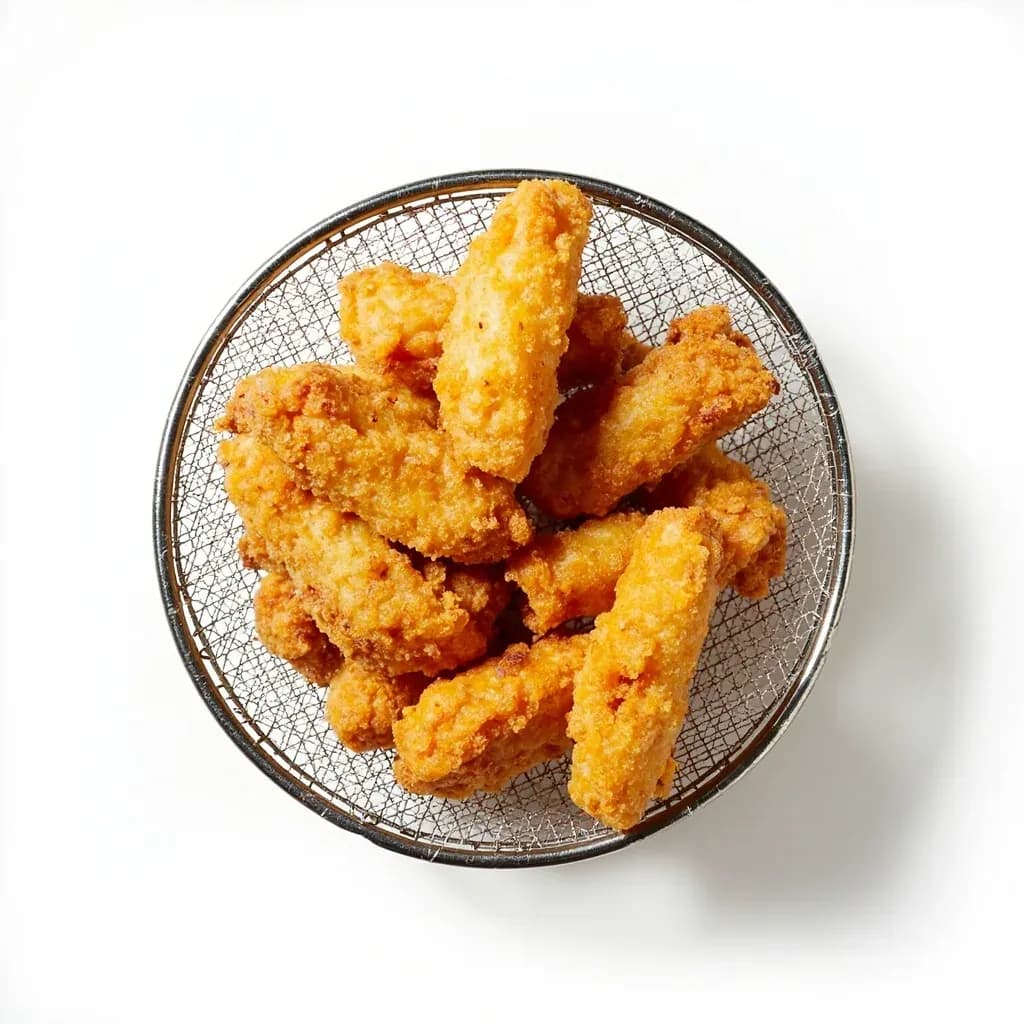
A wire-mesh basket that holds food submerged in hot oil and lifts it out to drain.
A deep fryer basket is a wire or mesh basket with a long handle used to lower food into hot oil and raise it clear when done. It keeps fried items like fries, chicken and donuts together for even cooking and easy draining. The open mesh lets oil flow through quickly so food crisps and sheds excess fat as it is lifted out.
A deep fryer basket is the wire-mesh workhorse that turns a pot of hot oil into a controlled frying station. Without one, you are lowering food into oil with tongs or a slotted spoon and fishing it out piece by piece — a slower, messier, and far less even operation. The basket's job is to hold a batch of food fully submerged, lift it cleanly out of the oil when done, and let the oil drain back into the pot through open mesh. It is the single most important accessory for safe, repeatable deep frying at home or in a small commercial kitchen.
The basket's behavior is governed by a few design choices worth understanding. Mesh size controls what stays in and what escapes — coarse open mesh lets oil circulate freely and browns faster, while fine mesh keeps small or fragile items from drifting down into the oil. The long handle keeps your hand well away from the splatter zone, and the bent hook or tab near the top is what makes the whole tool genuinely useful: hang the basket on the rim of the pot and it drains hands-free while residual carryover heat finishes the crust. Submerging the basket slowly, away from your body, also keeps oil from sloshing up the sides.
Most home baskets are nickel- or chrome-plated steel, which conducts heat well and costs little, but the plating wears off within a year or two of regular use. Stainless steel baskets cost more but outlast multiple fryers and tolerate harsher cleaning, and a few European-style models carry a black enamel coating for corrosion resistance. None of those refinements matter if the basket is the wrong size for the pot — it should sit submerged with at least an inch or two of oil above the food — so measuring the interior of your fryer before buying a replacement is the most useful step a home cook can take.
Alternatives
Types & varieties
Standard for cylindrical home deep fryers and stockpots; sits centered in the pot.
Fits rectangular countertop fryers and commercial fryer tanks; usually sold in pairs.
Tight weave for small or fragile items such as shoestring fries, smelts, or breaded bits that would slip through open mesh.
Open weave for general frying of larger pieces; allows better oil circulation and faster browning.
Two smaller baskets share one fryer tank so different foods — or a fry and a hold — can cook side by side without flavor transfer.
Black or colored enamel over steel for corrosion resistance; common on European-style stovetop fryers.
Heavy-duty, restaurant-grade; lasts longer than plated steel and tolerates harsher cleaning.
Has a hooked rim that suspends the basket on the pot edge for hands-free draining.
Care and longevity
A plated-steel basket is cheap and gets the job done, but the nickel or chrome wears off within a year or two of regular frying — especially if it goes through the dishwasher, where harsh detergent strips the plating and invites rust. Stainless baskets cost more up front but outlast several fryers and shrug off aggressive scrubbing. Either way, the basket should be dried thoroughly after washing and hung by its handle hook so air circulates around the mesh. A broken or bent wire is not a cosmetic issue: it can shed into the oil and end up in food, so inspect the mesh before each heavy use.
- Hand-wash plated baskets; the dishwasher strips plating and causes rust.
- Dry thoroughly and hang by the handle hook — never store wet.
- Inspect the mesh for broken or bent wires before each heavy use.
- Replace the basket once plating is flaking off rather than cooking through bare steel.
Common uses
Tips & pitfalls
- Pat food completely dry before lowering it — surface moisture causes violent splatter and drops oil temperature sharply.
- Never crowd the basket; leave at least a third of the volume empty so the oil can recover and crisp the surface.
- Lower the basket slowly, away from you, with a splatter screen or lid partially shielding your hand.
- Shake the basket gently once at the start of frying to break pieces apart — a classic move for fries and onion rings.
- Lift and hang the basket on the rim hook the moment food finishes — residual heat keeps it cooking for another 10 to 20 seconds.
- Empty crumbs and sediment from the oil between batches; burnt debris is the main source of off-flavor in tired fry oil.
- Skip the dishwasher for nickel-plated baskets — the detergent strips plating and invites rust.
- Match basket size to pot size: the basket should sit submerged with at least 1 to 2 inches of oil above the food.
- If food sticks to the mesh, oil the basket lightly before loading, or dust sticky items like eggplant in flour first.
Good to know
- Also called
- Fry basket, frying basket, immersion basket
- Primary materials
- Nickel- or chrome-plated steel wire mesh for home use; stainless steel mesh for higher-end or commercial baskets
- Handle
- Long metal handle, often with a plastic or rubberized grip end, to keep the hand away from hot oil
- Drain feature
- A bent hook or tab near the top lets the basket hang on the rim of the fryer pot so oil drips back in
- Common home sizes
- Round baskets roughly 7–10 in (18–25 cm) diameter; rectangular baskets around 8 x 4 x 3 in to 11 x 6 x 4 in
- Mesh style
- Coarse open mesh for general frying; fine/close mesh for small or delicate items like shoestring fries or small fish
- Heat tolerance
- Designed for oil temperatures typically 300–375 °F (150–190 °C); handles stay cool enough to grip with a dry towel
- Cleaning
- Soak in hot soapy water to dissolve oil, then scrub with a stiff brush; hand-washing extends plating life
- Cost range
- Basic replacement baskets run roughly $8–25; commercial stainless versions run $30–100+
Also called
Fryer Basket · frying basket
Related

Steamer
Gentle moist heat that keeps vegetables, fish, and dumplings tender

Frying Pan
Shallow sloped pan for frying, sautéing, and quick sears

Saucepan
Tall, straight-sided pot for sauces, grains, and small batches

Sauté Pan
Wide straight-sided pan with room to brown and braise

Dutch Oven
Heavy lidded pot that turns tough cuts tender over hours

Stock Pot
Tall, roomy pot for stocks, pasta, and big-batch cooking

Wok
High-sided bowl pan built for blistering-hot stir-fries

Griddle
Flat, broad surface for pancakes, smash burgers, and breakfast