Baking & Pastry
Garganelli / Gnocchi Board (Pettine)
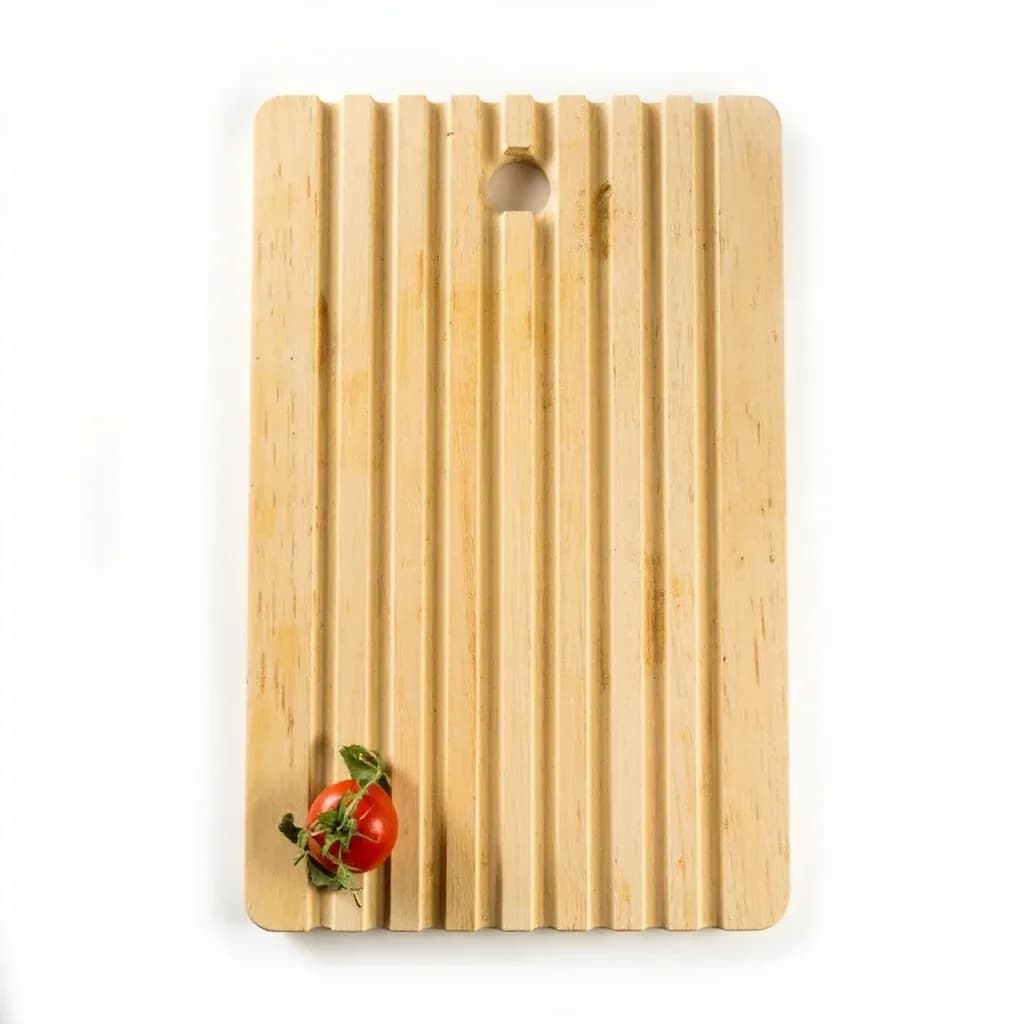
A ridged wooden board that grooves pasta like garganelli and gnocchi to hold sauce.
A garganelli or gnocchi board, called a pettine, is a small ridged wooden paddle used to roll pasta into textured shapes. A square of dough rolled over it on a dowel becomes a ridged garganelli tube, while a thumb-pressed dumpling becomes grooved gnocchi. The ridges create channels and a porous surface so sauce clings better to each piece.
The garganelli board, known in Italian as a pettine (comb) or pettine rigato (ridged comb), is a small handheld wooden paddle carved with parallel grooves, used to imprint functional ridges onto fresh pasta and potato gnocchi. It comes from Emilia-Romagna — specifically the Romagna sub-region, with strong traditional associations in Imola and the area south of Bologna — where garganelli, short rolled tubes of egg-enriched pasta, have been shaped the same way for centuries. Traditional boards are carved from hardwoods like beech, oak, or walnut; modern versions exist in plastic or food-grade resin, though most pasta makers still prefer wood for its slight grip and feel.
The ridges are not decorative. They increase surface area, create micro-channels that catch and hold sauce, and help cooked pieces grip each other in the pan. The classic garganelli board also has a slim wooden dowel (sometimes called a bacchetta or stecchino) fixed at one end; the cook lays a small square of pasta over the dowel and rolls it down the board in one motion, and the dough wraps around the stick while picking up ridges on the outside. Plain ridged boards without a dowel are used for pressing and rolling gnocchi — a thumb pushes each cut piece down the board so it curls and imprints grooves on one face.
A good board is one of the simplest tools in the pasta kitchen and one of the most rewarding to use. Unlike an extruder, it requires nothing more than a piece of dough and a confident hand, and the pasta it produces has a hand-shaped character no machine replicates. Care is strict but simple: never soak or submerge a wooden board, clean it dry with a brush and scraper, and condition it occasionally with food-grade mineral oil. A well-kept board will outlast its owner and, like a wooden rolling pin, often improves with age.
Alternatives
Types & varieties
A ridged board with a thin wooden stick fixed across one end; a square of egg pasta is wrapped around the dowel and rolled against the ridges to form the tube in a single motion.
No dowel; just a small wooden paddle scored with parallel grooves. Used to press and roll individual potato gnocchi so the ridges land on one side.
Bigger boards (30+ cm or more) used in restaurants or by serious home cooks; same ridge pattern, may or may not include a dowel.
Modern designs with fine ridges on one side and coarser grooves on the other, for different pasta sizes or weights of gnocchi.
Dishwasher-safe alternative common in commercial kitchens; functional but lacks the wood's slight grip and traditional feel.
A simpler hand-held comb-like tool with teeth rather than a full board; used in some regions for gnocchi or cavatelli; rarer than the board form.
Garganelli vs. Gnocchi: Two Uses, One Tool
Though often sold and discussed interchangeably, the garganelli board and the gnocchi board are slightly different tools used for slightly different jobs. The traditional garganelli board has a dowel — without it, you cannot form the rolled tube shape that defines garganelli. The plain ridged gnocchi board has no dowel; it is purely a texturing surface for an already-shaped piece of dough.
- Buy the doweled version if you intend to make garganelli or maccheroni al pettine. The dowel is what forms the hollow tube.
- Buy the plain ridged version if you mainly want to texture potato gnocchi, cavatelli, or any short pasta where the ridges themselves are the goal.
- Double-sided boards compromise on both jobs but work for the casual cook who only shapes pasta occasionally.
- A truly traditional Romagna cook often owns both: a larger bench board for pasta and a smaller handheld one for gnocchi and quick work.
- Vintage boards, often hand-carved by a family member, are common in Italian kitchens and frequently passed down — the patina of use is part of the tool's character.
Why the Ridges Matter
Ridges do three things at once: they increase surface area for sauce to grab, they create tiny reservoirs that hold fat and liquid, and they give cooked pasta or gnocchi more friction against itself in the pan so the sauce coats evenly instead of pooling at the bottom. A smooth tube or a smooth gnocchi will let butter, oil, and thin sauces slide off; the same shape with ridges carries them up and onto every piece.
- The grooves substantially increase the effective surface area of the pasta compared with a smooth cylinder of the same diameter, improving sauce contact.
- The ridges trap starch released during cooking, helping the sauce emulsify and cling as you toss the pasta.
- Ridges also give a visual cue: when sauce is clearly caught in the grooves on each piece, the dish is properly dressed.
- If the ridges on your board wear smooth over years of use, the functional benefit disappears; refresh with a fine rasp or replace the board.
Common uses
Tips & pitfalls
- Dust the board with a thin, even layer of semolina or 00 flour before each piece — too much and the ridges blur, too little and the dough sticks and tears.
- Keep dough on the dry, firm side for garganelli (about 100 g 00 flour per egg yolk is a typical starting point); soft dough collapses on the dowel and loses its seam.
- Lay the square of pasta on the board at a slight diagonal, place the dowel at the far edge, and roll away from you in one smooth motion — hesitating makes the seam reopen.
- For gnocchi, press with the side of your thumb, not the pad, and let the dough curl naturally over the ridges; forcing it flattens the shape and smears the grooves.
- Work over a parchment-lined tray so shaped pieces can rest without sticking to one another.
- Condition the wood occasionally with food-grade mineral oil; olive oil can go rancid and is not recommended for long-term care.
- If ridges become worn or smoothed over with years of use, refresh the surface with a fine-tooth rasp or replace the board — dull ridges mean sauce will slide off.
- Common mistake: rolling too hard, which crushes the ridges into the dough and effectively makes the pasta smooth — let the board do the work.
- Common mistake: using a wet or freshly wiped board — water raises the wood grain and creates a sticky surface that pulls the dough apart.
- Common mistake: shaping gnocchi while the dough is still warm from the cooked potatoes — let it cool fully or the residual heat softens the ridges on contact.
Good to know
- Italian name
- Pettine (comb) or pettine rigato (ridged comb); sometimes tagliere per gnocchi for the gnocchi-specific version, or tagliere per garganelli when the dowel is included
- Origin
- Emilia-Romagna, Italy — the Romagna sub-region, particularly around Imola and south of Bologna
- Material
- Hardwood, traditionally beech, oak, or walnut; modern versions also made in plastic or food-grade resin
- Typical size
- Small and handheld; roughly 18–25 cm (7–10 in) long and 6–10 cm (2.5–4 in) wide
- Key feature
- Parallel ridges/grooves carved into the surface; traditional garganelli boards also have a slim wooden dowel (bacchetta or stecchino) fixed at one end around which dough is rolled
- Function
- Imprints ridges onto pasta or gnocchi so sauce clings; the ridges are functional, not decorative
- Also known as
- Garganelli board, gnocchi board, pasta board, maccheroni board, pettine, rigagnocchi
- Care
- Never soaked or submerged; cleaned by scraping and brushing out flour; conditioned with food-grade mineral oil to prevent drying and cracking
Also called
pettine · gnocchi board · garganelli board
Related

Muffin Pan
Multi-cup pan for muffins, cupcakes, and egg bites

Bundt Pan
Fluted ring mold for showstopping cakes with a center hole

Springform Pan
Latch-release pan that frees delicate cakes without flipping

Pie Dish
Sloped round dish for crisp-bottomed pies and quiches

Tart Pan
Fluted pan with a pop-out base for clean-edged tarts

Rolling Pin
Rolls dough into even sheets for pastry and bread

Pastry Brush
Brushes on egg wash, glaze, butter, and marinades

Bench Scraper
Flat blade that divides dough and clears your work surface