Baking & Pastry
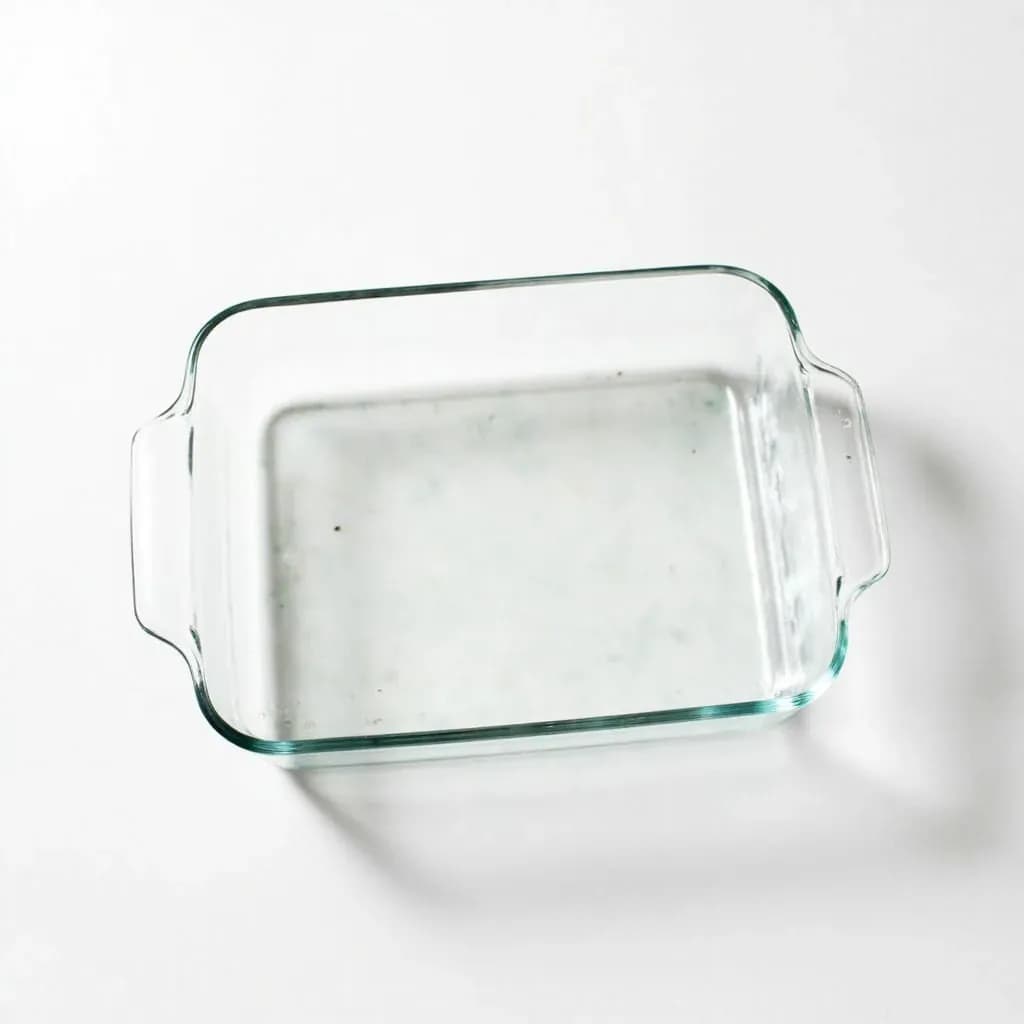
Glass / Pyrex Oven Dish
An oven-safe glass baking dish for gratins, casseroles, and roasted bakes.
A glass or Pyrex oven dish is a tempered-glass baking vessel used for gratins, casseroles, lasagna, and roasted vegetables. The shallow form maximizes surface area for browning crusts and bubbling cheese, and the clear walls let the cook watch the bake. Tempered glass handles oven heat well but should not be moved between extreme temperatures to avoid thermal shock.
A glass oven dish — most recognizably the Pyrex line introduced by Corning Glass Works in 1915 — is a tempered-glass baking vessel valued in the kitchen for two reasons above all: it is completely non-reactive, so tomatoes, citrus, wine, and acidic dairy do not pick up metallic flavors or discoloration, and it is transparent, which lets the cook judge browning on the bottom and sides of a bake that metal and ceramic hide. Modern pieces are made of tempered soda-lime glass (in the United States) or borosilicate glass (in Europe); both conduct heat evenly to the base and sides and retain warmth longer than thin metal, which is why glass is a natural choice for gratins, custards, brownies, and fruit crisps. The trade-off is vulnerability to thermal shock — a hazard that grew when US consumer Pyrex switched from borosilicate to soda-lime glass in 1998, making the once famously durable kitchen staple a piece of equipment that demands more care than most cooks realize.
Alternatives
Types & varieties
The standard US clear-glass bakeware line in rectangular, square, oval, and round forms and a range of sizes
Still manufactured from borosilicate glass in France; substantially more resistant to thermal shock than US soda-lime equivalents
Switched from borosilicate to tempered soda-lime glass in 1998; less forgiving of temperature swings
The main US competitor, also soda-lime tempered glass in comparable shapes including pie plates and loaf pans
Shallow oval with sloping sides, the classic French shape for pommes dauphinoise and similar gratins
Deeper-walled, often with integrated or tab handles, suited to lasagna, baked pasta, and layered braises
Straight-sided loaf form for meatloaf, pâtés, terrines, and dense quick breads
Shallow round dish with fluted or straight rim for pies, tarts, quiches, and shallow fruit crisps
Why glass behaves the way it does
Glass heats a little more slowly than thin metal but distributes that heat more evenly across the base and up the walls, which is why the underside of a glass-baked gratin or brownie takes on color reliably without the hot spots a thin aluminum pan produces. Because glass also retains heat well, the dish keeps cooking its contents for several minutes after it leaves the oven — useful for custards and bread puddings that need a gentle finish, but worth accounting for when you would otherwise pull a metal-baked dish at the same moment. The transparency is not a gimmick: it lets you lift the corner of a bake and judge whether the base has caramelized, whether custard has set at the edges, or whether a fruit crisp has begun to bubble thickly — judgments that are guesswork in an opaque ceramic or dark metal pan.
- Glass conducts heat well but slightly slower than metal; reduce oven temperature by about 25 °F (15 °C) when substituting for a dark-metal pan.
- Heat retention means carry-over cooking continues after the dish is pulled — shorten planned resting times for custards and dense bakes.
- Transparent walls let you monitor browning on the base and sides, a real advantage over ceramic and metal.
The thermal-shock problem
A glass dish fails when one part of it expands faster than another, and the most common trigger in a home kitchen is exactly the sequence a recipe rarely warns about: pulling a hot dish from the oven and setting it on a cold, wet stone counter, or adding cold liquid to a hot glass vessel. Under the brand name, the hazard changed character in 1998, when US consumer Pyrex replaced the original borosilicate formulation (a low-expansion glass originally developed for laboratory beakers) with tempered soda-lime glass, which expands roughly three times more per degree of temperature change. The European product, still borosilicate, is more forgiving of the same mistake. Tempered soda-lime glass is by no means unsafe to use — millions of pieces are in active service — but it demands respect: gradual heating, gradual cooling, and an intermediate resting surface such as a dry trivet, wooden board, or folded kitchen towel.
- Never set a hot glass dish on a cold, wet, or stone surface — use a dry trivet, wooden board, or folded towel.
- Do not add cold liquids to a hot glass dish straight from the oven.
- Pre-warm a refrigerated glass dish with tepid water (and dry it) before loading and baking to ease the temperature climb.
- Allow 5–10 minutes of cooling on a rack before washing to avoid thermal stress at the sink.
- Do not place glass under a hot broiler or directly on a stovetop burner.
Common uses
Tips & pitfalls
- Reduce oven temperature by about 25 °F (15 °C) when substituting glass for a dark-metal pan; the base bakes more aggressively.
- Grease thoroughly with butter or a baking spray, particularly for gratins, custards, and brownies, for clean release.
- Use wooden or silicone utensils to avoid scratching the interior surface, which can become a stress point over time.
- For a gratin that needs a true broiled top, finish in a flameproof metal dish — glass cannot take direct overhead radiant heat.
- Watch the edges of custards and brownies: glass transmits heat to the base efficiently, and the corners and rim are where overcooking shows first.
- Never add cold liquid (water, stock, dairy) to a hot glass dish straight from the oven — a classic shattering scenario.
- Pull custards and dense bakes a few minutes before the timer and let carry-over heat finish the job; the retained heat is part of the cooking.
- When storing leftovers, let the dish cool to room temperature before moving it to the refrigerator to avoid a second thermal-shock event.
Good to know
- Primary material
- Tempered soda-lime glass (modern US consumer Pyrex) or borosilicate glass (original formulation and current European Pyrex)
- Origin
- Introduced by Corning Glass Works in 1915 as a borosilicate cookware line
- Temperature ceiling
- Generally safe to roughly 425–500 °F (220–260 °C); follow the specific rating printed on the dish
- Heat source restrictions
- Not safe on stovetops, induction, or under direct broiler heat
- Key risk
- Thermal shock from sudden temperature change — the leading cause of shattering
- Reactivity
- Non-reactive with acidic ingredients such as tomatoes, citrus, and wine
- Storage and reheating
- Freezer, refrigerator, microwave, and dishwasher safe; reheating leftovers in the same dish is one of its quiet advantages
- Current brand owner
- Corelle Brands, which acquired the consumer Pyrex line from Corning in 1998
Also called
glass-oven-dish · Gratin Dish · Pyrex Dish · Baking Dish · Casserole Dish
Related

Muffin Pan
Multi-cup pan for muffins, cupcakes, and egg bites

Bundt Pan
Fluted ring mold for showstopping cakes with a center hole

Springform Pan
Latch-release pan that frees delicate cakes without flipping

Pie Dish
Sloped round dish for crisp-bottomed pies and quiches

Tart Pan
Fluted pan with a pop-out base for clean-edged tarts

Rolling Pin
Rolls dough into even sheets for pastry and bread

Pastry Brush
Brushes on egg wash, glaze, butter, and marinades

Bench Scraper
Flat blade that divides dough and clears your work surface