Baking & Pastry
Loaf Pan
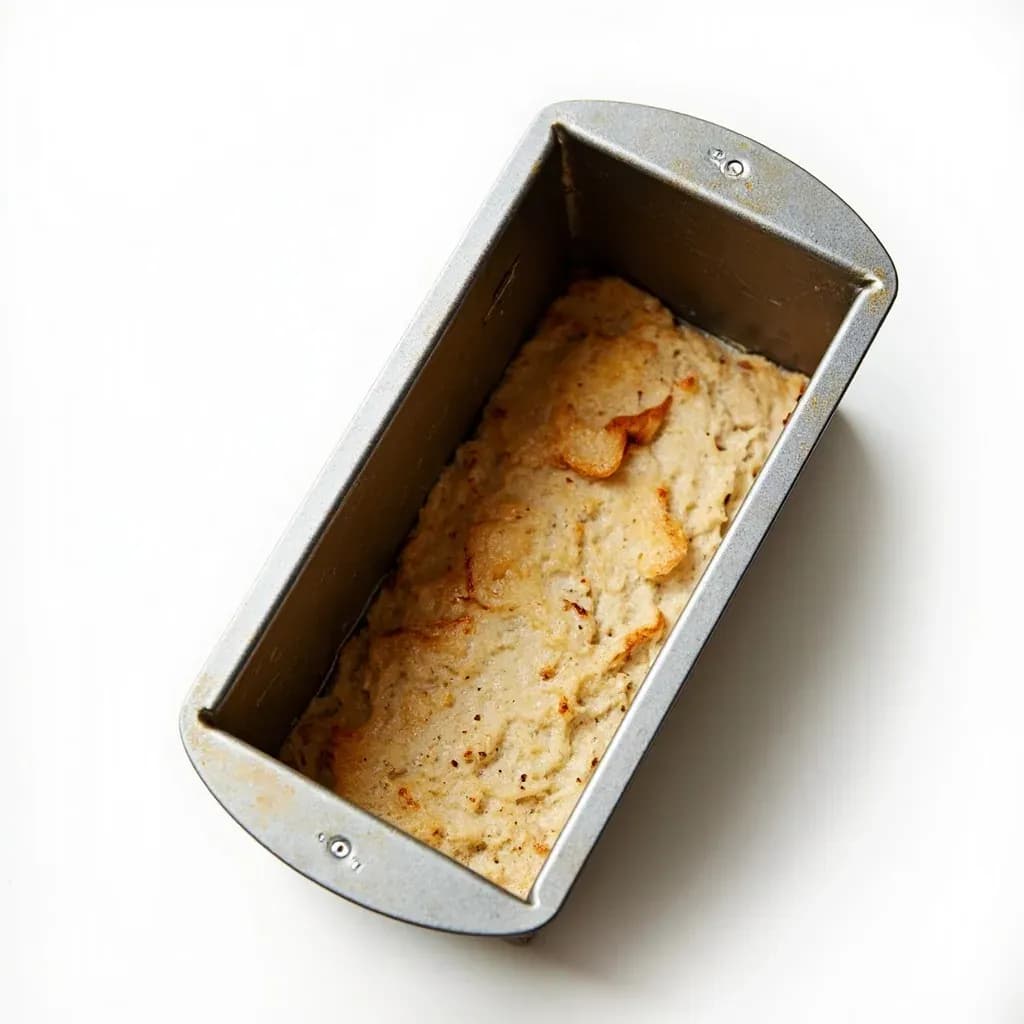
Rectangular pan that shapes bread loaves, pound cakes, meatloaf, and terrines.
A loaf pan is a deep, narrow rectangular pan used to bake sandwich bread, quick breads, pound cakes, and to shape meatloaf and terrines. The tall sides support rising dough and give baked goods their characteristic loaf shape with a domed top. Common sizes are around 8.5 by 4.5 or 9 by 5 inches, in metal, glass, or silicone.
A loaf pan is a rectangular baking vessel with straight sides and modest depth, built to give batters and doughs a clean, sliceable shape while they rise. The straight walls do real structural work, especially for yeasted sandwich loaves and delicate pound cakes, where a round or sloping pan would let the crumb collapse or bake unevenly. In practice, the pan's material — not just the oven — controls how the crust browns and how the crumb sets, which is why a shiny aluminum pan, a dark non-stick, and a glass pan can each produce a noticeably different loaf from the same batter.
Loaf pan sizing is not universal. American recipes are written for a 9 x 5 inch pan, while British and Commonwealth recipes call for 1 lb or 2 lb tins that often sit at different proportions — the 1 lb tin is smaller and shallower, and the 2 lb tin is close in capacity to the US pan but at a slightly different aspect ratio. Substituting one for the other without adjusting bake time or leavening is a common source of sunken middles, overflowing rims, and over-browned edges. The pan's job is simple but exacting: hold a batter, conduct heat predictably, and release cleanly — and choosing the right material and size for the job is half the technique.
Alternatives
Types & varieties
Open-topped rectangular pan, 9 x 5 or 8.5 x 4.5 in; the everyday choice for quick breads, pound cakes, and meatloaf.
Tall, narrow pan with a sliding lid that produces perfectly square sandwich loaves with a thin, even crust.
Smaller format, around 5.75 x 3.25 x 2.25 in (6 x 3.5 in is also common), used for gift loaves and individual quick breads with shorter bake times.
Holes in the bottom and sides let steam escape and hot air circulate, mimicking a deck oven for crusty hearth-style loaves.
Thin, single-use pans suited to gifting, holiday baking, and freezer storage; always set on a sheet pan to prevent buckling.
Heavy with excellent heat retention; gives a deeply browned crust, ideal for yeasted breads and dense cornbread.
Heats slowly but retains heat; lets you watch browning on the sides, and behaves more like dark metal than shiny aluminum.
Flexible for easy unmolding; must be supported on a rigid sheet pan and tends to bake cooler, so browning is usually lighter.
Choosing a Material
For most home baking, a heavy-gauge shiny aluminum pan is the most forgiving: it heats quickly and evenly, and its lighter color means the crust browns at a pace that matches standard recipes. Dark non-stick and glass pans run hotter, so a recipe written for aluminum will over-brown on the edges and top before the center is done unless you drop the oven temperature by roughly 25°F (15°C) or tent the loaf with foil partway through. Cast iron is wonderful for crusty yeast breads and cornbread but is heavy and slow to preheat, so give it extra time in the oven before baking. Silicone is convenient for unmolding chilled desserts and terrines, but because it insulates rather than conducts, expect paler sides and a longer bake for cake batters — set it on a metal sheet pan so the bottom sets properly.
- Shiny aluminum: the default; even heating, predictable browning, recipe-friendly.
- Dark non-stick or glass: bake ~25% faster; lower oven by 25°F (15°C) or tent with foil.
- Cast iron: deeply browned crust, slower to preheat, great for yeasted loaves and cornbread.
- Silicone: easy release, lighter browning; always support on a rigid sheet pan.
- Disposable aluminum: convenience over performance; set inside a sheet pan to prevent warping.
Sizing and Substitution
Because US and UK loaf pans are not exactly the same dimensions, a recipe written for one system will often need adjusting for the other. The British 1 lb tin (about 21 x 11 x 6 cm) is smaller and shallower than a US 9 x 5 in pan, so a batter that rises neatly in the American pan can dome and overflow in the British one. The larger 2 lb tin is closer in size to the US 9 x 5 but sits at a slightly different aspect ratio, so bakers still see real differences in rise and crust. When you have only one size on hand, scale the recipe: a 9 x 5 in pan (about 8-cup capacity) pairs with most standard quick-bread and pound-cake recipes, while an 8.5 x 4.5 in pan is the right choice when you want a taller, more compact loaf and the recipe is robust enough to climb the narrower walls. Mini loaf pans bake on a shorter timeline, so start checking for doneness about two-thirds of the way through the original bake time.
- US 9 x 5 in ≈ 6 to 8 cups; UK 1 lb tin is noticeably smaller and shallower.
- UK 2 lb tin is closer to the US 9 x 5 in capacity but at a different aspect ratio.
- 8.5 x 4.5 in gives a taller, tighter crumb if the batter can support the climb.
- Reduce the recipe by roughly 20% to fit a smaller pan, or pour the excess into muffin cups.
- Mini loaf pans finish in roughly two-thirds the time of a full-size pan.
Common uses
Tips & pitfalls
- Fill the pan no more than two-thirds to three-quarters full; overfilled pans overflow, and underfilled pans dome awkwardly and dry out at the edges.
- Use a parchment sling — two long strips laid crosswise with overhang on both long sides — to lift bread or cake out cleanly without inverting the pan.
- Cool quick breads and loaf cakes in the pan for 10 to 15 minutes, then turn out; leaving them longer traps steam and can turn the bottom gummy.
- Reduce the oven temperature by about 25°F (15°C) when swapping a shiny aluminum pan for a dark non-stick or glass pan to prevent scorched edges.
- Lightly grease and flour even non-stick pans for buttery, sugary batters — or use a baking spray with flour for the most reliable release.
- For a squared Pullman loaf, shape the dough to fit precisely and slide the lid on before the dough can dome over the rim.
- Avoid metal utensils inside non-stick or silicone pans to preserve the coating; reach for wood, silicone, or nylon tools instead.
- Hand-wash aluminum pans; dishwasher detergent can darken raw aluminum and dull anodized finishes over time.
- Don't trust the visual browning of a glass pan as a doneness cue — test with a wooden skewer or an instant-read thermometer (roughly 200 to 205°F / 93 to 96°C internal for most quick breads).
- For meatloaf and pâté, line the pan with parchment or set a perforated loaf pan on a sheet pan so fat drains and the bottom does not stew.
Good to know
- Common size (US)
- 9 x 5 x 2.75 in (23 x 13 x 7 cm), often called a 1-lb loaf pan; 8.5 x 4.5 x 2.75 in yields a taller, closer-grained crumb
- Common size (UK/Commonwealth)
- 1 lb (450 g) and 2 lb (900 g) loaf tins, roughly 21 x 11 x 6 cm and 24 x 13 x 7 cm
- Capacity
- About 6 to 8 cups (1.4 to 1.9 L) of batter for a standard 9 x 5 pan
- Materials
- Aluminum, anodized aluminum, aluminized steel, cast iron, borosilicate glass, stoneware, silicone, and disposable aluminum
- Dark vs. light finish
- Dark or non-stick pans bake roughly 25% faster and brown more deeply than shiny aluminum; lower the oven about 25°F (15°C) when swapping
- Glass behavior
- Glass heats slowly but retains heat and browns aggressively, behaving more like dark metal than shiny aluminum
- Pullman origin
- The covered Pullman or Pain de Mie pan is named for the squared-off silhouette of a Pullman railway car; the lid is usually sold separately
- Standardized form
- The modern rectangular shape took hold in the US in the late 19th and early 20th centuries alongside commercial yeast-bread and quick-bread cookbooks
Also called
loaf-pan · loaf-tin · bread-pan
Related

Muffin Pan
Multi-cup pan for muffins, cupcakes, and egg bites

Bundt Pan
Fluted ring mold for showstopping cakes with a center hole

Springform Pan
Latch-release pan that frees delicate cakes without flipping

Pie Dish
Sloped round dish for crisp-bottomed pies and quiches

Tart Pan
Fluted pan with a pop-out base for clean-edged tarts

Rolling Pin
Rolls dough into even sheets for pastry and bread

Pastry Brush
Brushes on egg wash, glaze, butter, and marinades

Bench Scraper
Flat blade that divides dough and clears your work surface