Baking & Pastry
Madeleine Pan
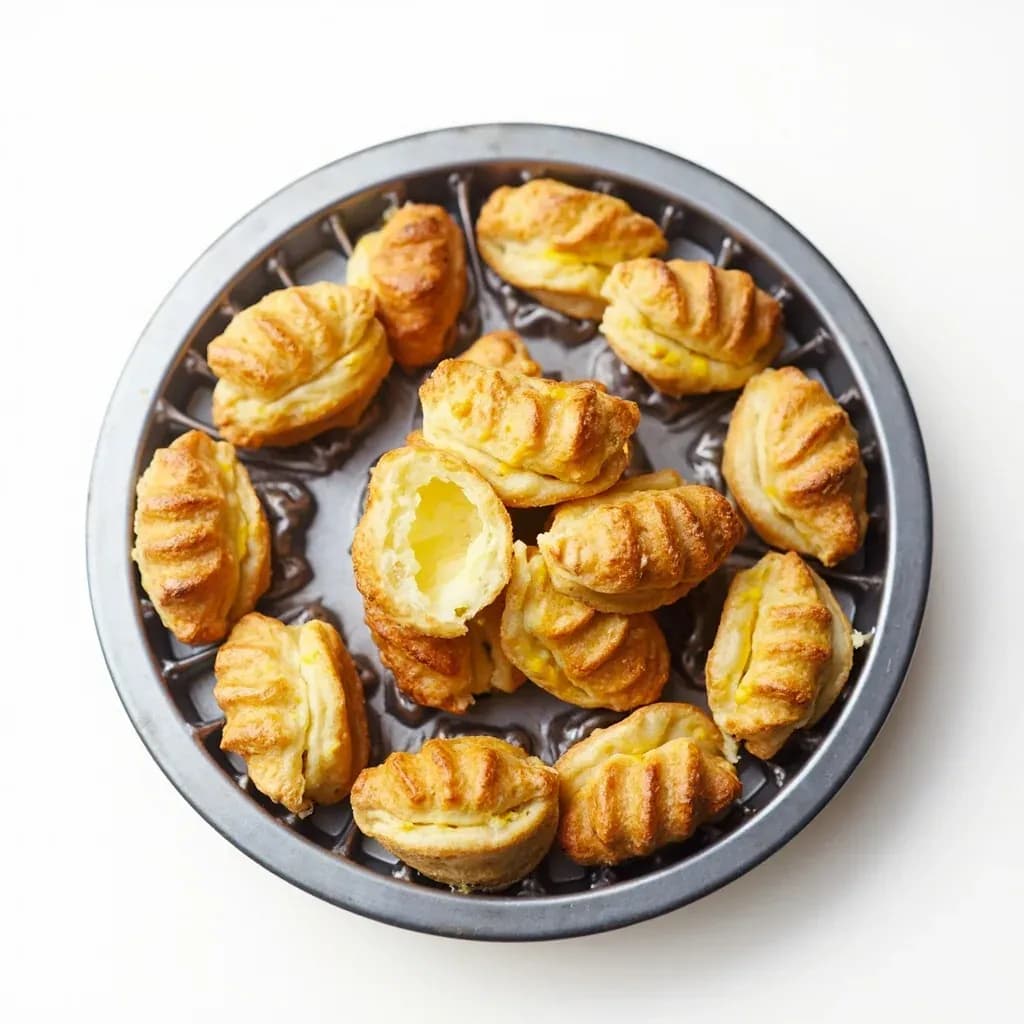
A tray of shell-shaped molds that gives madeleine cakes their signature ridged seashell form.
A madeleine pan is a baking tray with shallow, fluted, shell-shaped depressions that mold the small French sponge cakes called madeleines. The thin, scalloped cavities create their crisp ridged exterior and characteristic hump on top. Nonstick and tinned-steel versions both work; the molds should be well buttered and floured so the delicate cakes release intact.
A madeleine pan is a small, rigid baking tray molded with a grid of scallop-shaped cavities, each cast with the ridged pattern of a pilgrim's shell. Far more than a novelty shape, the pan is the defining piece of equipment for the cake it makes: its thin, hot-conducting metal and shallow, ridged wells are what produce the contrast between a crisp browned crust and a tender, pillowy center, crowned by the famous hump on the back of the shell — the bump the French call la bosse.
The pan behaves as much like molding equipment as a baking sheet. The ridges grip the batter and set a thin crust quickly, sealing in the steam that lifts the cake. Material matters more here than with most pans: tin-plated steel, the traditional choice, runs hot enough to crisp the edges without overcooking the crumb, while silicone transfers heat so gently that the shells stay pale and soft. A well-kept tin pan will outlast several non-stick ones and is what French pastry shops still use today.
Choosing a madeleine pan is really choosing a crust. Tin gives the benchmark French browning and snap; anodized aluminum gives the most even, repeatable results for frequent baking; silicone trades texture for convenience. The standard 12-cavity pan is the size recipes are written for, and most home bakers eventually add a mini pan for one-bite desserts, financiers, and canapés.
Alternatives
Types & varieties
The professional choice; runs hot, gives crisp deeply browned edges and a pronounced hump. Needs careful seasoning; never washed with soap or in a dishwasher.
Heats very evenly and quickly; non-reactive surface tolerates long rests of batter in the pan. A reliable, durable alternative to tin.
Excellent heat transfer and browning, but reactive — must not sit in contact with acidic batters. Often lined or coated by modern makers.
Easiest release for home bakers; browning is slightly muted versus tin. Coating is fragile — no metal utensils, no abrasives, and recoating is not possible.
Flexible, no greasing needed, easy unmolding, but transfers heat poorly so the shells stay pale and soft; the crackly edge is sacrificed unless finished under a broiler.
Rare but excellent heat retention; heavy, must be seasoned like any cast iron, and produces very dark, crisp shells.
The default size recipes are written for; cavity roughly 7–8 cm long.
Smaller cavities (≈ 4–5 cm) for bite-size madeleines, financiers, tea cakes, and savory canapés; shorter bake time of 5–8 minutes.
6–9 oversized cavities suited to plated-dessert madeleines or breakfast-style shells meant to be split and filled.
The Hump, Explained
The defining feature of a madeleine is the rounded bump on its back, called la bosse. It is not decorative — it is the visible proof that the cake was baked correctly, and the pan is half the reason it happens. A cold, rested batter is poured into a fully preheated pan, and the sudden heat sets the outer crust almost instantly. The interior, still liquid and warm from the batter's rest, expands with steam and pushes the soft center upward before the crust firms around it. Skip the chill or underheat the oven and you get a flat, dense shell; overheat and the crust sets before the center can rise.
- Chill the rested batter for at least 1 hour, ideally overnight.
- Preheat the oven fully and, when the recipe allows, the empty pan as well.
- Fill each shell two-thirds to three-quarters full — roughly 30–40 g for a standard cavity.
- Bake just until the edges are deep golden and the center springs back; the window between perfect and dry is narrow.
Choosing the Right Pan
Material is the single biggest decision, because it dictates both how the crust browns and how long the pan will last. Tin-plated steel remains the benchmark for the classic French result: it runs hot, browns aggressively, and rewards careful seasoning with years of service. Anodized aluminum is the most forgiving — even heat, non-reactive, and durable — and is what many serious home bakers settle on. Non-stick coated steel is the most convenient but the most disposable: once the coating scratches or loses its release, the pan is finished. Silicone is the furthest from tradition — easy to unmold and to clean, but the shells emerge pale and soft, and the iconic crisp edge is lost.
Seasoning and Long-Term Care
Treat a tin or aluminum pan the way you would treat cast iron. After each bake, wipe it out with a paper towel, rinse briefly with hot water if needed, and dry it in a low oven. Rub the cavities lightly with a neutral oil before storing; this keeps the tin from oxidizing and builds up a thin, non-stick patina. Never use soap, steel wool, or the dishwasher on tin — they strip the plating and shorten the life of the pan dramatically. A well-kept tin pan will outlast several non-stick ones and is the pan French pastry shops still use, often for decades.
- Wipe, do not wash — hot water and a soft cloth are enough for routine cleanup.
- Dry in a warm oven to prevent rust on tin-plated surfaces.
- Rub cavities lightly with oil after drying to maintain the seasoning.
- Store in a dry place; trapped moisture dulls the tin.
Common uses
Tips & pitfalls
- Chill the batter thoroughly — at least 1 hour, ideally overnight. A cold batter hitting a hot oven is what creates la bosse, the iconic hump on the back of the shell.
- Brush every shell with soft (not melted) butter using a pastry brush, then dust with flour and tap out the excess. Skip this and madeleines will stick, even in non-stick pans.
- Fill each cavity two-thirds to three-quarters full — roughly 30–40 g for a standard shell. Overfilling causes overflow between ridges; underfilling yields flat, pale shells with no hump.
- Bake just until the edges are deep golden and the centers spring back; madeleines cross from perfect to dry in 60–90 seconds, so start checking a minute before the recipe's time.
- Let madeleines rest in the pan 1–2 minutes, then unmold onto a rack. Too short and they tear; too long and trapped steam softens the crisp crust.
- For tin-plated pans, never use soap, steel wool, or the dishwasher — they strip the plating. Wipe clean, dry in a low oven, and rub lightly with oil.
- Avoid non-stick spray alone in uncoated metal pans; over time the lecithin polymerizes into a gummy, brown film in the ridges. Use real butter plus flour, or a baking spray that includes flour.
- If using silicone, lower the oven temperature by about 10 °C / 25 °F and accept that the shells will be paler and softer. A brief finish under the broiler can add color, but watch closely.
Good to know
- Form
- Baking pan with shell-shaped (coquille/scallop) indented cavities; rigid metal pans have the ridged shell pattern cast directly into each well.
- Standard configuration
- 12 cavities in a 3 × 4 grid; mini pans hold 18–24 cavities, large/half-sheet pans hold 6–9.
- Cavity size (standard)
- Roughly 7–8 cm long × 4–5 cm wide × 1.5–2 cm deep (about 3 in × 2 in × ¾ in); capacity ~30–40 g batter per shell.
- Materials
- Tin-plated steel (traditional), aluminum (bare or anodized), non-stick coated steel, silicone, and occasionally cast iron.
- Best material for browning
- Tin-plated steel or uncoated aluminum; both run hotter than non-stick and produce the deeply browned, crisp shell.
- Origin of the shape
- The shell form echoes the pilgrim's scallop shell of Saint James (coquille Saint-Jacques); the pan itself was standardized in 19th–20th-century French bakeware.
- Origin of the cake
- Madeleines are associated with Commercy in Lorraine, France; the molded pan is the defining piece of equipment for the cake.
- Oven temperature (typical)
- 190–210 °C / 375–410 °F; reduce by ~10 °C / 25 °F for silicone.
- Bake time
- 8–12 minutes for standard shells; 5–8 minutes for mini.
- Signature hump
- Created by chilling the rested batter (often 1+ hour, or overnight) and baking in a fully preheated oven; thermal shock lifts the center.
- Required prep
- Every metal cavity must be brushed with soft butter and dusted with flour (or baking spray with flour) — even non-stick ones — for clean release and crisp edges.
- Care
- Tin-plated pans should not go in the dishwasher or be scrubbed with soap; wipe out, dry in a warm oven, and rub lightly with oil to re-season.
- Yield per pan
- 12 standard madeleines; recipes commonly multiply the base batter to fill 1–3 pans.
Also called
Madeleine Tray · Shell Cake Pan · Moule à Madeleine
Related

Muffin Pan
Multi-cup pan for muffins, cupcakes, and egg bites

Bundt Pan
Fluted ring mold for showstopping cakes with a center hole

Springform Pan
Latch-release pan that frees delicate cakes without flipping

Pie Dish
Sloped round dish for crisp-bottomed pies and quiches

Tart Pan
Fluted pan with a pop-out base for clean-edged tarts

Rolling Pin
Rolls dough into even sheets for pastry and bread

Pastry Brush
Brushes on egg wash, glaze, butter, and marinades

Bench Scraper
Flat blade that divides dough and clears your work surface