Cookware
Maslin Pan (Preserving Pan)
A wide, flared-sided pot for boiling jam and marmalade so liquid evaporates fast and sets.
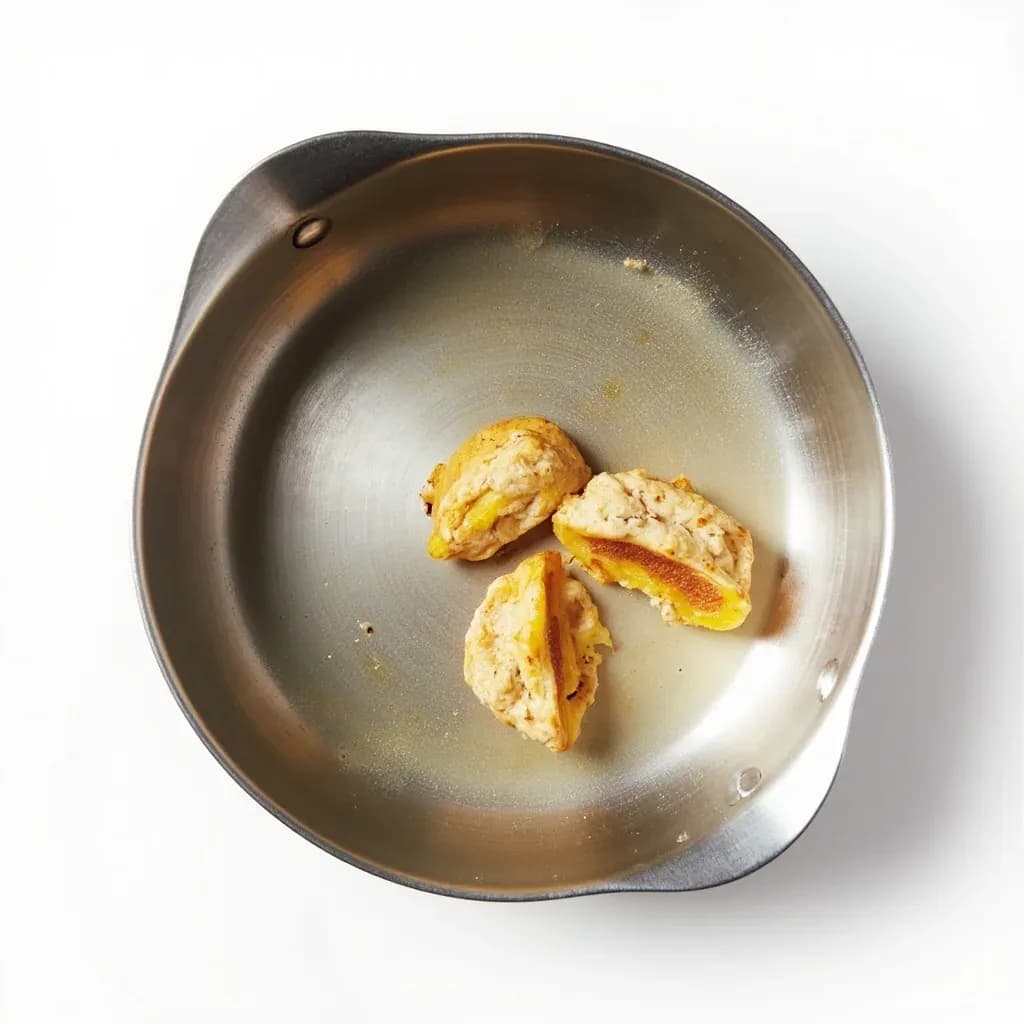
A maslin pan is a wide, heavy, sloped-sided pot with a high capacity, traditionally used for making jams, marmalades, and chutneys. The broad surface speeds evaporation so preserves reach setting point quickly, while the flared sides reduce boil-over and the high walls contain bubbling sugar. Many have a graduated lip for pouring and a folding handle for lifting full loads.
A maslin pan is a wide, shallow pot built for one job: boiling down fruit and sugar quickly enough that the preserve sets while the fruit still tastes fresh. The defining feature is geometry, not material — a broad, flat base with gently flared sides gives the mixture a large surface area relative to its depth, so water evaporates fast and the boil reaches setting point (around 104–105 °C / 220 °F) in minutes rather than the slow, steamy half-hour that a tall stockpot demands. That rapid reduction is the whole point: every extra minute at the boil dulls colour, drives off volatile aromatics, and risks scorch. The same batch cooked in a standard saucepan can take twice as long and taste noticeably flatter for it.
The name has nothing to do with maslin flour or mixed grain. It comes from the "maslin bag," the flannel or linen cone that was suspended above or beside the pan to drip-filter fruit juice into clear jellies — a setup so standard in British kitchens that the pot itself took the cloth's name. A traditional maslin pan is copper, tinned or stainless-lined, with riveted iron or brass handles and no lid; modern versions in stainless steel, hard-anodised aluminium, or enameled steel do the same work with less upkeep. Sizes for home use run from about 5 to 12 litres, with 7–9 L the practical sweet spot — large enough for a generous batch of marmalade or damson jam, small enough that a full pan still weighs under 12 kg and can be lifted with two hands.
The material choice is largely about heat response. Copper answers to a turned-down flame almost instantly, which matters when a sugar boil can pass from perfect to burnt in under a minute. Stainless is heavier and slower but tough, non-reactive, and induction-friendly if it has a sandwiched magnetic base. Avoid non-stick finishes for serious preserving work: the dark coating hides the colour cues you need to judge doneness, and the long hours at high heat break the surface down faster than normal cooking would.
Alternatives
Types & varieties
Traditional choice, tin- or stainless-lined; the most heat-responsive option, prized by serious preservers.
Modern workhorse; affordable, non-reactive, often with a sandwiched aluminum or copper base for even heat and induction compatibility.
Lightweight with excellent conduction; the dark interior makes judging colour changes by eye harder.
Non-reactive and easy to clean; heavier, and chips can expose base metal over time.
Slightly rounded sides rather than straight; helps returning scum gather at the centre for cleaner skimming.
One side flared into a spout for decanting hot jam into jars with minimal spillage.
Large 15–30 L capacity with a brass or stainless tap near the base, used for drawing off liquid jellies and syrups.
Why shape beats material
Evaporation rate is governed by surface area, not volume. Doubling the diameter of a pan roughly doubles how fast it sheds water, and a maslin pan's diameter typically runs twice its depth or more. The practical consequence is significant: a wide preserving pan reaches setting point in a small fraction of the time a tall stockpot of the same capacity needs. Those extra minutes of boiling bleach pigment from the fruit, cook off the brighter top notes, and concentrate the mixture past the point where delicate flavours survive. Shape, not thickness or fancy metal, is what makes a preserving pan a preserving pan.
- Surface area drives evaporation; depth fights it
- A wide pan reaches setting point in minutes, not half-hours
- Fast reduction preserves fruit colour and fresh aroma
- Scorching risk rises sharply in the final minutes of a long boil
Choosing a maslin pan
For most home cooks a 7–9 L stainless steel pan with a thick sandwiched base is the practical choice: induction-ready, dishwasher-safe, and forgiving if left a minute too long. Copper is the connoisseur's pick for its instant response to a turned-down flame — useful when a sugar boil can run from perfect to scorched in under a minute — but it costs more, needs polishing, and is not induction-compatible unless clad. A helper handle on the opposite side from one main handle makes lifting a full pan far safer.
- 7–9 L suits most home batch sizes
- Look for a sandwiched base if you want induction compatibility
- Two riveted side handles are essential; a third helper handle is a real plus
- A pouring lip saves spillage when filling jars
- Skip non-stick finishes — the dark interior hides colour cues, and long boiling degrades the coating
Common uses
Tips & pitfalls
- Leave at least 25% headspace — jam foams up dramatically the moment sugar hits the boil and will boil over in a narrower pot.
- Pre-warm the sugar in a low oven or on a tray over the pan; warm sugar dissolves almost instantly, cutting total boil time and preserving fresh fruit colour.
- Clip a sugar thermometer to the side, or use the wrinkle test: a small spoonful on a chilled saucer, pushed with a finger after 30 seconds — if the surface wrinkles, the jam is set.
- Stir occasionally with a long-handled wooden spoon, especially in the last few minutes; the shallow base scorches easily if left untouched.
- Skim pink or grey scum with a slotted spoon, or swirl in a small knob of butter at the end to disperse it across the surface.
- Never leave acidic fruit sitting in unlined copper; if the tin lining wears through, have it re-tinned before the next season's preserving.
- Wipe the rim of the pan clean with a damp cloth before ladling into jars — stray sugar crystals seed re-crystallisation and ruin the texture of the finished jam.
- Fill sterilised jars to within 3 mm / ⅛ in of the top and seal immediately while hot to draw a reliable vacuum seal.
Good to know
- Also known as
- Preserving pan, jam pan, jelly pan (UK); historically "maslin kettle"
- Origin of name
- From the "maslin bag," the flannel or linen straining cloth it was traditionally paired with — not from mixed grain
- Defining shape
- Wide, shallow body with flared or sloping sides; roughly 2:1 or greater diameter-to-depth ratio
- Typical capacities
- 5–12 L for home use; 7–9 L is the common sweet spot
- Traditional material
- Copper with a tin or stainless-steel lining
- Modern materials
- Stainless steel, hard-anodized aluminum, enameled steel
- Setting point
- Around 104–105 °C / 220 °F
- Weight when full
- A 9 L pan full of jam can weigh 10–12 kg / 22–26 lb
Also called
Preserving Pan · Jam Pan · Jam Pot
Related

Steamer
Gentle moist heat that keeps vegetables, fish, and dumplings tender

Frying Pan
Shallow sloped pan for frying, sautéing, and quick sears

Saucepan
Tall, straight-sided pot for sauces, grains, and small batches

Sauté Pan
Wide straight-sided pan with room to brown and braise

Dutch Oven
Heavy lidded pot that turns tough cuts tender over hours

Stock Pot
Tall, roomy pot for stocks, pasta, and big-batch cooking

Wok
High-sided bowl pan built for blistering-hot stir-fries

Griddle
Flat, broad surface for pancakes, smash burgers, and breakfast