Baking & Pastry
Mooncake Mold
A carved press that stamps intricate patterns onto mooncakes for the Mid-Autumn Festival.
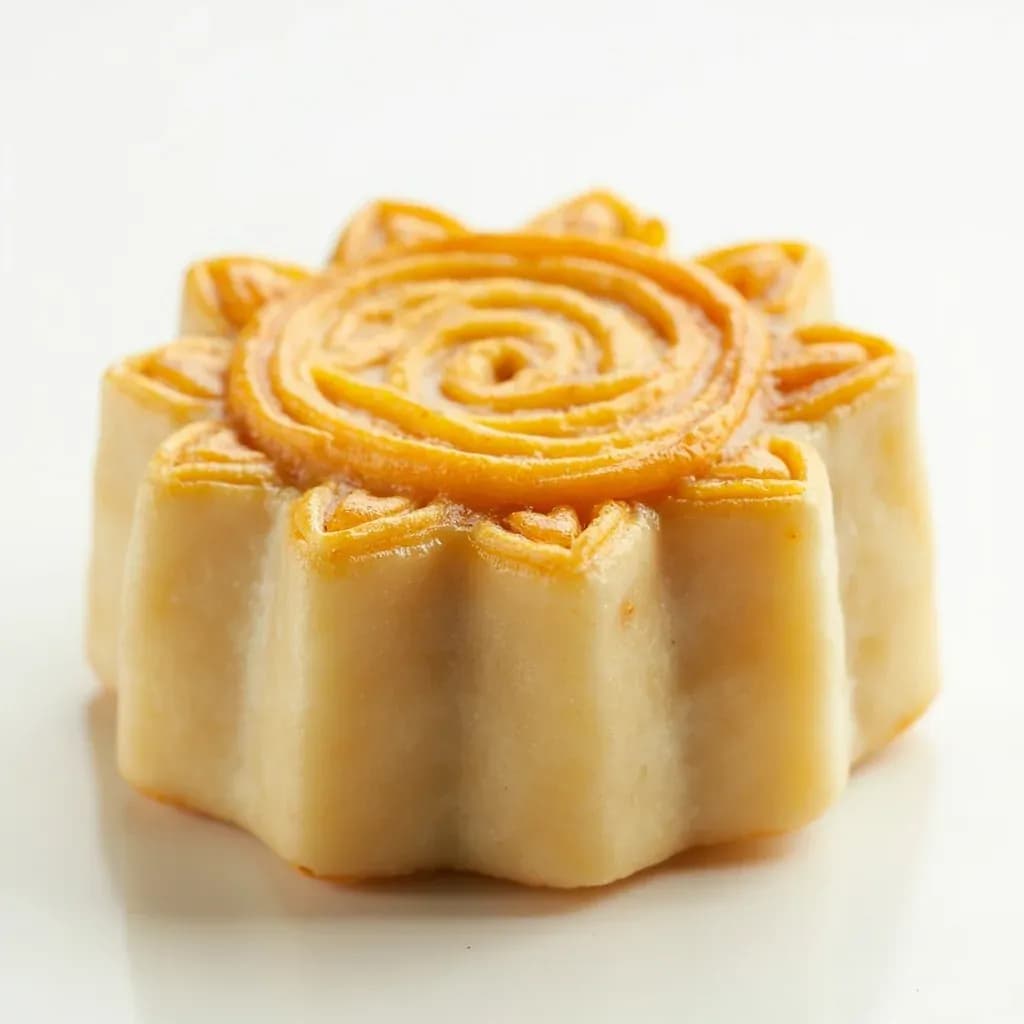
A mooncake mold is a carved wooden or spring-loaded plastic press used to shape and imprint detailed designs onto mooncakes, the dense filled pastries of the Mid-Autumn Festival. Filled dough is packed into the cavity, then turned out or pushed by the plunger so the motif, often characters and floral borders, appears crisply on top. Interchangeable pattern discs let one plunger mold make several designs.
A mooncake mold is a hand-operated press that simultaneously shapes a filled dough ball into a tidy round (or square) and stamps a decorative pattern onto its top surface. It consists of a hollow barrel with a pattern deeply carved into its inner face, a plunger that fits the barrel, and (in modern versions) sometimes a spring-loaded handle that ejects the cake in one motion. The baker packs the filled dough into the barrel, presses the plunger down so the dough takes the barrel's shape and is pressed firmly against the carved face, then lifts or ejects the cake so the design is reproduced in relief on the finished pastry.
The mold matters because the mooncake's identity is partly visual. A clean, sharp impression of an auspicious character, peony, rabbit, or maker's seal signals a well-made cake before a single bite is taken, and it standardises size so a whole tray bakes at the same rate. In China, wooden carved molds were already common by the late Ming and Qing dynasties, and many were family heirlooms passed down with their original patterns intact. The carved face of the mold is the entire top of the cake; the bottom is simply the flat tray the cake was pressed onto, so the choice of pattern and the quality of the impression carry real weight.
In use the tool is forgiving but not lazy. A well-packed, lightly chilled dough ball pressed straight down lifts free with a crisp, fully-defined image; a loosely packed ball pressed with a twist comes out smudged or stuck. Getting that result reliably is mostly a matter of flour dusting, chill time, and even pressure — the rest is the mold doing what it was carved to do.
Alternatives
Types & varieties
Traditional choice; prized for the crispness and depth of its impression and for lasting decades. Needs to stay dry and be lightly oiled, never soaked or washed.
Modern, inexpensive, and dishwasher-friendly; the easiest entry point for beginners and the most widely available style today.
Plastic body with a lever that ejects the cake; gives even one-handed pressure and reduces sticking for cleaner impressions.
Smaller capacity (roughly 30–50 g) suited to bite-sized pastries and snow skin mooncakes, which set rather than bake.
Found in some southern Chinese traditions; produces square or other geometric impressions in place of the round face.
Choosing the right mold
Match the mold to the cake, not the other way around. Capacity ratings on the mold refer to the finished pressed cake, so if your recipe yields 100 g of dough plus filling, a 100 g mold will feel cramped and over-pack; size up. For traditional Cantonese baked mooncakes, a 100 g or 125 g mold is the most common starting point. For snow skin mooncakes, which are pressed cold and eaten without baking, a mini mold (30–50 g) is more useful than a full-size one. Wooden molds give the deepest, sharpest impressions but require careful drying after every use; plastic molds trade some crispness for convenience and are the sensible choice for a first purchase.
- Capacity ratings refer to the finished pressed cake, including filling — not the raw dough ball alone
- Choose wood for depth of pattern and plastic for low-maintenance learning
- Begin with a 100 g or 125 g mold for traditional Cantonese baked mooncakes — the most common beginner size
Caring for a wooden mold
A wooden mooncake mold is a working tool that can outlive its owner if treated right. The enemies are water, sudden humidity changes, and direct heat. After each session, tap out loose crumbs, wipe the carved face with a clean dry cloth, and stand the mold upright in a ventilated spot until it is fully dry to the touch. Once a month, or whenever the wood looks thirsty, wipe a paper-thin coat of food-safe oil (grapeseed or a light vegetable oil) over the carved surface, let it soak for an hour, then buff off the excess. Avoid the dishwasher, the sink, and the dish rack entirely.
- Never soak, rinse, or put a wooden mold in a dishwasher
- Dry upright in open air after each use; do not seal it in a closed container while damp
- Oil sparingly — a sticky, oil-logged mold will mark the dough as much as a dry one
Common uses
Tips & pitfalls
- Dust the inside of the mold lightly with toasted cooked flour (low-protein flour dry-toasted until pale tan), cornstarch, or rice flour before each press to stop sticking and keep the pattern crisp.
- Pack the dough firmly and evenly into the barrel; a loosely packed ball gives a soft, smeared impression and may jam in the mold.
- Chill filled dough balls for 10–15 minutes before pressing so the wrapper holds the filling and the print stays sharp.
- Press straight down, hold for about a second, then lift the mold cleanly — twisting blurs the pattern and can shear the cake's edge.
- Do not wash wooden molds with water; tap out crumbs and wipe with a dry cloth. Plastic molds can be washed but should be fully dried before reuse.
- For very sticky doughs (snow skin, melon seed paste), dust more generously and chill the mold briefly between presses.
- Season a new wooden mold with a thin wipe of food-safe oil so the wood does not absorb dough oils and stain.
- Match mold capacity to the finished cake weight, not just the dough ball — account for the filling so the impression is not distorted by over- or under-fill.
Good to know
- Tool type
- Hand-press mold for shaping and patterning filled mooncakes
- Traditional material
- Carved hardwood such as peach, jujube, or camphor wood, chosen for tight grain and durability
- Modern material
- Food-grade plastic, often with a spring-loaded or pistol-grip handle
- Standard capacities
- 50 g, 75 g, 100 g, 125 g, 150 g, and 200 g molds are widely sold
- Typical diameter
- Roughly 6–10 cm for the round face, scaling with capacity
- Common shape
- Round and thick; square and other geometric shapes appear in some southern Chinese regional styles
- Pattern themes
- Auspicious characters (longevity, harmony, 'mid-autumn'), peony, lotus, chrysanthemum, rabbits, clouds, stylised dragons
- Care for wooden molds
- Keep dry, out of direct sun; wipe occasionally with a thin coat of food-safe oil to prevent cracking
Also called
Mooncake Press · Mooncake Stamp
Related

Muffin Pan
Multi-cup pan for muffins, cupcakes, and egg bites

Bundt Pan
Fluted ring mold for showstopping cakes with a center hole

Springform Pan
Latch-release pan that frees delicate cakes without flipping

Pie Dish
Sloped round dish for crisp-bottomed pies and quiches

Tart Pan
Fluted pan with a pop-out base for clean-edged tarts

Rolling Pin
Rolls dough into even sheets for pastry and bread

Pastry Brush
Brushes on egg wash, glaze, butter, and marinades

Bench Scraper
Flat blade that divides dough and clears your work surface