Baking & Pastry
Muffin Tin
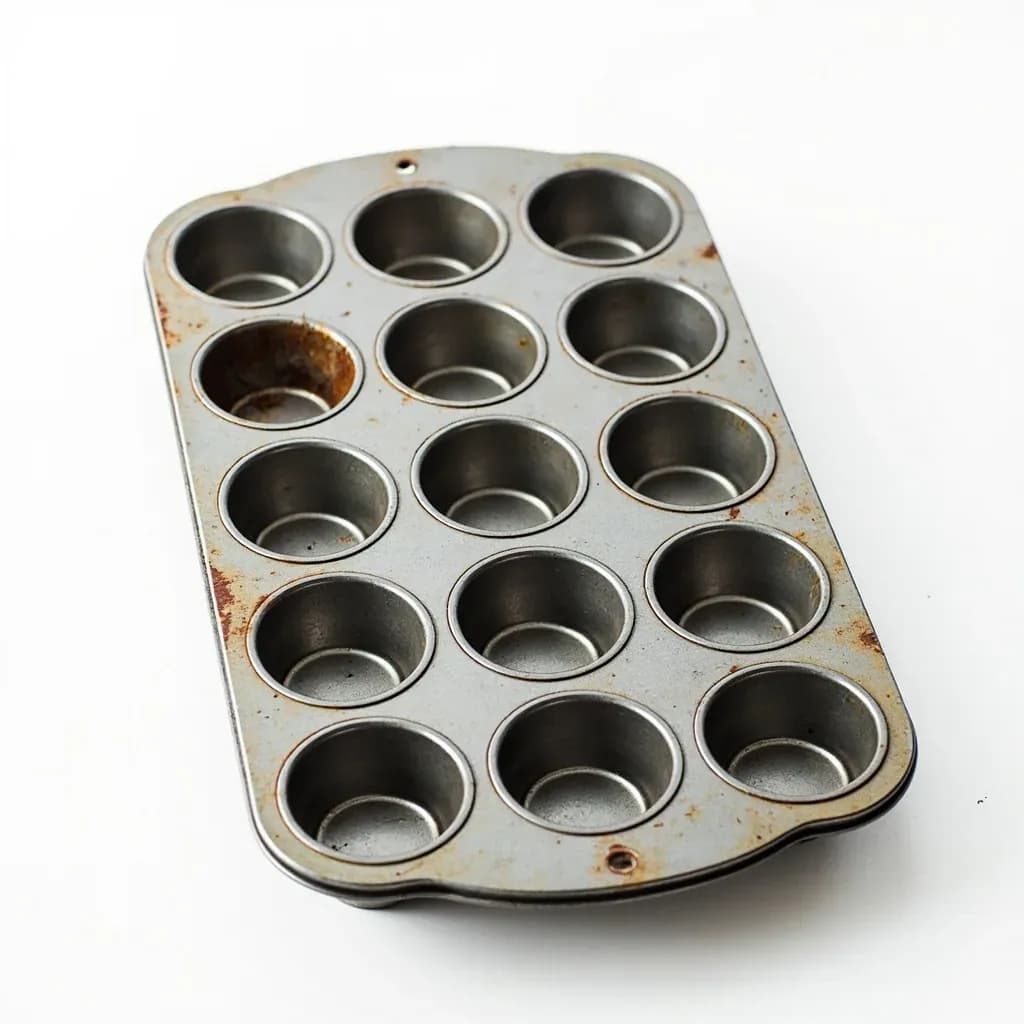
Tray of round cups for baking muffins, cupcakes, and portioned individual bakes.
A muffin tin is a metal baking tray with a row of rounded wells, typically six or twelve, that hold batter in uniform portions. Bakers use it for muffins and cupcakes, but also for egg bites, mini frittatas, popovers, and other single-serve baked items. Cups are usually lined with paper or greased so the baked goods release cleanly.
A muffin tin is a rigid metal pan with a row of deep, cup-shaped wells designed to bake small, individual portions of batter that rise and set with their own structure. The home-kitchen standard is a 12-cup pan of roughly 4 oz / ½ cup capacity per well — a size that fits comfortably in most ovens and that virtually every published muffin and cupcake recipe assumes, which is why this single pan has become one of the most universal pieces of bakeware in the world. The tin matters less for what it makes than for what it does: it gives the cook automatic portion control, uniform baking, and a finished shape that is easy to glaze, frost, stack, or plate.
The tool's behavior is governed by three variables — well size, pan material, and surface treatment. Standard aluminum conducts heat quickly and browns the underside evenly; dark non-stick coatings run hot and can scorch delicate batters; silicone is gentle but floppy and produces a paler, softer crust. A 12-cup pan with ~4 oz wells yields a muffin that bakes in roughly 18 to 22 minutes; jumbo cups bake a taller, longer-rising product; mini cups cut that time nearly in half. Understanding those differences is what separates a batch of well-risen, cleanly released muffins from a tray of stuck, uneven, or overflowed ones.
In practice, the muffin tin is one of the few pieces of equipment that crosses sweet and savory with equal authority. It is as comfortable producing a tray of vanilla cupcakes as it is holding a dozen individual mini quiches, stuffed mushrooms, or portioned bread puddings. Treated as a modular portion-control pan rather than a single-purpose baking tool, it becomes one of the most useful shapes in a working kitchen.
Alternatives
Types & varieties
The home-kitchen default; ~4 oz wells, the size virtually all recipes assume.
Larger, deeper cups for oversize muffins, large popovers, or stuffed bakes.
Smaller cups (~1–2 Tbsp) for bite-size muffins, brownie bites, appetizers, and cocktail cupcakes.
Flexible, naturally non-stick, and easy to release; must be set on a rigid sheet pan for stability and even browning.
Heavy, retains heat, and produces very even browning; requires thorough seasoning and a preheat like other cast iron.
Preferred in professional bakeries for fast, even heat conduction and long-term durability.
Convenient release out of the box, but the coating degrades with metal utensils and prolonged high heat.
Single-use, lightweight, common for bake sales, transport, and large-batch entertaining.
Shallower, wider cups designed for whoopie pies and other shallow domed bakes.
Deep, narrow, straight-sided cups engineered for tall-rising popovers and Yorkshire puddings.
Choosing the right material
Material matters more than most home cooks realize, because the pan's heat behavior is what determines whether a muffin has a pale, even crumb or a scorched bottom and a raw center. Bare or anodized aluminum is the benchmark: it heats fast, spreads heat evenly, and produces the kind of golden-brown underside most recipes are written for. Dark non-stick pans run noticeably hotter and benefit from a 25°F (15°C) reduction in oven temperature, especially for cupcakes and delicate batters. Silicone is the gentlest, but its insulating quality means paler bottoms and a softer crust; it also deforms under its own weight, so it must be set on a rigid sheet pan before it goes in the oven. Cast iron is excellent for browning but heavy, slow to preheat, and demanding to maintain. For most home bakers, a single heavy-gauge aluminum 12-cup pan will outperform three cheaper ones.
- Bare or anodized aluminum: the professional and home-baker default for even browning.
- Dark non-stick: convenient release, but runs hot — drop the oven temperature ~25°F (15°C) for delicate batters.
- Silicone: gentle and non-stick, but floppy and pale; always set on a sheet pan.
- Cast iron: exceptional browning and heat retention, but heavy and slow to preheat.
- Disposable aluminum: fine for transport and bake sales, but flimsy and prone to warping at high heat.
Filling, baking, and releasing cleanly
The two operations that determine a successful muffin are how full the wells are filled and how the baked goods are removed. Overfilling is the single most common mistake: more than three-quarters full, batter crowns over the rim, sticks to the pan, and pulls the crust when the muffin is released. Underfilling yields a flat, stunted top. The release step is equally important — muffins need a few minutes in the pan to finish setting, but too long and the trapped steam softens the crust into a gummy layer that will tear.
- Fill each well ⅔ to ¾ full; this is the difference between a clean dome and an overflowed rim.
- Cool in the pan 3–5 minutes, then turn out onto a rack — too soon and they crumble, too long and the crust goes soggy.
- Release with a thin offset spatula or paring knife; twisting the muffin to free it tears the crumb.
- For a clean bakery-style edge, grease with butter, dust with flour, and tap out the excess.
- Rotate the pan front-to-back and top-to-bottom halfway through baking to correct for oven hot spots.
Beyond baking: savory and utility uses
Because the muffin tin is essentially a portion-control mold that holds its shape during baking, it has dozens of uses outside the sweet-baking canon. The same modular grid that produces a dozen cupcakes will hold a dozen mini quiches, frittatas, or meatloaves with equal reliability, and the cup shape gives each portion a built-in serving vessel. It is equally useful for savory baking — a hot, heavily greased muffin tin will produce tall, evenly puffed Yorkshire puddings that rival a dedicated popover pan — and for cold preparations like portioned ice cream, chocolate cups, or herb-and-oil freezer cubes.
Common uses
Tips & pitfalls
- Fill wells only ⅔ to ¾ full — more and the batter crowns over the rim and welds itself to the pan.
- Grease thoroughly with butter or baking spray, or use paper or silicone liners; flouring a greased cup is the classic bakery finish.
- Let muffins rest in the pan 3–5 minutes before turning out; remove too soon and they crumble, leave them too long and steam softens the crust.
- Run a thin offset spatula or paring knife around each cup to release — twisting to free a stuck muffin tears the crumb.
- Drop oven temperature by ~25°F (15°C) when using dark or non-stick pans; they run hot and will scorch the bottoms.
- Set silicone molds on a rimmed sheet pan; on their own they are floppy, unstable, and bake unevenly.
- Avoid metal utensils on non-stick coatings; switch to silicone or wood to extend the life of the pan.
- For large batches, leave the center wells empty when you can — edge cups bake faster, and an empty center improves airflow.
Good to know
- Also called
- Muffin pan, cupcake pan, muffin tray
- Standard configuration
- 12 cups per pan (home-kitchen default); 6-cup jumbo and 24-cup mini tins are also common
- Standard cup capacity
- ~4 oz / ~120 ml / ~½ cup batter per well
- Cup dimensions (standard)
- ~2½ in (6.4 cm) top diameter, ~1¼–1½ in (3–4 cm) depth
- Mini cup capacity
- ~1–2 Tbsp (~15–30 ml) per well
- Jumbo cup capacity
- ~5–6 oz / ~150–180 ml per well
- Overall dimensions (12-cup)
- ~14 × 10½ in (35.5 × 27 cm)
- Common materials
- Aluminum (bare or anodized), carbon steel, stainless steel, silicone, cast iron, disposable aluminum
- Heat tolerance
- Aluminum/steel ~450°F and up; silicone ~428–450°F depending on brand — verify manufacturer specs
- Origin
- Tinplate and cast-iron muffin pans appeared in 19th-century American kitchens; aluminum versions became standard mid-20th century
Also called
Muffin Pan · Cupcake Tin · Cupcake Pan
Related

Muffin Pan
Multi-cup pan for muffins, cupcakes, and egg bites

Bundt Pan
Fluted ring mold for showstopping cakes with a center hole

Springform Pan
Latch-release pan that frees delicate cakes without flipping

Pie Dish
Sloped round dish for crisp-bottomed pies and quiches

Tart Pan
Fluted pan with a pop-out base for clean-edged tarts

Rolling Pin
Rolls dough into even sheets for pastry and bread

Pastry Brush
Brushes on egg wash, glaze, butter, and marinades

Bench Scraper
Flat blade that divides dough and clears your work surface