Knives & Cutting
Mushroom Knife
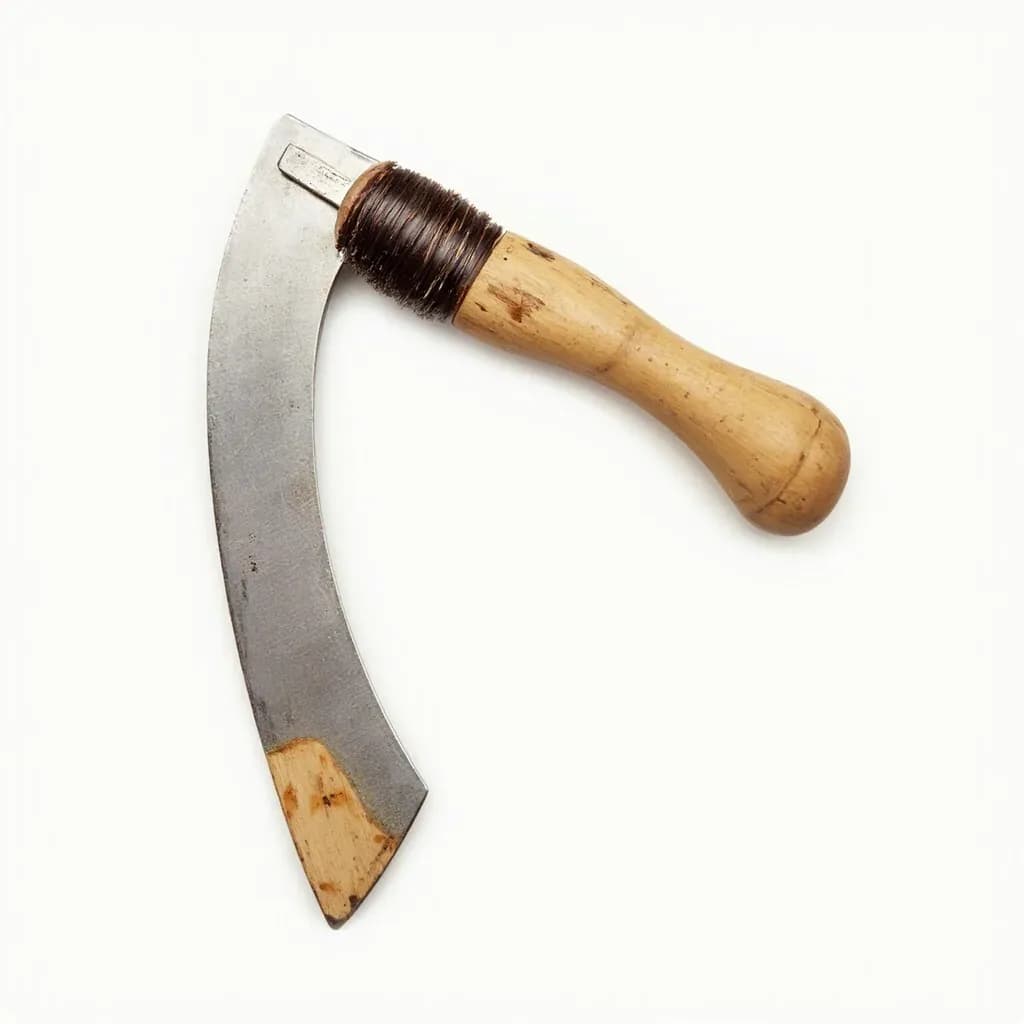
A small curved foraging knife with an attached brush for cutting and cleaning wild mushrooms.
A mushroom knife has a short, curved blade for slicing mushroom stems cleanly at the base and a stiff brush on the handle to flick away dirt and pine needles in the field. Foragers use it to harvest without uprooting the mycelium and to clean caps before they go in the basket. The curved edge follows the contour of the stem for a neat cut.
A mushroom knife is a purpose-built foraging tool that pairs a short, curved blade with an integrated bristle brush at the pommel, letting a forager cut, lift, and clean a specimen in one continuous motion before it goes into the basket. The blade is deliberately small — usually 6 to 10 cm with a concave edge and a fine tip — so it can follow the curve of a cap, slip under a chanterelle nestled in moss, or sever a bolete's stipe cleanly at the soil line, leaving the underground mycelium undisturbed and the haul free of the soil and grit that come with yanking. The brush on the opposite end, traditionally boar bristle or horsehair, sweeps pine needles, leaf litter, and grit off the cap and stem without wetting the flesh.
A standard kitchen paring or chef's knife is a poor substitute for this work: its length is hard to control inches from the ground, its straight edge cannot trace the contour of a cap, and its bulk prevents the close, angled cuts this task demands. The mushroom knife's curved, scalpel-like profile lets the user work inches from the soil with the tip angled upward, preserving the mycelium so the patch fruits again the following season.
The design has deep roots in European foraging culture — particularly in France, Italy, Germany, and Scandinavia — and remains a niche tool outside of mushroom country. It earns its place, however, the moment a cook starts buying uncleaned wild mushrooms at a farmers' market: the same brush-and-blade logic that works in the forest translates directly to the kitchen counter, where a quick dry brushing beats a soak in water every time.
Alternatives
Types & varieties
The iconic French folding mushroom knife; curved stainless blade, beech handle, retractable boar-bristle brush in the pommel, Virobloc safety ring
Larger sibling of the No. 8 with a longer curved stainless blade, suited to bigger boletes and caps
Italian folding knife with a safety lock, natural-bristle brush, and laminated or stainless blade in olive or walnut handle scales
German-style fixed-blade champignon knife with a curved stainless blade and integrated bristle brush
German folding knife with a curved stainless blade and horsehair brush; popular among German-speaking foragers
Traditional Italian fixed-blade mushroom knife, often with an olive-wood handle and natural-bristle brush
Newer designs use food-safe nylon or plastic bristles instead of animal hair, easier to wash and dry
Why Brushing Beats Washing
Wild mushrooms are sponges. Their flesh is up to 90 percent water and is laced with thin-walled hyphae that wick liquid into the cap almost on contact. A soak in the kitchen sink — or even a quick rinse under the tap — fills the pores and gills, dilutes flavor compounds, and turns a firm bolete into a soggy gray disc that will never brown properly in the pan. Dry brushing in the field, moments after the cut, removes the loose duff, insects, and conifer needles before any of that debris embeds in the cap. The same principle applies at the kitchen counter to cultivated mushrooms bought dirty from a farm stand: a few flicks of the brush beats a splash under the faucet every time.
- Brush in the field, immediately after cutting — debris dries onto caps fast and becomes harder to remove later
- Always stroke away from the gills, tubes, and pores so grit doesn't lodge in the spore-bearing surface
- If a mushroom is muddy beyond dry cleaning, accept a brief rinse, pat it dry with linen, and cook it the same day
- Soaking in salted water is reserved for stubborn cases like morels, which benefit from a short bath to evict insects
Common uses
Tips & pitfalls
- Cut, don't pull: slicing the stem at the base preserves the underground mycelium so the patch fruits again, and avoids dragging soil and grit up with the mushroom
- Always brush in the field and never wash wild mushrooms in water until you are ready to cook — they absorb liquid, lose flavor, and become soggy
- Brush away from the gills, tubes, and pores so debris doesn't lodge in the spore-bearing surface
- Keep the brush end clean and dry between outings; a soiled brush is the fastest way to smear soil and stray spores across your next haul
- For any specimen you cannot identify with certainty, leave the entire base — volva, bulb, ring, and all — attached and intact until an expert confirms the ID; trimming too early can make a deadly species look like an edible one
- Wipe a carbon-steel blade with a thin film of food-safe oil after use; mushroom moisture and soil acids will stain and pit carbon steel quickly
- Don't pry with the fine tip — it is for slicing and lifting, not levering. Use a small stick or your fingers to move heavy debris
- After the season, wash the brush with mild soap and lukewarm water, rinse well, and dry bristle-down so water drains; store the knife open, dry, or in its sleeve to prevent rust
- A forager's basket is part of the system: lay mushrooms cap-down so spores fall through the weave as you walk, helping reseed the patch
Good to know
- Kind
- Specialized foraging and field-cleaning knife
- Origin
- European foraging tradition, with strong roots in France, Italy, Germany, and Scandinavia
- Blade Length
- Typically 6–10 cm (2.5–4 in)
- Blade Shape
- Short, curved (concave) with a fine, sharp point
- Notable Maker
- Opinel (France) — No. 8 and No. 10 'Champignon' models
- Brush Material
- Boar bristle, horsehair, or modern food-safe synthetic fiber
- Typical Price
- $15–$60 USD for most consumer models
- Configuration
- Folding (most Opinel-style) or fixed-blade
Also called
Sieniveitsi · Foraging Knife · Mushroom Brush Knife
Related

Knife
The fundamental cutting tool every kitchen is built around

Chef's Knife
The do-everything blade for chopping, slicing, and mincing

Paring Knife
Small, nimble blade for peeling and detailed in-hand work

Serrated Knife
Saw-toothed blade that slices crusty bread without crushing

Cleaver
Heavy broad blade for chopping through bone and bulk prep

Cutting Board
The stable surface every cut starts on

Mandoline
Adjustable blade for paper-thin, perfectly even slices

Kitchen Shears
Heavy-duty scissors for poultry, herbs, and packaging