Cookware
Oil Strainer Pot
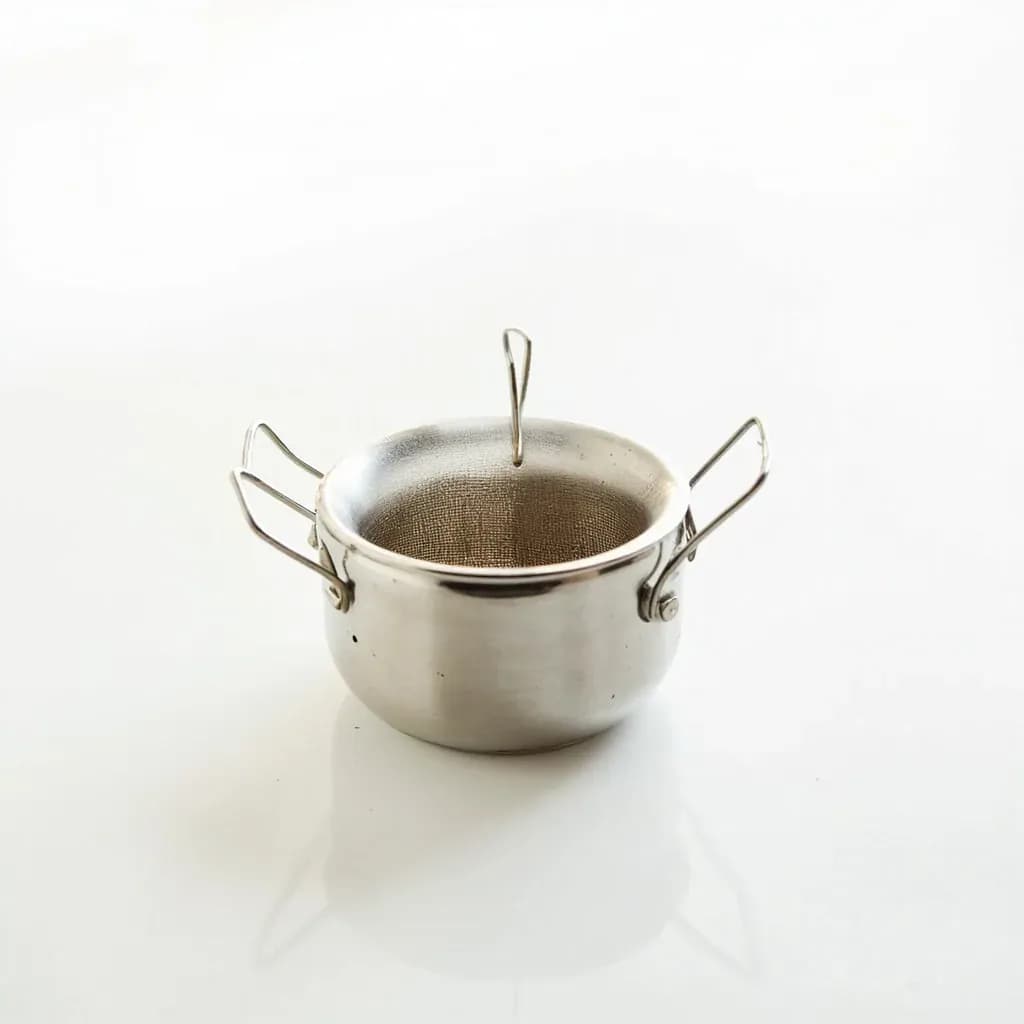
A lidded pot with a built-in mesh filter for straining and storing reused frying oil.
An oil strainer pot is a storage container, often with a fine mesh basket in the lid, used to filter food particles out of cooking oil after deep-frying so the oil can be reused. Cooks pour hot oil through the strainer, which traps crumbs and sediment, then store the cleaned oil in the same pot. It extends the life of frying oil and keeps it from going rancid quickly.
An oil strainer pot is a two-part vessel built around a single recurring chore: the moment between frying batches when used oil has to come off the heat, be cleared of crumbs, and be put away somewhere it won't go rancid before the next session. The body is a lidded stainless pot sized to hold the oil from one or two home-fryings; nested into or over that pot is a fine wire-mesh basket or lid-mounted screen. You pour the warm oil through the mesh, the food particles stay behind, and the clean oil collects in the pot below, sealed with its lid until the next use.
The tool exists because oil is expensive, and clean oil fries better. Even a few stray crumbs of batter or breading will scorch on the next fry, darken the oil faster, and impart off-flavors to whatever is cooked in it. A strainer pot does what a cheesecloth-lined funnel or a coffee filter does, but in one motion, into one vessel, with a lid that closes on top — which is the part that actually determines how long the oil keeps. Light, heat, and oxygen are the three things that degrade stored oil, and a sealed stainless pot in a dark cupboard handles all three.
In practice the pot behaves like a small, dedicated canister that lives next to the stove or in the fridge. It is not a fryer and it is not for cooking on. Its job begins when the fryer or pan is done, and ends when clean, strained oil is back on the shelf waiting for the next round of croquetas, tempura, or french fries.
Alternatives
Types & varieties
Mesh is built into the underside of the lid; oil poured into the lid drains through into the pot. The quickest workflow, but the screen is harder to deep-clean.
A fine-mesh basket sits inside or hooks over the rim of the pot. Easiest to lift out and scrub — the most common home design.
A separate mesh strainer rests on the pot rim during pouring, then comes off for storage. Combines fast filtering with a clean storage vessel underneath.
Larger (5–10 L), heavier-gauge stainless, often with a bail handle, drip-resistant spout, and a finer or replaceable mesh for high-volume fry kitchens.
A related East Asian form: a lidded metal can with a built-in fine screen, traditionally used for sesame and other frying oils. A clear design influence on the modern oil strainer pot, not a direct ancestor.
Cheaper and lighter, but not as heat-tolerant. Generally not recommended for hot oil and prone to staining and retaining odors.
Building an oil-care routine
A strainer pot is most useful when it is the fixed endpoint of a small, repeatable workflow rather than a gadget pulled out occasionally. The routine that gets the most life out of frying oil looks like this:
- Fry as usual, then switch off the heat and let the oil sit in the pan or fryer for 3–5 minutes so heavier crumbs sink to the bottom.
- Pour the clearer upper oil through the strainer pot; leave the cloudy, sediment-heavy last 10–15 percent behind in the fryer and discard it.
- Wipe the rim of the pot with a paper towel before closing the lid, label the pot with the oil type and the date it was first used, and put it in a dark cupboard or the fridge.
- Strain again at the start of the next session if the oil has been sitting for more than a few days, since any fine particles left behind will have settled to the bottom.
When to retire the oil
Filtering buys time, but it does not make oil immortal. These are the reliable signs that oil should be discarded rather than strained and reused:
- Smell: a sharp, acrid, or crayon-like aroma that does not fade after straining.
- Foam: a persistent ring of fine bubbles around a thermometer or skewer at normal frying temperature (170–180 °C / 340–355 °F).
- Smoke point drop: oil that smokes well below 180 °C / 350 °F has broken down and is unsafe for high-heat cooking.
- Color and viscosity: oil that has gone visibly dark, thick, or gummy — usually after 3–8 reuses for refined neutral oils, fewer for olive or nut oils.
- Flavor carryover: oil that still smells strongly of fish or onion after straining is best reserved for matching foods only, and discarded after that.
Common uses
Tips & pitfalls
- Strain oil while it is still warm — around 60–80 °C / 140–175 °F. Cool oil pours too slowly and clogs the mesh; full-fry-temp oil can scorch residue onto the screen and stress any seals.
- Let the oil settle in the fryer, then discard the cloudy, sediment-heavy bottom 10–15 percent — running that sludge through the mesh just plugs it.
- Wipe the pot rim with a paper towel before closing the lid. A thin film of oil on the sealing surface is the first place rancidity develops.
- Label the pot with the oil type and the date of first use. Most refined oils are good for 3–8 reuses; nut and olive oils for fewer. The label is what keeps that count honest.
- Keep different oils in separate pots, and never mix peanut, sesame, and vegetable oil in the same vessel — particularly if anyone in the household has an allergy. Cross-contact is a real risk.
- Clean the mesh promptly after each use. Soak in hot water with dish soap and brush with a soft bottle brush; baked-on oil hardens into a film that steadily reduces flow rate.
- Store in a dark cupboard or the refrigerator. A clear pot kept on the counter will oxidize the oil within days, no matter how well it was strained.
- Do not top up old oil with fresh oil to 'extend' it. The fresh oil simply takes on the degradation products of the old batch, and the blend degrades faster than either would have alone.
Good to know
- Primary material
- 18/10 stainless steel body and mesh; cheaper models use aluminum with a stainless insert
- Typical capacities
- 1–3 L for home use; 5–10 L for commercial versions
- Mesh grade
- Fine stainless wire mesh, roughly 60–100 mesh count — fine enough to trap batter flecks and breadcrumbs, open enough that warm oil flows through in seconds
- Configuration
- Two-part: an outer storage pot plus a removable mesh basket, a strainer that rests on the rim, or a mesh screen built into the underside of the lid
- Pouring feature
- Most have a spout or D-shaped rim for drip-free transfer
- Straining temperature
- Pour oil while warm, around 60–80 °C / 140–175 °F — fluid enough to pass through the mesh but not hot enough to stress seals or scorch residue onto the screen
- Dishwasher safe
- All-stainless models generally are; check the maker if a plastic knob or silicone gasket is fitted
- Price range
- Roughly $15–$45 for home models; $50–$150+ for larger or commercial units
Also called
oil keeper · fry oil filter pot
Related

Steamer
Gentle moist heat that keeps vegetables, fish, and dumplings tender

Frying Pan
Shallow sloped pan for frying, sautéing, and quick sears

Saucepan
Tall, straight-sided pot for sauces, grains, and small batches

Sauté Pan
Wide straight-sided pan with room to brown and braise

Dutch Oven
Heavy lidded pot that turns tough cuts tender over hours

Stock Pot
Tall, roomy pot for stocks, pasta, and big-batch cooking

Wok
High-sided bowl pan built for blistering-hot stir-fries

Griddle
Flat, broad surface for pancakes, smash burgers, and breakfast