Cookware
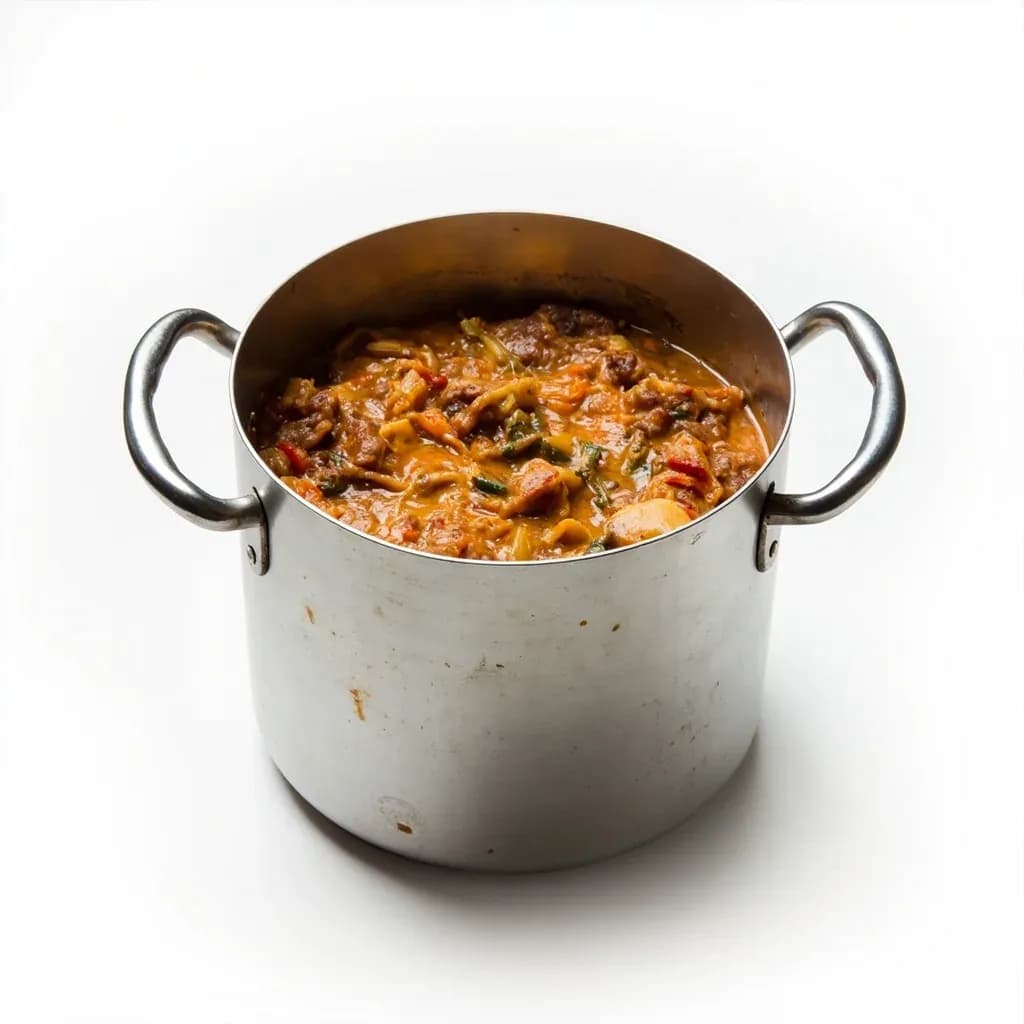
Tall Stockpot (Olla)
Tall, deep pot for boiling beans, simmering stocks, and steaming tamales.
An olla is a tall, deep cooking pot, traditionally clay but commonly aluminum, used for long boils and large batches. It simmers beans, broths, and stews and, fitted with a rack, steams tamales upright in big numbers. The height keeps liquid from boiling over and lets steam build for a tamalera.
An olla is the Spanish word for a cooking pot, but in kitchen practice it names a tall, deep vessel—typically narrower at the base than a classic stockpot—used throughout Mexican and Latin American cooking for the long, water-heavy jobs of the kitchen: dried beans, bone broths, hominy stews, and steamed tamales. The word covers both traditional unglazed or glazed earthenware (olla de barro) and the modern aluminum and stainless steel pots that have largely replaced clay in everyday use. What sets the olla apart from a wide French-style stockpot is its depth relative to its diameter: solids and liquid stack vertically, evaporation is controlled, and a small burner footprint handles a large volume.
The clay olla has been used in Mesoamerica for thousands of years, predating Spanish contact, and is still prized for the subtle earthy quality it lends to beans, moles, and atole. It demands care—curing before first use, low heat, and protection from thermal shock. The metal olla is the practical default in most modern Mexican kitchens: it heats fast, costs little, tolerates any heat source (induction included on a clad or magnetic base), and can be scrubbed without ceremony. Many households keep both, reaching for clay for special dishes and metal for weeknight work.
The shape matters as much as the material. A tall, narrow pot exposes less surface area relative to its volume than a wide pot, so stocks reduce gently without boiling down too fast, and beans stay submerged even as they swell. Skimming foam is easier because impurities collect on a smaller surface. The same geometry that suits a four-hour frijol simmer also suits a tamalera, where the deep body holds a tall stack of wrapped masa above the simmering water without crowding the lid.
Alternatives
Types & varieties
Traditional clay pot; porous, imparts a subtle earthy quality, and requires curing and gentle heat
Lightweight aluminum tall pot; the everyday workhorse of modern Mexican kitchens for beans and stocks
Stainless steel tall stockpot; non-reactive, durable, and well-suited to long stock simmers
Purpose-built for steaming tamales, with a deep body, tight lid, and an internal rack or steamer insert
Oversized pot, often 20+ quarts, sized for cooking hominy stews for large gatherings
Pressure cooker—shares the word root but is a different tool entirely
Clay vs. Metal: Choosing Your Olla
The choice between an olla de barro and a metal olla is the choice between tradition and convenience, and most experienced cooks end up with one of each. Clay is porous and imparts a faint mineral depth you can taste in plain boiled beans, in a thin caldo, and in a delicate atole; the same porosity is what makes the pot fragile. Metal heats faster, cleans easily, tolerates a hard boil, and forgives the occasional drop. For a household that cooks beans every week and stocks on weekends, an 8-quart stainless or aluminum olla is the practical anchor. A 4- to 6-quart clay pot earns its place for the dishes where its flavor and ritual matter most.
- Pick metal (aluminum or stainless) as the everyday pot for beans, stocks, pasta water, and large-batch cooking.
- Add clay as a specialty pot for beans you want to taste the pot in, certain moles, and atole.
- Buy clay from a maker that explicitly states a food-safe, lead-free glaze—health authorities in both Mexico and the U.S. have issued warnings about lead leaching from some traditional glazes.
- If you cook on induction, choose a clad or magnetic-base metal olla; clay works on gas, electric, and open flame but not on induction.
Regional Clay Traditions
Ollas de barro vary noticeably by region, and cooks often have strong preferences. Mexican pottery centers like Tonalá in Jalisco, Atzompa and surrounding villages in Oaxaca, and workshops in Michoacán each produce distinctive shapes, clay colors, and rim profiles. Tonalá is known for its burnished finishes and rounded, bellied pots—the classic bean-pot silhouette. Atzompa and the broader Oaxacan tradition are recognized for their colored glazes, including the green-glazed style that has become a regional signature, with forms ranging from tall and narrow to wider cooking vessels. Michoacán pieces often carry a darker, more rustic finish, and many workshops still use traditional wood-fired kilns. For everyday cooking the differences are subtle, but a clay pot from one region can behave slightly differently from another, both in how it holds heat and how it seasons over time.
- Tonalá (Jalisco): rounded belly, burnished finish, a classic bean-pot silhouette.
- Atzompa and surrounding Oaxacan villages: known for distinctive colored glazes and varied forms, from tall and narrow to wider cooking pots.
- Michoacán: darker, more rustic finishes; many pieces are still wood-fired in traditional kilns.
- Regardless of origin, ask the maker or seller for written confirmation of a food-safe, lead-free glaze.
Common uses
Tips & pitfalls
- Cure a new clay olla before first use: soak it in water overnight, then bake it empty at about 250°F (120°C) for an hour to settle the clay and seal the surface.
- Never subject a clay olla to thermal shock—pre-warm the empty pot over low heat and add ingredients that are already warm, not refrigerator-cold.
- Keep the flame at medium-low for clay; a hard burner will eventually crack the pot and scorch whatever sits on the base.
- Use wooden or silicone spoons inside clay ollas; metal spoons gradually wear down traditional glazes.
- Sun-dry clay ollas thoroughly before putting them away—trapped moisture breeds mildew and, in cold storage, cracking.
- Do not store food or refrigerate leftovers in a clay olla; transfer to glass or plastic, since the clay absorbs oils and odors and the cold can crack the pot.
- Verify lead-safe certification on any traditional glazed olla, especially unbranded imports—lead leaching from traditional glazes is a documented public-health concern.
- When steaming tamales, keep the water level just below the rack and top up with boiling water from a kettle, never cold, to avoid dropping the pot's temperature.
Good to know
- Origin
- Spanish word meaning 'pot'; clay versions (olla de barro) were used in Mesoamerica for thousands of years, predating Spanish contact
- Primary Materials
- Traditional: unglazed or glazed earthenware clay (barro); modern: aluminum, stainless steel, or enameled steel
- Shape
- Tall and deep, narrower at the base than a typical stockpot; traditional clay versions often have a rounded bottom and slightly flared rim
- Typical Capacity
- Home sizes run 4–12 quarts; pozoleras and tamaleras reach 20–40+ quarts for gatherings
- Heat Tolerance
- Clay ollas require low-to-medium heat; metal ollas handle high heat like any standard stockpot
- Compatibility
- Gas, electric, induction (magnetic-base metal), and open flame for metal; clay is suitable for gas, electric, and open flame but not induction
- Storage
- Must be fully dry before storing; clay is porous and absorbs moisture, which can lead to mildew or cracking
- Lead Safety
- Some traditional glazed ollas have been documented to leach lead; buy only certified lead-free pieces, especially with unbranded imports
Also called
olla · tamale-pot · tamale-steamer · tamalera · steamer-tamalera · steamer-tamalera-yuc · Stockpot
Related

Steamer
Gentle moist heat that keeps vegetables, fish, and dumplings tender

Frying Pan
Shallow sloped pan for frying, sautéing, and quick sears

Saucepan
Tall, straight-sided pot for sauces, grains, and small batches

Sauté Pan
Wide straight-sided pan with room to brown and braise

Dutch Oven
Heavy lidded pot that turns tough cuts tender over hours

Stock Pot
Tall, roomy pot for stocks, pasta, and big-batch cooking

Wok
High-sided bowl pan built for blistering-hot stir-fries

Griddle
Flat, broad surface for pancakes, smash burgers, and breakfast