Baking & Pastry
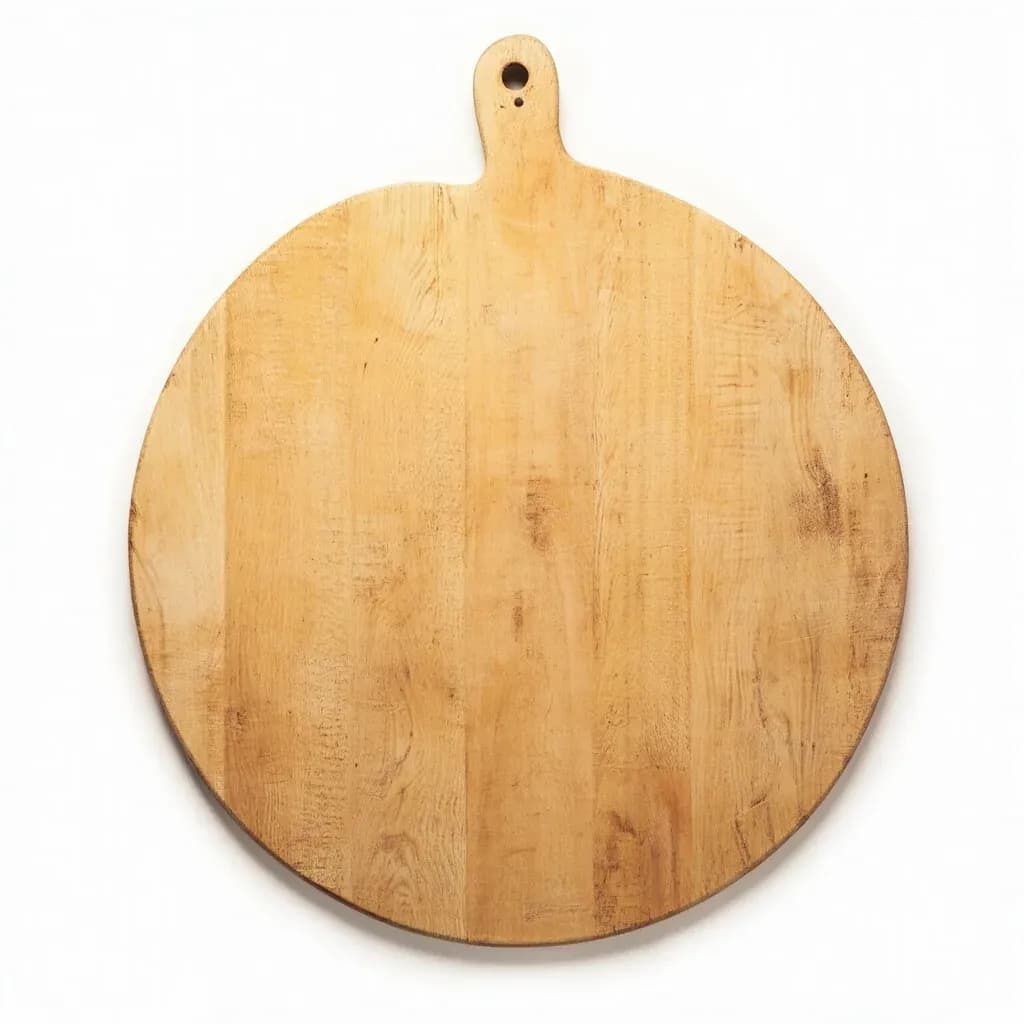
Wooden Pasta / Pastry Board (Spianatoia)
Large flat wooden board for kneading dough and rolling out fresh pasta and pastry.
A spianatoia is a large, smooth wooden board used as a dedicated surface for working dough. Its slightly porous, lightly floured wood grips dough just enough to help knead and roll fresh pasta, bread, and pastry without sliding. Many have a lip that hooks onto the counter edge to keep the board steady while you work.
The spianatoia is the large, flat hardwood board that has anchored Italian kitchens for centuries — a working surface designed specifically for flattening, kneading, and shaping doughs of every kind, from bread and pizza to fresh egg pasta and laminated pastry. Its Italian name comes from spianare, to flatten or roll out, and the best examples are heavy, single-piece slabs of beech, chestnut, oak, maple, or walnut, thick enough (2–4 cm) to stay put when a cook leans into a rolling pin.
What sets wood apart from marble, granite, and stainless steel is twofold. First, it is a poor heat conductor, so the surface stays cool: butter in pastry does not melt on contact, and egg-pasta dough does not warm up and become sticky or tough. Second, a properly finished hardwood surface is gently yielding and lightly grippy, which means dough clings just enough to roll out evenly with far less dusting flour — yielding a more tender, less dusty final product. A well-oiled spianatoia is genuinely a lifetime tool; Italian households commonly inherit them from grandparents, and a professional board can be sanded and re-oiled to refresh after decades of service.
Alternatives
Types & varieties
The most common form — a large flat hardwood rectangle, often beech, used for bread, pizza, and pasta work
Has a wooden lip along one or two long sides to keep dough contained and to act as a rolling-pin stop
Circular board useful for shaping round breads, pizza, and discs of pasta
Smaller, lighter board engraved with a grid for measuring rolled pastry or for portioning scones and cookies
End-grain or edge-grain laminated hardwood, very heavy and stable, often used in professional kitchens
A wooden proofing box with a fitted lid that doubles as a spianatoia when inverted — common in Italian bakeries
Why wood beats marble for fresh pasta and pastry
Marble and granite pastry slabs are faster-working than wood because their cold mass chills dough on contact, which helps with butter-based pastry in a warm kitchen. For sfoglia and most fresh egg pasta, however, that same chill is a drawback: an over-cold sheet cracks at the edges, fights the rolling pin, and produces a tough final texture. Wood stays cool without being cold, grips the dough lightly so less bench flour is needed, and — critically — is far gentler on the edges of a wooden rolling pin. In professional pasta labs in Italy, large beech boards are still preferred over marble for sfoglia work for exactly these reasons.
Care and feeding of a spianatoia
A wooden board is a long-term investment, not a disposable tool, and a few habits keep it flat, sanitary, and beautiful for decades.
- Oil about once a month with food-grade mineral oil or a beeswax-mineral-oil paste; olive and other culinary oils go rancid and will smell.
- Clean by scraping off residue with a bench scraper, then wiping with a barely damp cloth — never soak, never run through a dishwasher.
- If the surface roughens or grey spots appear, sand lightly with 220-grit paper along the grain, then re-oil.
- Store flat in a dry room; upright storage can cause warping over time.
Common uses
Tips & pitfalls
- Lightly flour the board before rolling fresh pasta, but use semolina rimacinata on the underside of cut sheets to prevent sticking without drying the dough out.
- Stand the rolling pin against the raised lip (bordo) at the end of each stroke — this gives even, square sheets and is the classic Italian rolling technique.
- Choose a board at least as deep as your longest rolling pin allows, so you can work dough without it hanging off the edge.
- Don't use the board as a chopping board for heavy cleaver work; deep cuts harbor moisture and bacteria and ruin the flat working surface.
- Never set a hot pan or tray on it — thermal shock can crack the wood.
- Rub the dry board with a cut clove of garlic before working bread dough — a traditional Italian baker's trick said to subtly flavor the crust and keep the surface seasoned.
- To refresh a tired surface, sand lightly with 220-grit sandpaper along the grain, then flood with food-grade mineral oil and let it soak overnight before buffing dry.
Good to know
- Italian name
- Spianatoia, from spianare — to flatten or roll out
- Primary material
- Solid hardwood — typically beech (faggio), chestnut (castagno), oak (quercia), maple, or walnut (noce)
- Typical dimensions
- Rectangular boards commonly 60 × 40 cm to 100 × 70 cm; thickness 2–4 cm; round versions 50–70 cm diameter
- Weight
- Usually 4–10 kg depending on size — heavy enough to stay planted during vigorous kneading and rolling
- Surface temperature
- Wood is a poor heat conductor, so the surface stays cool and does not melt butter or warm egg-pasta dough
- Maintenance
- Wipe-clean only; never soaked or dishwashed; oil monthly with food-grade mineral oil (never olive oil, which turns rancid)
- Working life
- Decades if kept dry and oiled; surfaces can be sanded and re-oiled to refresh
- Origin
- Italy; a fixture of traditional home and professional kitchens for centuries
Also called
pastry-board · wooden-pasta-board · large-pastry-board · Spianatoia · Pastry Board
Related

Muffin Pan
Multi-cup pan for muffins, cupcakes, and egg bites

Bundt Pan
Fluted ring mold for showstopping cakes with a center hole

Springform Pan
Latch-release pan that frees delicate cakes without flipping

Pie Dish
Sloped round dish for crisp-bottomed pies and quiches

Tart Pan
Fluted pan with a pop-out base for clean-edged tarts

Rolling Pin
Rolls dough into even sheets for pastry and bread

Pastry Brush
Brushes on egg wash, glaze, butter, and marinades

Bench Scraper
Flat blade that divides dough and clears your work surface