Cookware
Large Pasta Pot
A tall pot, often with a perforated insert, for boiling and draining pasta in plenty of water.
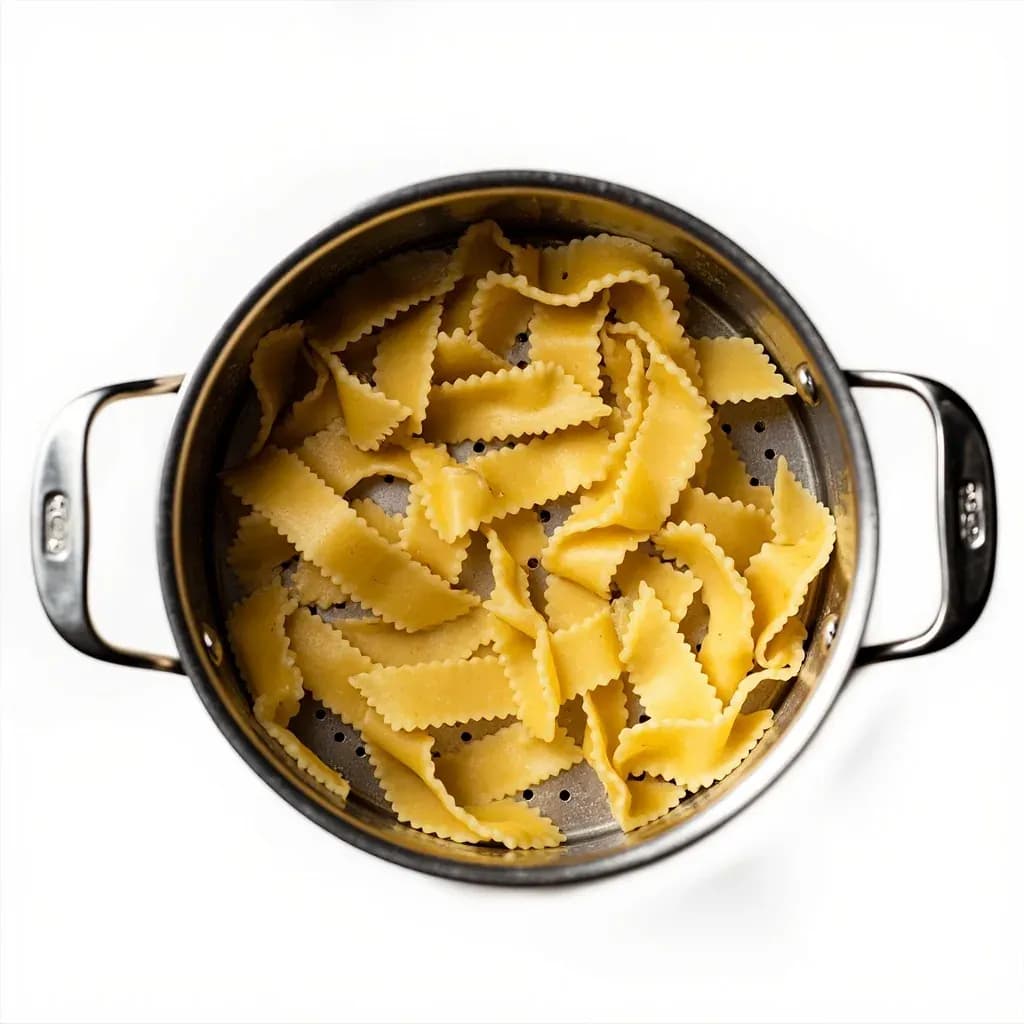
A large pasta pot is a tall, wide pot designed to boil pasta in an abundant volume of salted water so strands cook evenly without clumping. Many include a perforated drain insert that lifts the pasta straight out, leaving the starchy water behind for sauces. It is the standard vessel for boiling spaghetti, dried noodles, gnocchi, and blanching vegetables.
A large pasta pot is a tall, narrow stockpot built around the peculiar geometry of long dried noodles. Where a wide soup pot wastes energy heating a broad surface of water, a pasta pot concentrates heat in a column usually 9–12 inches (23–30 cm) tall, so a fistful of spaghetti, linguine, or bucatini can stand upright, soften at the submerged end, and bend gently into the water rather than snap in half. That shape, more than any accessory, is what defines the category: it shortens the time to a rolling boil, holds heat well when a pound of cold pasta hits the water, and gives long strands room to move freely as they cook.
In practice, the category splits into two camps. The plain tall stockpot with a tight lid drains the way Italian home cooks traditionally do — into a separate colander, or directly into the waiting pan of sauce. The pot-with-insert, by contrast, comes with a perforated stainless basket that lifts out in one motion, an Anglo-American convenience that pays off most when you're blanching vegetables, cooking delicate stuffed pasta you don't want to chase around a sink, or trying to lift a heavy pot of boiling water away from a burner safely. Either approach works; the insert is a workflow choice, not a question of how the pasta itself cooks.
A few details separate a true pasta pot from a tall generic stockpot. The base should be thick, encapsulated, or fully clad so it won't scorch or warp on a high-BTU gas burner. Riveted or welded loop handles matter more than usual because the pot is often full of boiling water when you grab it. And if you cook on induction, confirm the base is magnetic stainless or fully clad — bare anodized aluminum will not work.
Alternatives
Types & varieties
Plain tall pot with a tight lid; pasta is drained in a separate colander or poured into a waiting pan of sauce. The classic, lowest-cost option.
Inner stainless basket with handles that lifts out for one-step draining — useful for long strands, delicate stuffed pasta, and quick blanching.
Lid contains a built-in strainer; the pot is tipped to drain through the lid slots rather than lifted or carried.
Anodized aluminum body with stainless or nonstick interior; excellent heat response, not induction-compatible unless bonded to a magnetic base.
Multi-ply stainless with an aluminum or copper core; induction-ready, the most durable choice, and the priciest.
Same tall silhouette, sold with a perforated trivet for steaming asparagus, corn, lobster, or small whole fish.
How Much Water, How Much Salt
The two numbers a pasta cook commits to memory are water and salt, in that order. Dried pasta needs room to move: crowd it in too little water and the starch concentration rises fast, the surface turns gummy, and the noodles fuse into a single slippery mass before they can cook through. The working ratio is 4–6 quarts per pound of dried pasta, and for long strands that means filling the pot roughly two-thirds of the way up the side. Salting happens after the boil is established, not before, and at a level that makes the water taste clearly of the sea — about a tablespoon of kosher salt per four quarts is the standard benchmark. That salt seasons the interior of the noodle, which is the only chance you get, since the sauce that finishes the dish sits on the outside.
- Use 4–6 qt water per 1 lb (450 g) dried pasta; more is better than less.
- Wait for a full rolling boil before salting and before adding pasta.
- Salt until the water tastes like sea water — roughly 1 tbsp kosher salt per 4 qt.
- Skip the olive oil: it coats the noodles and prevents sauce from clinging.
The Insert-Basket Question
The perforated insert is the most contested feature on a modern pasta pot, and the answer depends on what else you cook. If your pasta routine is plain spaghetti or penne for a family of four and you finish it in a pan of sauce, you don't need one — you'll tip the pot or drain through a colander the way the tradition describes. If, however, you regularly blanch green beans, cook stuffed pasta like cappelletti or ravioli, or need to fish a delicate noodle out before it overcooks, the basket earns its keep quickly. Look for one with handles that sit above the water line and perforations fine enough to trap orecchiette and small shapes; coarse holes are fine for spaghetti but can lose fusilli and small tubes.
Choosing the Right Pot for Your Burner
A pot that is too wide for the burner wastes heat up the sides and can scorch the base, especially on gas. A pot that is too narrow for the burner takes forever to boil and heats unevenly. The fit you want is one where the burner flame or coil covers roughly 70–90% of the base. Most 12-quart pasta pots are around 8–9 inches across the bottom, a reasonable match for a standard residential gas or induction element and slightly larger than a typical 6–8 inch electric coil. If you have a powerful wok-style gas burner, prefer a clad or thick-encapsulated base — bare aluminum will pit and discolor from the salt.
Common uses
Tips & pitfalls
- Use at least 4–6 qt of water per pound of dried pasta; an under-filled pot is the leading cause of sticky, gummy noodles.
- Bring the water to a full rolling boil before salting and before adding pasta — pasta added to lukewarm water leaches starch and clumps.
- Salt until the water tastes like sea water (about 1 tbsp kosher salt per 4 qt); pasta itself is unseasoned, so the boiling water is the only chance to season the noodle's interior.
- Skip the olive oil in the water. It coats the pasta and prevents sauce from clinging; stirring in the first 1–2 minutes is what actually prevents sticking.
- Stir the pasta once as soon as it goes in and again briefly in the first minute or two to keep strands from fusing; after that, occasional stirring is plenty.
- Pull the pasta about 1 minute shy of the package's al dente time and finish it in the sauce so the noodles absorb flavor and reach proper doneness together.
- Reserve a cup or two of starchy pasta water before draining; it is the primary emulsifier and sauce-loosener for nearly every Italian pasta preparation.
- Match pot diameter to burner size — a narrow pasta pot on a wide burner wastes heat and can scorch the base, while an oversized pot on a small burner boils slowly and unevenly.
Good to know
- Typical capacity
- 8–16 quarts (8–15 L); 12 qt is a common home size
- Shape
- Tall and relatively narrow, usually 9–12 in (23–30 cm) tall so long strands can stand without bending
- Common materials
- Anodized aluminum, clad stainless steel, or plain aluminum; copper is rare
- Base
- Thick, encapsulated, or clad base for even heat and to prevent scorching on high-BTU burners
- Insert/basket
- Many models include a perforated stainless insert or strainer lid so pasta can be lifted out without a colander
- Water-to-pasta ratio
- Roughly 4–6 qt of water per 1 lb (450 g) of dried pasta
- Salting convention
- Generously salted — about 1–1.5 tbsp kosher salt per gallon (≈1 tbsp per 4 qt)
- Heat source
- Gas, electric coil, and induction (if magnetic stainless or fully clad); oven use is uncommon
Also called
pasta-pot · Pasta Pot · Multipot
Related

Steamer
Gentle moist heat that keeps vegetables, fish, and dumplings tender

Frying Pan
Shallow sloped pan for frying, sautéing, and quick sears

Saucepan
Tall, straight-sided pot for sauces, grains, and small batches

Sauté Pan
Wide straight-sided pan with room to brown and braise

Dutch Oven
Heavy lidded pot that turns tough cuts tender over hours

Stock Pot
Tall, roomy pot for stocks, pasta, and big-batch cooking

Wok
High-sided bowl pan built for blistering-hot stir-fries

Griddle
Flat, broad surface for pancakes, smash burgers, and breakfast